The Best Small Cars with Big Boots in 2026
Need plenty of luggage space but don't want a big car? These are the best small cars with big boots in 2026, from roomy superminis to clever small SUVs and electric cars, with every boot size listed in litres.
The Cazoo editorial team
Published on 23 October 2026 | 11 mins read

If you need a used car with a big boot, it doesn't necessarily mean you need a big car. Many small cars are cleverly designed to give you a big boot, but in a cost-effective vehicle that fits into all but the teeniest of parking spaces.
Here, we've compiled a list of the best new and used small cars with big boots, ranked from the biggest boot down. We've included each car's official boot capacity with the rear seats in place, measured up to the load cover, so you can see how they compare with each other – and with any other car you might be considering.
For context, a typical supermini such as the Vauxhall Corsa has a 309-litre boot, while a Volkswagen Golf, which is a size bigger, has 381 litres. So anything over 350 litres is a lot of space for a small car. If you're short on time, the Skoda Scala has the biggest boot here, at 467 litres, while the Citroen C3 Aircross and Vauxhall Frontera are the roomiest small SUVs.
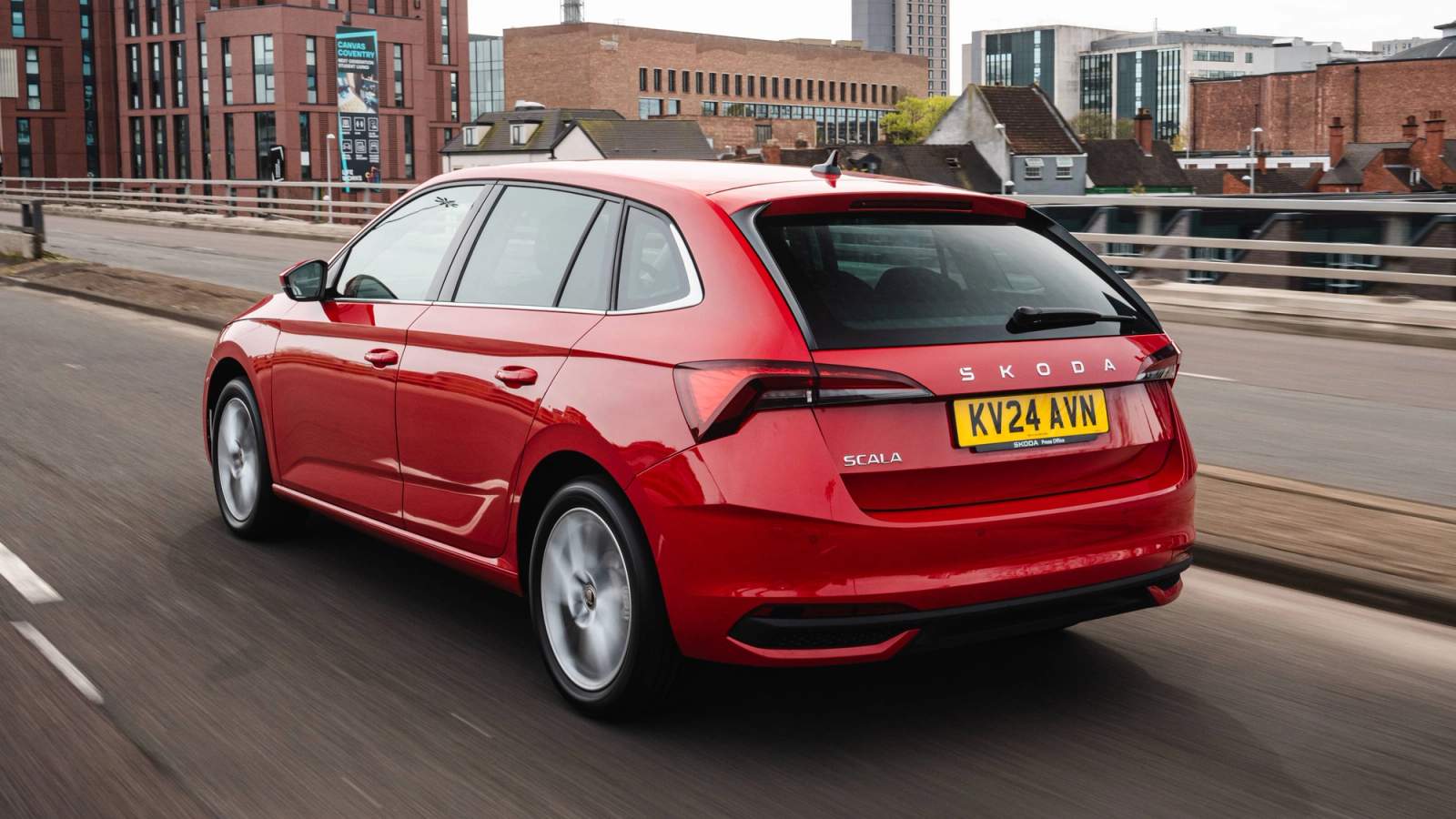
1. Skoda Scala: 467 litres
The Skoda Scala – like most Skoda cars – is especially practical compared with its rivals. Its boot capacity of 467 litres is more than that of many larger cars, including the Volkswagen Golf, which has 381 litres. Fold the rear seats and you'll have 1,410 litres to play with.
The Scala's boot is about the biggest you can get for a car of this size. A movable boot floor provides extra flexibility if you need a large, flat surface to load oversized items. All versions are well-equipped, have low running costs, and are excellent value for money.
Strictly speaking, the Scala is a size up from a supermini, but it costs less than most family hatchbacks and there's plenty of room in the back for adults, too. A 2024 update brought sharper styling and a 114bhp version of the 1.0-litre turbo petrol engine, alongside a 94bhp 1.0 and a 148bhp 1.5. It's packed with Skoda's clever touches, including an umbrella in the driver's door and an ice scraper that doubles as a tyre tread gauge. You'll find plenty of choice in our listings.
2. Citroen C3 Aircross: 460 litres
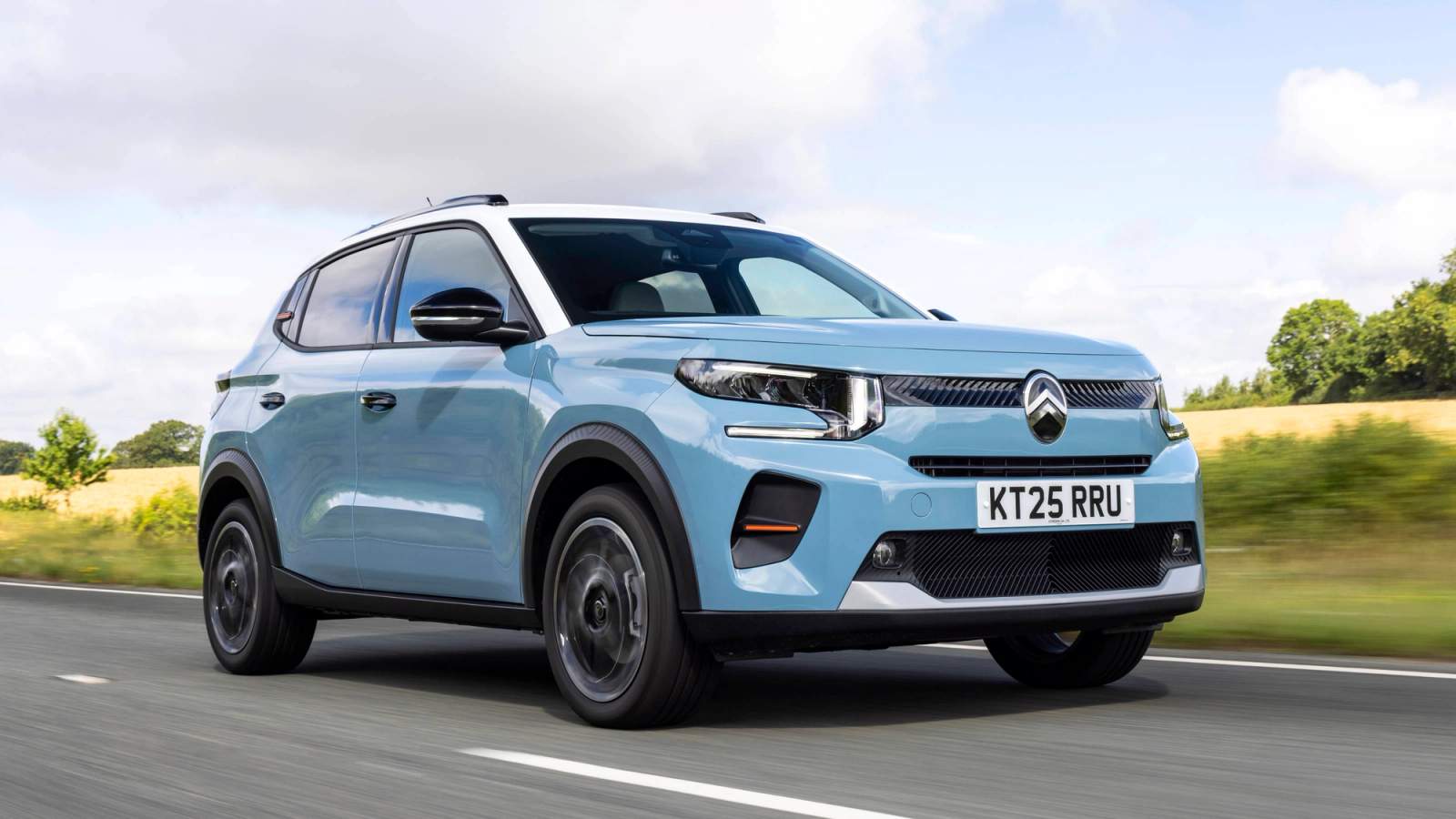
The Citroen C3 Aircross is an affordable small SUV that's smartly packaged to offer the space and practicality you expect from a compact MPV.
The latest version, on sale since 2024, is bigger than before, and its 460-litre boot is a really good size. Fold down the back seats and you'll have 1,600 litres to play with.
It's also one of the very few cars of this size that you can get with seven seats. The two extra seats fold out of the boot floor and are best kept for children, and there's only around 40 litres of luggage space when they're in use, but they're a real bonus if you occasionally need to give your kids' friends a lift. Seven seats are offered on petrol and hybrid models, while the electric e-C3 Aircross is a five-seater with the same 460-litre boot and a range of up to 249 miles.
Other bonuses for the C3 Aircross include modern styling, a comfortable interior and low prices. Earlier C3 Aircross models, sold new between 2017 and 2024, are a little smaller but still roomy, with a 410-litre boot that grows to 520 litres if you slide the rear seats forward. Take a look at our listings to see what's available.
3. Vauxhall Frontera: 460 litres
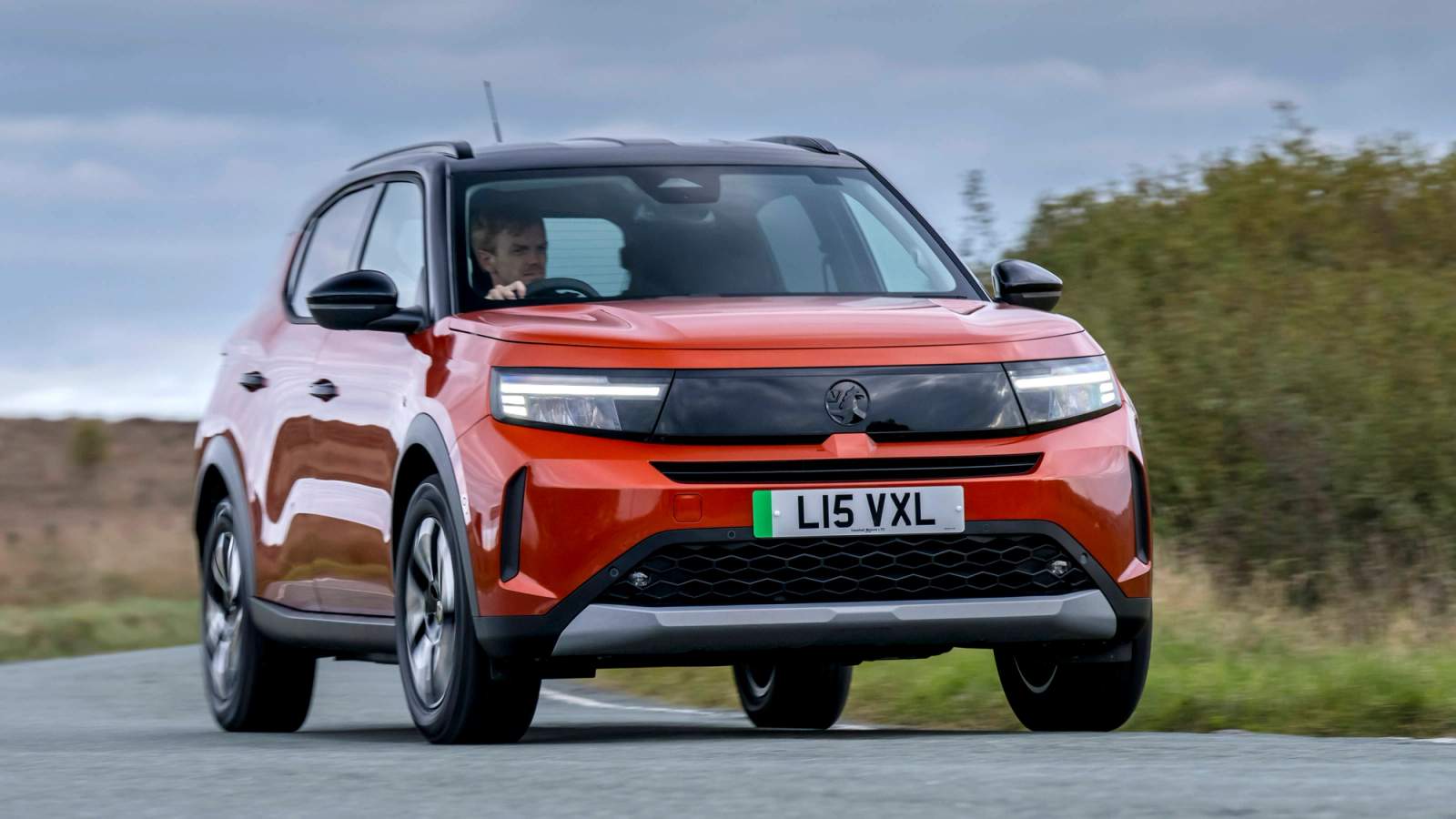
The Frontera replaced the Vauxhall Crossland in 2024, and it's an even more practical small SUV. While numbers on paper indicate a boot's roominess, they don't tell you about the shape. So let us tell you that the Frontera's boot floor can be raised to sit level with the boot opening, so there's no lip to lift heavy things over. With the rear seats up there's 460 litres of space, and fold them down and you'll have around 1,600 litres.
Better still, the boot is the same size whether you choose the hybrid or the Frontera Electric, which isn't always the case with electrified cars. Hybrid versions can also be had with seven seats, although the third row is really only suitable for children. The hybrids come with 108bhp or 143bhp, while the Electric has 111bhp and a range of up to 186 miles, or up to 253 miles with the bigger battery.
It's a bonus that the Frontera is also very good value for money, and there's already a good choice of models available on Cazoo. If you'd like something a little older, the Crossland, sold between 2017 and 2024, is worth a look too, with a 410-litre boot that grows to 520 litres with its optional sliding rear seats.
4. Ford Puma: 456 litres
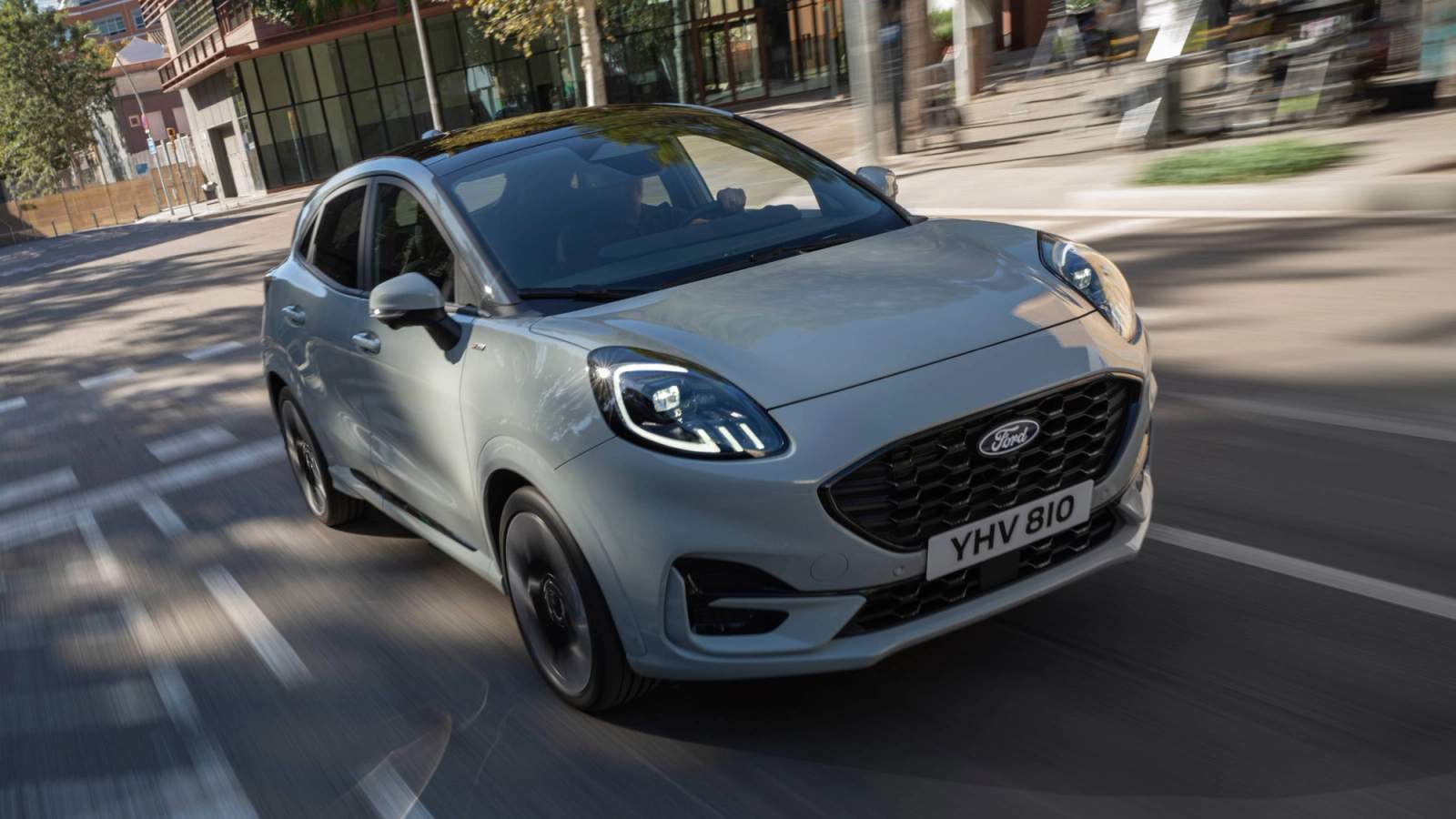
The Ford Puma is one of the best small SUVs, and part of its broad appeal is its spacious boot. At 456 litres, it gives you more space than most rival cars, and an extra party piece – an 80-litre compartment under the boot floor that Ford calls the MegaBox, which is included in that figure.
You can keep odds and ends in there, and because it's waterproof, it's ideal for muddy football kits or wet belongings after a day at the beach. There's also a drain plug at the bottom so you can even hose it out afterwards.
A 2024 update gave the Puma a smarter interior with bigger screens, and most are powered by a 1.0-litre mild hybrid petrol engine with either 123bhp or 153bhp. There's now an electric version, too. The Puma Gen-E swaps the MegaBox for an even bigger underfloor 'GigaBox', giving it a boot of more than 500 litres, plus a 43-litre storage space under the bonnet that's perfect for charging cables. It has 166bhp and an official range of more than 230 miles. Browse our listings to find one, or read our guide to the best small SUVs for more ideas.
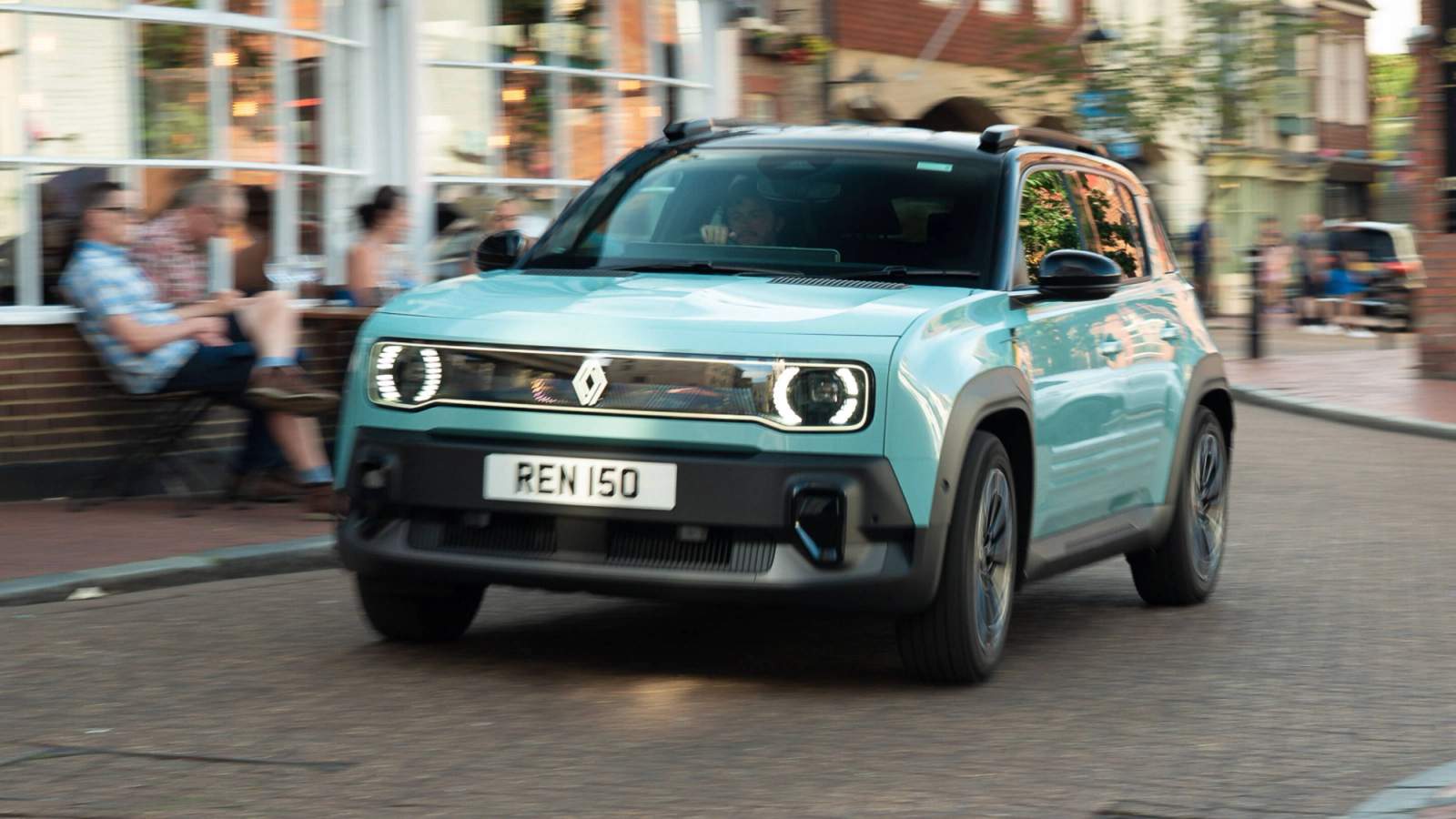
5. Renault 4 E-Tech: 420 litres
The Renault 4 is a modern, electric take on Renault's much-loved 1960s original, and like that car, it's designed to carry a surprising amount. Its 420-litre boot is bigger than you'll find in many small SUVs, there's a handy storage space under the floor for charging cables, and if you fold the rear seats, you'll have 1,405 litres to play with. That's a lot of room for a car that's only around 9cm longer than a Renault Clio.
UK cars have a 52kWh battery and a 148bhp electric motor, which gives an official range of up to 247 miles. The Renault 4 went on sale in 2025, so most used examples are nearly new, and there's a growing number of Renault 4 E-Tech models on Cazoo. If you're buying a used electric car for the first time, our guide to checking battery health explains what to look for.
6. Toyota Yaris Cross: 397 litres
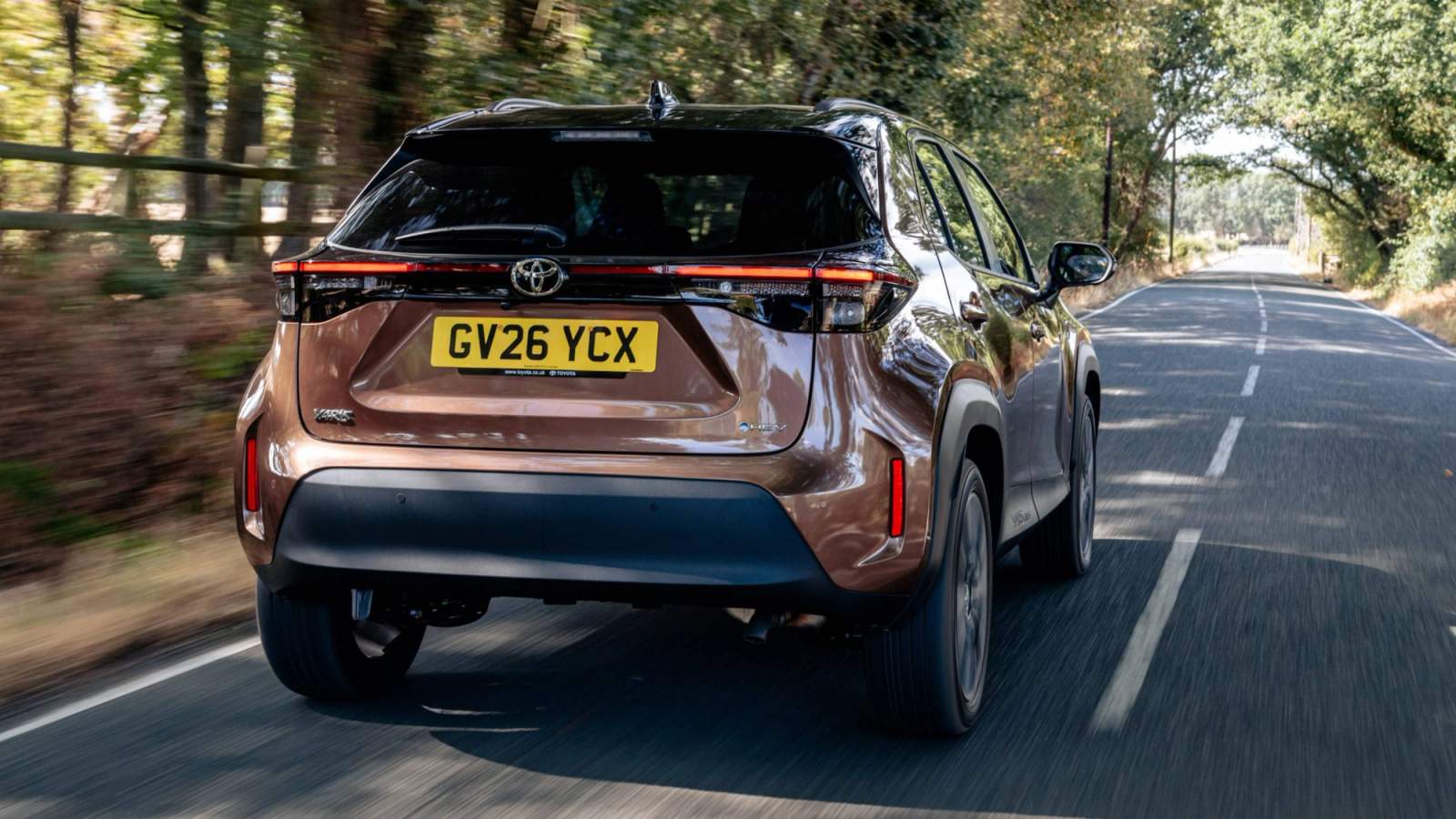
The Yaris Cross is Toyota's smallest SUV, and while it's based on the Yaris supermini, its boot is far bigger, at 397 litres compared with the Yaris's 286 litres. Fold the rear seats and that rises to 1,097 litres, and there's a split-level boot floor that lets you hide valuables or create a flatter load space. Just bear in mind that the four-wheel-drive AWD-i version drops to 320 litres, because of the extra electric motor that drives the rear wheels, and there's a fairly high lip to lift heavy items over.
Every Yaris Cross is a self-charging hybrid, so it's very cheap to run, and Toyota's reputation for reliability makes it a smart used buy. An updated version arrived in August 2026 with fresh styling, more standard kit and a 129bhp hybrid system across the range, while earlier cars have 114bhp, which is plenty for most drivers. Browse our listings to find one.
7. Renault Clio: 391 litres
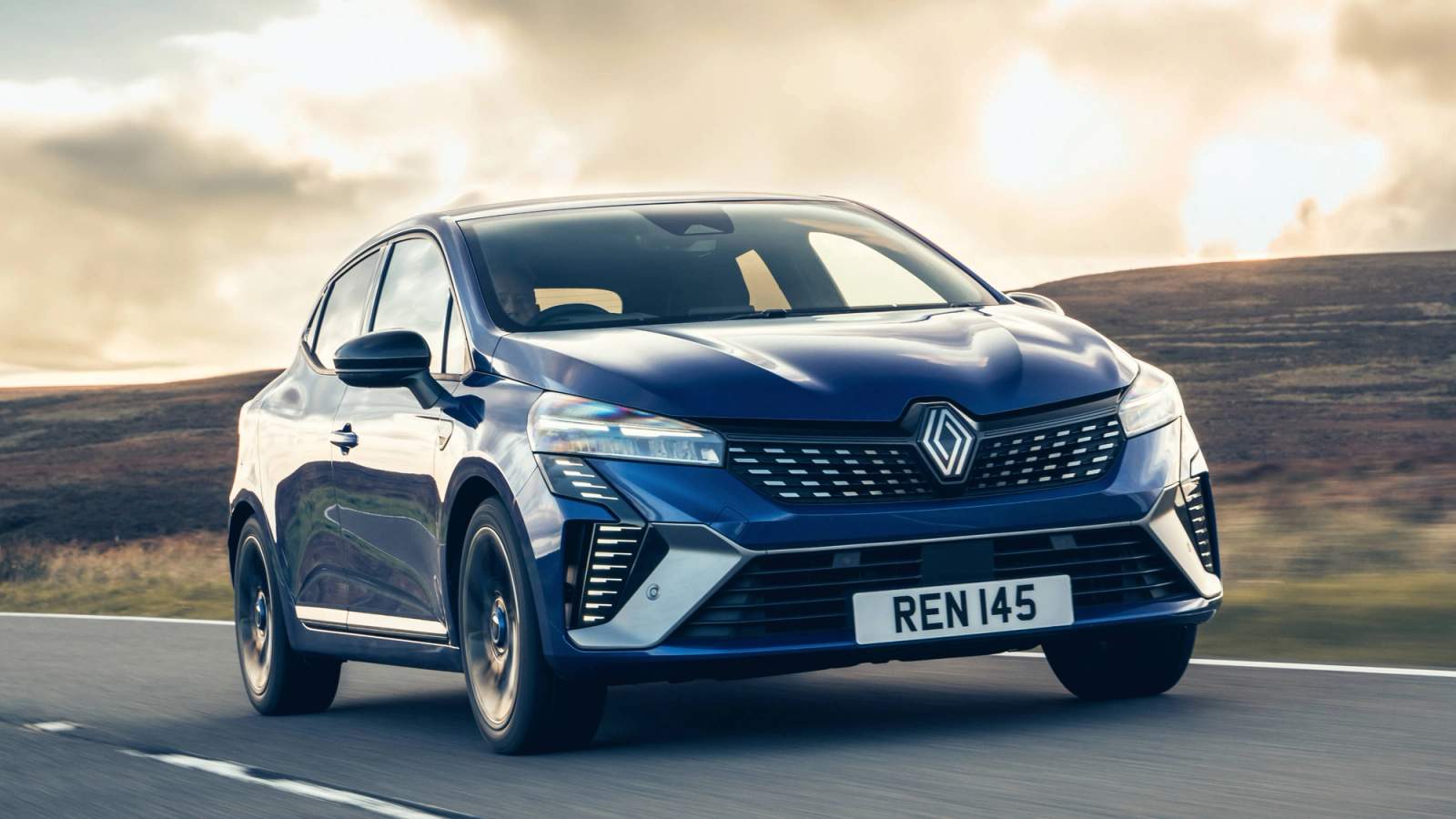
The boot space in the current Renault Clio is genuinely impressive, even compared to cars in a larger class. Its 391-litre capacity is 10 litres more than you'll find in a Volkswagen Golf – a much larger car. Fold the rear seats and it grows to 1,069 litres. If you want a compact hatchback with maximum boot space, this could be the car for you.
The boot is deep and wide, although there's a fairly large lip to lift heavy items over. It's also worth knowing that the E-Tech full hybrid version has a smaller 301-litre boot, as its battery takes up some of the space under the floor.
The rest of the Clio's interior is stylish and modern, and there's decent space for people, too. It's good to drive and excellent value for money, while all versions are also very fuel-efficient.
This fifth-generation Clio has been on sale since 2019 and was given a fresh look in 2023. An all-new Clio has already been revealed, but it isn't expected in the UK until 2027, so the current car is still very much up to date. Petrol versions have an 89bhp 1.0-litre turbo engine, while the hybrid has 143bhp. You'll find lots of choice in our listings.
8. Skoda Fabia: 380 litres
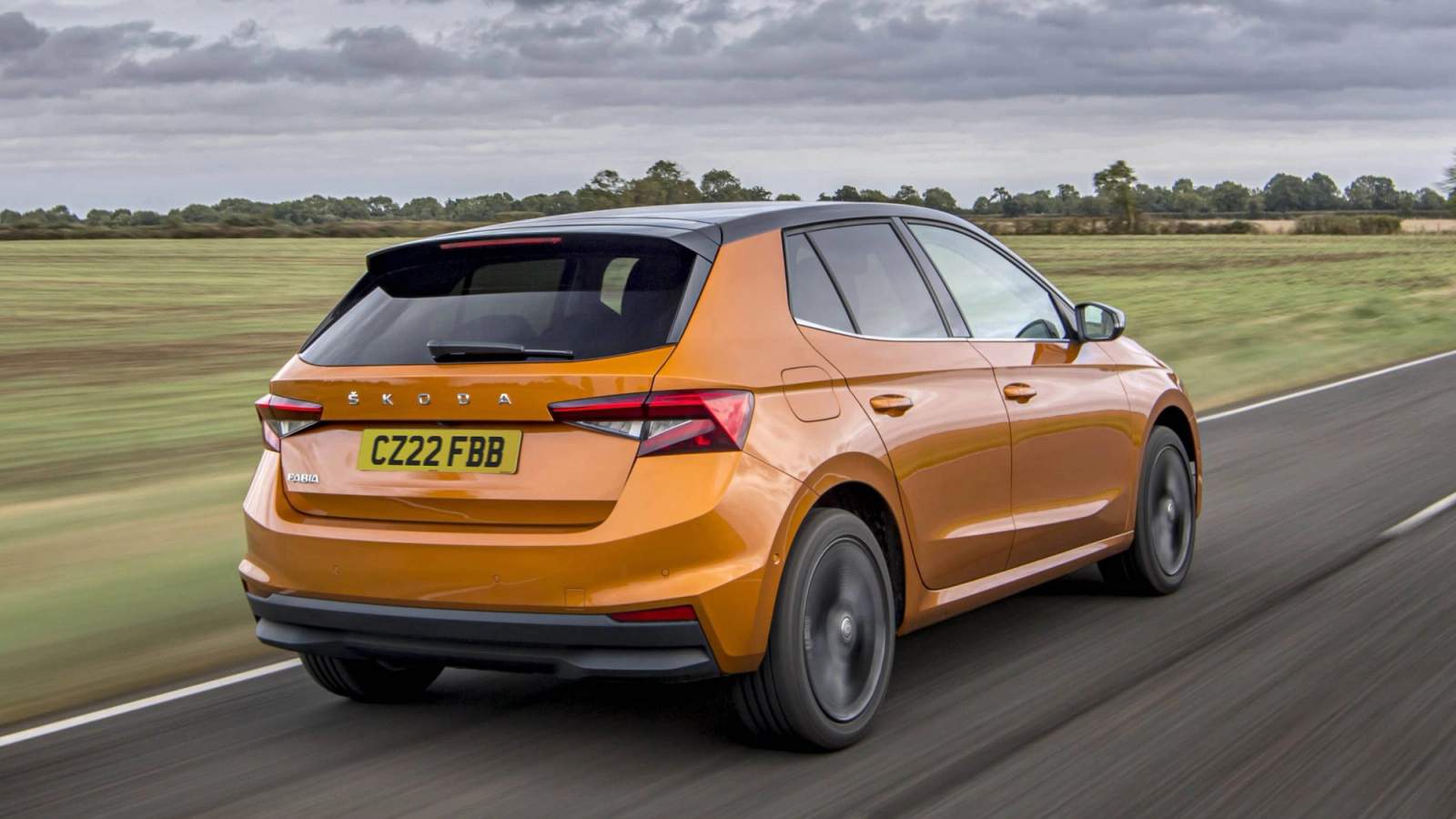
Like the Skoda Scala mentioned above, the latest Skoda Fabia, on sale since 2021, is as practical as cars in a larger class. The boot offers a capacity of 380 litres, almost exactly the same as a Volkswagen Golf, which is much larger and more expensive. Fold the rear seats and you'll have 1,190 litres.
You get more back-seat legroom than you do with most of its rivals, so the Fabia is an excellent option if you often ferry adults or older children. Like many Skodas, the Fabia has several clever features, such as space in the driver's door for an umbrella. The previous-generation Fabia, sold new between 2015 and 2021, has a smaller 330-litre boot, but it's still roomy for a compact car. It was also sold as an estate, which boasts a massive 530-litre boot, but there's no estate version of the latest Fabia.
Most Fabias have a 1.0-litre turbo petrol engine with 94bhp or 114bhp, while the sporty Monte Carlo is also available with a 148bhp 1.5. Low running costs make the Fabia a great first car, too, as our guide to the best first cars explains, and you'll find lots of models on Cazoo.
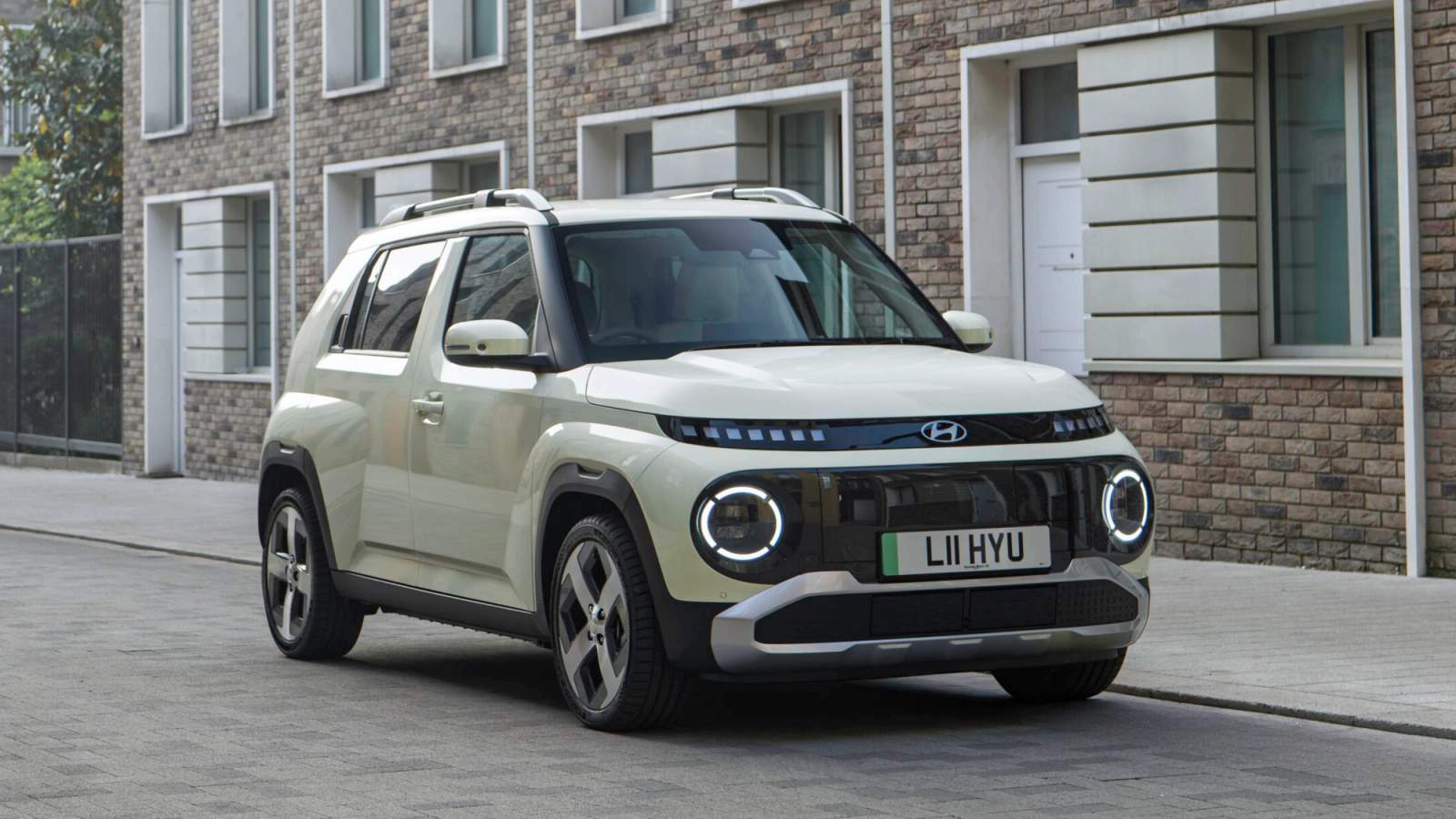
9. Hyundai Inster: up to 351 litres
The Hyundai Inster is a tiny electric car that's just over 3.8 metres long, which makes it shorter than a Fabia, yet it's cleverly designed to make the most of every inch. Its party trick, on 02 versions, is a pair of sliding rear seats that let you choose between more legroom and more luggage space. With the seats slid back there's 238 litres in the boot, but push them forward and that rises to 351 litres, which is more than you'll find in many superminis. Fold the rear seats flat and you'll have 1,059 litres.
On 02 versions, every seat in the Inster can be folded flat, including the driver's, so you can carry long items or even use it as a makeshift camper. There's a choice of 96bhp or 113bhp, with an official range of up to 229 miles, and like every Hyundai, it comes with a five-year unlimited-mileage warranty that transfers to future owners. Used Insters are still fairly rare, as the car only went on sale in 2025, but our electric vehicle guides will help you weigh up small electric cars.
10. Dacia Sandero: 328 litres
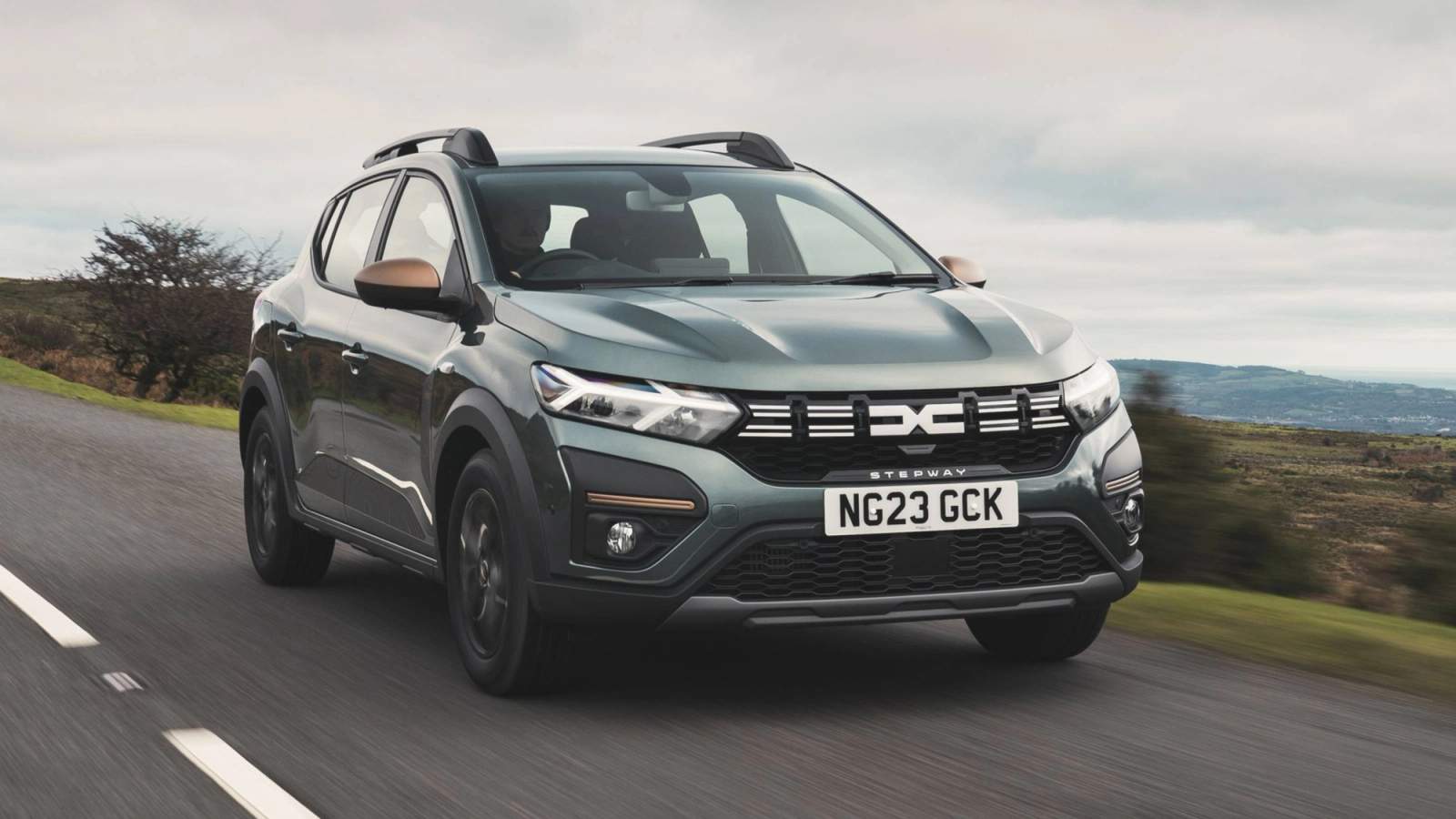
The Dacia Sandero is one of the cheapest new cars you can buy, but there's nothing stingy about its boot. At 328 litres, it's bigger than the boot in a Vauxhall Corsa or Toyota Yaris, and if you fold the rear seats, you'll have 1,108 litres. There's plenty of space in the back for passengers, too. You may see Dacia quote a bigger figure of 410 litres for the Sandero, but that's measured in a different way, as we explain below, so we've used the 328-litre figure to compare it fairly with the other cars here.
The Sandero Stepway adds a raised ride height and chunkier, SUV-inspired styling, with the same size boot. Most used Sanderos have an 89bhp 1.0-litre turbo petrol engine, or there's a 99bhp Bi-Fuel version that can also run on cheaper LPG, while a facelift for 2026 added a fresh look and a new 153bhp full hybrid. Used Sanderos are excellent value, as our guide to the best value used cars explains, and you can browse plenty of models on Cazoo.
How is boot space measured?
Most car makers measure boot space using a method called VDA. This involves filling the boot with standard-sized blocks, each measuring 20cm long, 10cm wide and 5cm tall, which works out at exactly one litre. Because the blocks can't fill every nook and cranny, a VDA figure gives you a realistic idea of how much luggage you'll actually fit in. Some manufacturers also quote a bigger figure, measured using a method that counts every gap and corner, which is why you'll sometimes see different numbers quoted for the same car.
All the main figures in this guide are VDA figures for the boot with the rear seats in place, measured up to the parcel shelf or load cover, as that's the most useful comparison for everyday use. Figures with the rear seats folded are usually measured right up to the roof, so they're best treated as a rough guide to how much you could carry on a trip to the tip.
What to look for in a small car with a big boot
The number on paper is a good starting point, but it's not the whole story. A boot that's square, with a wide opening and little or no lip, will often be easier to live with than a slightly bigger one with awkward corners. Features such as an adjustable boot floor, rear seats that fold flat and sliding rear seats all add flexibility, too.
It's also worth thinking about which version you choose. Hybrid and four-wheel-drive models often have smaller boots because batteries and motors take up space under the floor, as you'll see with the Clio and Yaris Cross above, although some electric cars, such as the Frontera Electric, don't lose out at all. And if you're tempted by a small SUV, remember that a taller body doesn't always mean a bigger boot, as the Skoda Scala hatchback beats them all here. Our guide to SUVs explains more about the differences.
The best test of all is to take your own kit along when you view a car. A pushchair, a set of golf clubs or the dog's crate will tell you more than any brochure, and our used car viewing checklist covers everything else worth checking. Before you buy, a vehicle check will confirm the car hasn't been written off and doesn't have outstanding finance, and you can look up its MOT history on GOV.UK for free.
Frequently asked questions
Which small car has the biggest boot?
Of the cars in this guide, the Skoda Scala has the biggest boot, at 467 litres. If you'd prefer a small SUV, the Citroen C3 Aircross and Vauxhall Frontera are close behind, with 460 litres each, while the Ford Puma has 456 litres if you include the deep space beneath the floor.
What is a good boot size for a small car?
Most superminis have between 280 and 350 litres of boot space, which is enough for a big weekly food shop or a couple of large suitcases. Anything over 350 litres is generous for a small car, and over 400 litres puts it on a par with many family hatchbacks.
Do hybrid and electric cars have smaller boots?
Sometimes. Batteries take up space, so the hybrid Renault Clio has 301 litres compared with 391 litres in the petrol version. However, many electric cars are designed around their batteries from the start, so they don't lose out, and some, such as the Ford Puma Gen-E, even have extra storage under the bonnet.
Is a small SUV more practical than a hatchback?
Not always. Small SUVs are easier to get in and out of and give you a higher driving position, but some hatchbacks, such as the Skoda Scala, have bigger boots than many SUVs. It's worth comparing the boot figures, rather than assuming the taller car is the roomier one.
Final thoughts
You don't need a big car to get a big boot. Whether it's the Skoda Scala's family-car space, the Ford Puma's clever MegaBox or the Hyundai Inster's sliding seats, every car here proves that small on the outside doesn't have to mean small on the inside. Think about what you'll carry most often, whether that's a pushchair, sports kit or the dog, and choose the boot size and shape that suits you best.
Whichever car catches your eye, you'll find thousands of small cars from trusted dealers across the UK in our listings.