Why are most new cars automatic? Is the manual dying out?
Most new cars are automatic because of advances in gearbox technology, changing efficiency tests, the rise of electric vehicles, and growing consumer demand for convenient driving have made automatics the default choice for manufacturers. Manual transmissions are still available but increasingly rare in new car lineups, though the used car market keeps them very much alive.

Charlie Harvey
Published on 20 August 2026 | 9 mins read

Flick through any new car brochure today and you'll notice something missing. The option to change gear yourself is quietly disappearing from the new car market, with automatic transmissions now fitted as standard across most mainstream models.
It's a shift that's happened gradually, and for a lot of good reasons. Better technology, changing driving habits, and the arrival of electric vehicles have all played a part. But it raises a fair question for anyone who still enjoys the feel of a clutch pedal: is the manual gearbox heading for extinction?
This guide breaks down exactly why automatic cars have taken over and whether manuals are truly on their way out. If you'd rather keep a gear stick in your hand, we outline where to find the best used manual cars on the market today.
Why are most new cars automatic?
There's no single reason automatics have taken over. It's a combination of technology catching up, driver habits shifting, and the car industry evolving around those changes. Here's what's driven it.
How has automatic gearbox technology improved over the years?
Early automatic gearboxes had a reputation problem. They were sluggish, thirsty, and took the fun out of driving. Compared to a manual, they felt like a watered-down experience and drivers knew it.
That reputation simply doesn't hold up anymore. Modern automatics, including dual-clutch transmissions (DCTs), continuously variable transmissions (CVTs), and eight- or ten-speed torque converters shift faster and more precisely than most drivers ever could manually. Many performance cars now come exclusively with automatic gearboxes because the technology genuinely delivers better lap times and acceleration.
What changed? Primarily, computing power. Modern gearboxes are controlled by sophisticated software that reads driving conditions in real time and selects the optimal gear instantly. The result is a transmission that's both smoother to live with and quicker when you need it.
On paper, you’ll often see fuel economy and emissions figures for modern automatics are actually better than those of the equivalent manual. In the past, the opposite was true, and in the real world, the question of whether automatics or manuals really are more fuel efficient is much more complex – more on that later.
How has the rise of electric and hybrid vehicles affected manual transmission availability?
Electric vehicles (EVs) don't have a traditional gearbox at all – in fact, most EVs don’t even have gears to switch between. Electric motors deliver power across a wide rev range without needing multiple gears, so there's nothing to shift. As EV adoption grows, the share of cars with any kind of traditional transmission, automatic or manual, shrinks accordingly.
Hybrid vehicles tell a similar story. Many use a continuously variable transmission or an automatic paired with an electric motor, because that combination works more efficiently with the hybrid powertrain. Fitting a manual gearbox to a traditional hybrid is technically possible, but very rare and becoming rarer still. One example of a hybrid with a manual transmission is the Honda CR-Z – if you want both hybrid fuel economy and the driver involvement of a manual, check that car out.
With governments across Europe setting deadlines to phase out new petrol and diesel car sales, manufacturers are investing heavily in electric platforms and streamlining their petrol and diesel car manufacturing to save costs. That investment leaves little room for manual gearbox development.
What role does consumer demand play in the shift to automatic cars?
Driving is more demanding than it used to be. More traffic, longer commutes, and more time spent in urban stop-start conditions have made the convenience of an automatic genuinely appealing not just for new drivers, but for experienced ones too.
Research consistently shows that automatic cars are preferred by the majority of buyers in most markets. In the UK, the Society of Motor Manufacturers and Traders (SMMT) has reported that automatic transmissions now account for the majority of new car registrations. Manufacturers follow the money, and the money is pointing firmly towards automatics.
There's also the demographic shift to consider. Younger drivers who learned in automatics or who passed their test in an automatic often have little appetite for a manual. As that group grows, so does the market for automatic cars.
Are automatic cars more fuel efficient than manuals now?
This one surprised a lot of drivers. For most of motoring history, manuals had a clear fuel economy advantage. A skilled driver shifting at the right moment could consistently beat an automatic at the pump.
That's no longer true across the board. Modern automatic gearboxes, particularly those with eight or more speeds, are designed to keep engines in their most efficient rev range almost constantly. They respond to conditions faster than human reaction times allow, and they don't suffer from the variation that comes with different drivers using different techniques.
For everyday driving (commuting, motorway cruising, errands) many modern automatics now match or outperform their manual equivalents on fuel economy. That's a significant shift, and it's removed one of the strongest remaining arguments for choosing a manual in a new car.
The story isn’t necessarily that simple, though, because some of the fuel efficiency gains are linked to the different ways in which autos and manuals are tested. Over the years, the fuel-efficiency testing protocol has changed to become more regimented. They force human test drivers to follow a rigid, robotic shifting script that prevents them from driving intuitively as a skilled driver might in the real world.
While an automatic's onboard computer is allowed to adapt instantly and shift early to save fuel, a manual driver in the laboratory is legally forbidden from looking ahead, coasting, or skipping gears. The crux of it is that a better-skilled driver staying in the most economical gear for the speed in question might actually use less fuel than they would in an automatic. The lab environment makes it impossible to replicate the flexible, efficient tactics a skilled driver uses in the real world.
Why are manufacturers moving away from offering manual gearboxes?
Building two versions of the same car (one manual and one automatic) costs money. Developing, testing, homologating, and supporting two separate transmission options adds complexity to the production process and reduces the economies of scale manufacturers depend on.
As demand for manuals falls, the business case for offering one weakens. Some manufacturers have quietly dropped manual options from popular models without any announcement. Others have limited manual availability to base trim levels, making them harder to find and less desirable by default.
Premium and performance brands have largely moved on already. The focus for most carmakers now is on developing the automatic and electric platforms that represent the future of their lineup.
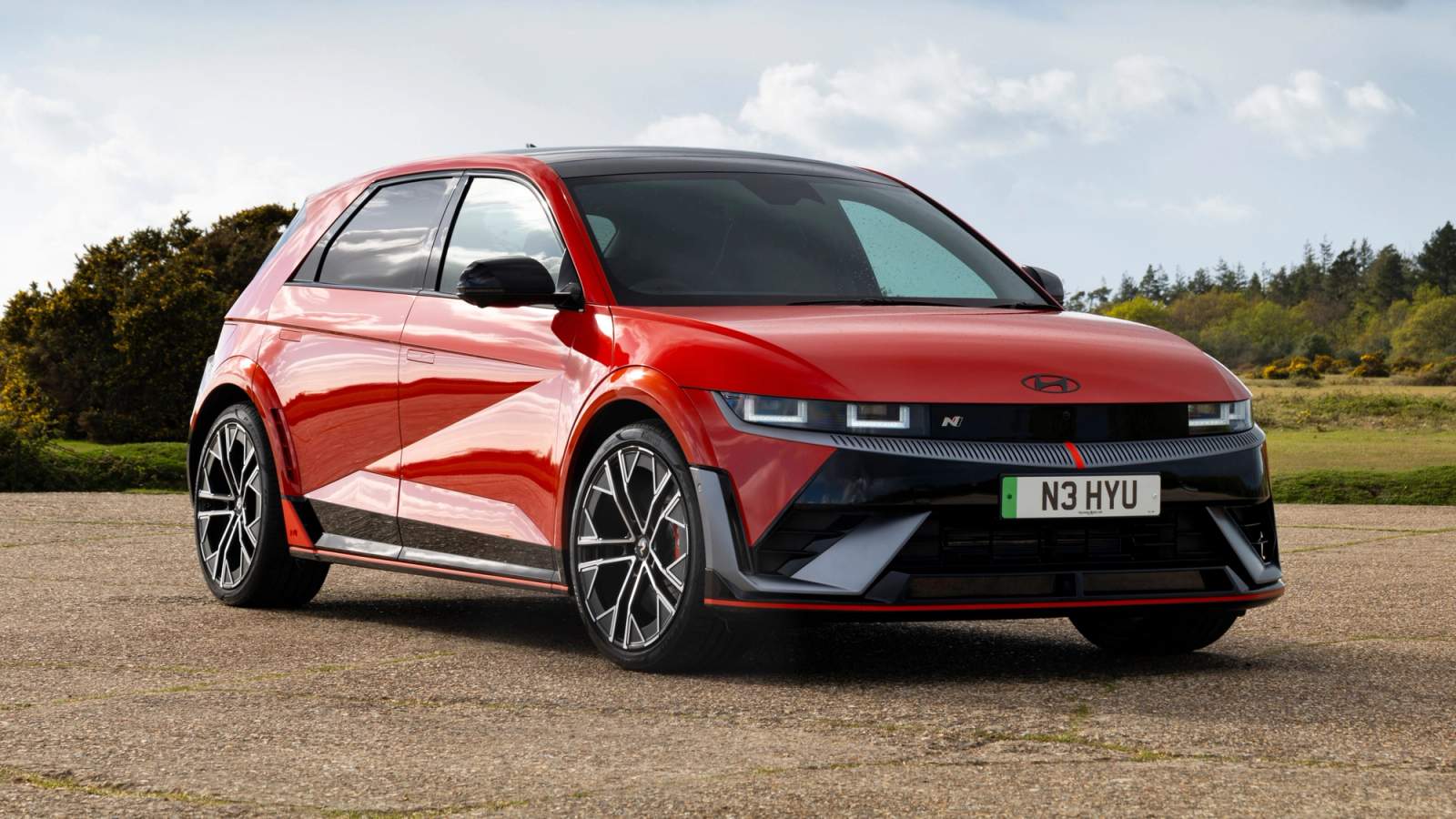
That’s not always the case, though – many hardcore driving enthusiasts lament the loss of the manual transmission, and some manufacturers, such as BMW, have brought them back in small numbers, often as an option at extra cost. There are even some EVs that are bringing simulated manuals to market, which can be toggled on and off via in-car settings, such as the Hyundai Ioniq 5 N.
Is the manual car dying out?
Honestly? In the new car market, it's heading that way. The trajectory is clear: fewer models, fewer trim levels and engine options, fewer markets. According to data from industry analysts, the proportion of new cars sold with a manual gearbox in Western Europe has fallen sharply over the past decade, and that decline shows no sign of reversing.
The UK's upcoming ban on new petrol and diesel car sales (currently under review but still a working target) will accelerate things further. When the switch to electric is complete, the traditional manual gearbox disappears with the combustion engine.
That doesn't mean manuals are gone tomorrow. They'll remain available in certain segments, especially among entry-level city cars, some performance models, and commercial vehicles, at least for the foreseeable future. But describing them as mainstream in new cars would be a stretch.
Why do manual cars still have their fans?
Talk to anyone who genuinely loves driving and they'll probably have something to say about automatics. The connection between driver and car, the feel of selecting the right gear and the satisfaction of a well-timed downshift isn't something that translates through a paddle shift.
There's also the cost argument. Manual cars have historically been cheaper to buy, cheaper to insure, and cheaper to repair. While that gap has narrowed, it hasn't disappeared entirely.
For some drivers, it's simpler than that: they learned in a manual, they're comfortable in a manual, and they don't see a compelling reason to change. That's a perfectly reasonable position, and one that plenty of drivers hold firmly. There are also studies to suggest that driving a manual keeps certain drivers more alert and in tune with their driving, as it activates parts of the brain that would otherwise not be used. That might stop a driver getting complacent or drifting off – having to plan for a downshift as you approach a corner or junction, for example, keeps you planning ahead and noticing the changes in road conditions that you might not otherwise.
Prefer a manual? The used car market is your best bet
If you want a manual gearbox and you're shopping for a new car, your options are shrinking fast. But the used car market? That's a different story entirely.
Millions of manual cars are on the road right now, and a good number of them are available to buy, often at a much lower price point than their automatic equivalents. Buying used means you're not limited by what manufacturers have decided to put in their current lineup. You can choose the car you actually want, with the gearbox you actually prefer.
Why Cazoo is a great place to find a used manual car
Cazoo offers a wide range of used manual cars across all makes, models, and price ranges all available to browse online from the comfort of wherever you happen to be.
You can filter by transmission type to find manual cars specifically, which makes the whole process a lot quicker than trawling dealership forecourts.
What are the benefits of buying a used manual car from Cazoo?
- Wider choice: The used market includes models that were never offered as automatics, as well as popular cars that no longer come with a manual option in their current generation.
- Better value: Used cars cost less than new ones. A well-chosen used manual can offer excellent value, particularly if fuel economy and lower insurance premiums matter to you.
- Transparency: Cazoo provides full vehicle details upfront, so you can make an informed decision without pressure.
Browse used manual cars on Cazoo
Frequently asked questions
Why are most new cars now automatic?
Most new cars are automatic because modern automatic gearboxes offer better on-paper fuel efficiency, faster gear changes, and greater driving convenience than older automatics. Combined with the rise of electric vehicles which have no traditional gearbox and falling consumer demand for manuals, manufacturers have increasingly dropped manual transmission options from their lineups.
Are manual cars being phased out?
Manual cars are declining in the new car market, particularly in Europe and North America. The UK's target to phase out new petrol and diesel car sales will eventually remove traditional gearboxes from new vehicles entirely. However, manual cars remain widely available in the used car market.
Is an automatic car better than a manual for fuel economy?
Modern automatics with eight or more speeds often match or outperform manuals on fuel economy on paper.. Older automatics were less efficient than manuals, but that gap has largely closed with advances in transmission technology and lab testing does advantage automatic transmissions. The reality is that your driving style makes the biggest difference to fuel economy, and in some cases you might even achieve better fuel economy returns by driving a manual as economically as you can.
Can I still buy a new manual car in the UK?
Yes, though your options are limited. Some entry-level cars and certain performance models still offer manual gearboxes, but the number of models available with a manual is shrinking each year. The used car market offers a much wider selection of manual vehicles.
Where can I find a good used manual car?
Cazoo offers a wide range of used manual cars across different makes, models, and budgets. You can filter by transmission type and browse detailed vehicle information all online.
Why do some drivers prefer manual cars?
Manual cars give drivers more direct control over gear selection, which many find engaging and enjoyable. They also tend to be cheaper to buy, insure, and repair than automatics, making them an appealing choice for drivers who prioritise cost-efficiency or simply prefer the driving experience a manual offers.