What does my number plate mean?: UK number plate guide
UK number plates follow a structured format that encodes where and when a car was registered. The current system was introduced in September 2001 uses a two-letter area code, a two-digit age identifier, and three random letters. Reading it correctly takes about 30 seconds and tells you whether the seller is being straight with you about the car's age.

Charlie Harvey
Published on 24 July 2026 | 7 mins read
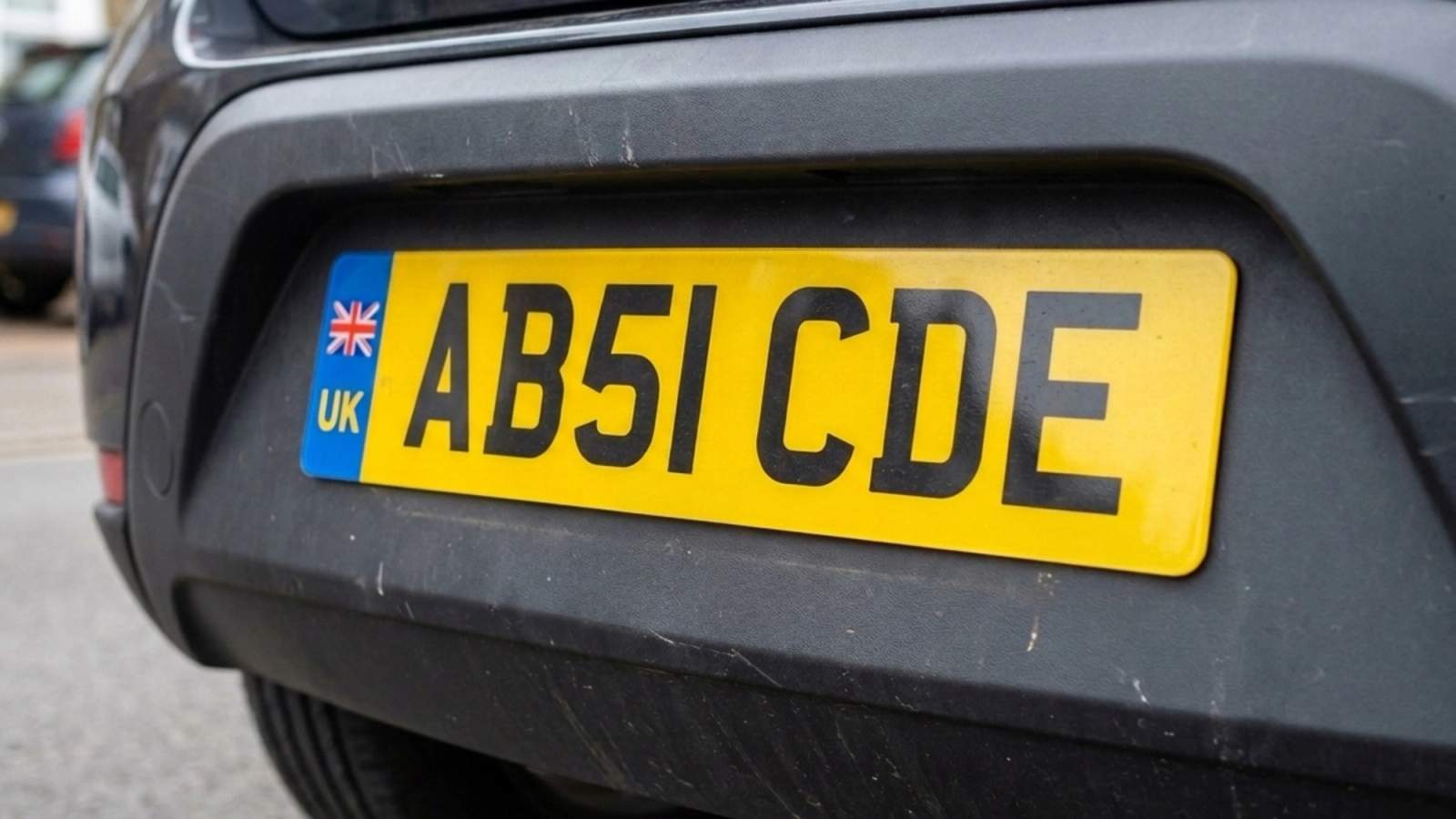
When you're standing in a driveway looking at a used car, most of what the seller tells you is unverifiable on the spot. The age of the car is not. It's printed on the number plate. Knowing how to read it is one of the quickest checks available to any buyer, and one of the most overlooked.
Misrepresenting a car's age is one of the more common forms of used car fraud in the UK. A car registered in September reads as newer than one registered in March of the same year, even though they may have rolled off the same production line weeks apart. Private sellers and dealers both understand this. Buyers who don't understand the plate format are at a disadvantage before the negotiation begins.
This guide explains how UK number plates work, starting with the current format used on most cars you'll encounter, and what each section tells you about the vehicle's history.
How to read the current UK number plate format (post-September 2001)
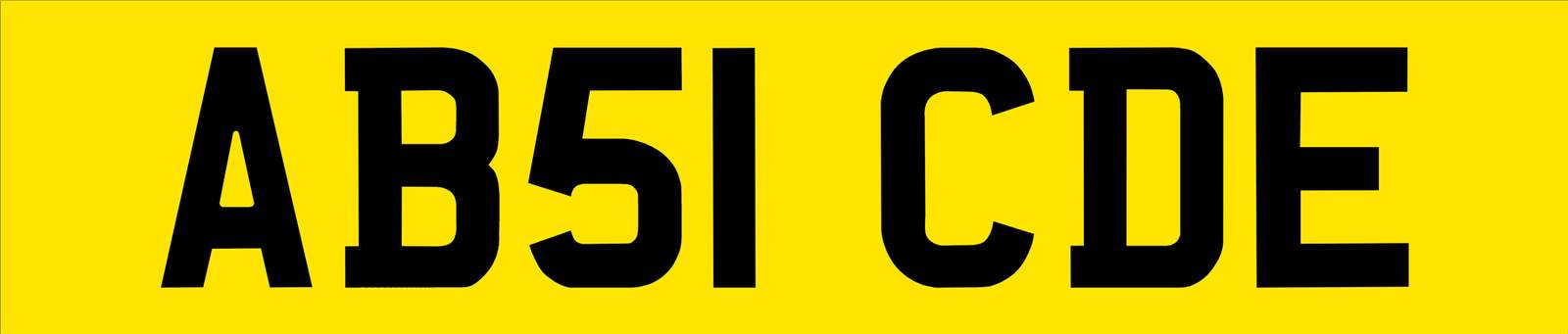
The current UK number plate format was introduced in September 2001 and applies to all cars registered from that point. It follows this structure:
AB51 CDE
There are three distinct sections, each carrying specific information.
- The first two letters — the local memory tag — indicate where the car was first registered
- The two numbers — the age identifier — indicate when it was registered
- The final three letters — random — carry no specific meaning and simply make each plate unique
That's the full structure. The rest is understanding what each section actually tells you.
What the age identifier tells you: March and September registration plates
The two-digit number in the middle of a current-format plate is the age identifier. It tells you which six-month registration period the car belongs to.
The UK splits each year into two registration periods:
- March registrations: The age identifier is the last two digits of the year. A car registered in March 2019 carries the identifier 19.
- September registrations: The age identifier is the last two digits of the year, plus 50. A car registered in September 2019 carries the identifier 69.
So a plate reading AB19 CDE was registered between March and August 2019. A plate reading AB69 CDE was registered between September 2019 and February 2020.
This distinction matters. A car described as a "2019 car" could be an early 2019 model (March registration, 19 plate) or a late 2019 model (September registration, 69 plate). Both are technically correct. But a 69-plate car registered in September 2019 is effectively six months newer than a 19-plate car from March of that year. On a car with significant mileage or wear, six months is not nothing.
The table below shows age identifiers for recent years:
| Year | March Plate | September Plate |
| 2020 | 20 | 70 |
| 2021 | 21 | 71 |
| 2022 | 22 | 72 |
| 2023 | 23 | 73 |
| 2024 | 24 | 74 |
| 2025 | 25 | 75 |
| 2026 | 26 | 76 |
If the number on the plate doesn't correspond to a real registration period, something is wrong with the plate.
What the local memory tag tells you: where the car was registered
The first two letters on a current-format plate indicate the DVLA local office where the car was originally registered. The first letter identifies the region; the second narrows it down to a specific office within that region.
Regional first letters:
| Letter | Region |
| A | Anglia (East England) |
| B | Birmingham |
| C | Cymru (Wales) |
| D | Deeside (NW England/NE Wales) |
| E | Essex |
| F | Forest & Fens (East Midlands) |
| G | Garden of England (SE England) |
| H | Hampshire & Dorset |
| K | Luton & Northamptonshire |
| L | London |
| M | Manchester & Merseyside |
| N | North (NE England) |
| O | Oxford |
| P | Preston (NW England) |
| R | Reading |
| S | Scotland |
| V | Severn Valley |
| W | West of England |
| X | Special series |
| Y | Yorkshire |
So a plate beginning with LA through LY was registered in London. A plate beginning with SA through SY was registered in Scotland.
Why does this matter for buyers? It doesn't change the car's mechanical condition. But it can help verify a seller's story. If a seller says the car has spent its entire life in rural Yorkshire, but the plate starts with L, it was registered in London. That's not necessarily a problem, but it's worth knowing before you take the story at face value.
It also gives you context when running a history check. A car that's changed hands several times across different regions may have a more complicated background than one with a single local owner.
What is a Q plate?
You may have noticed some cars’ number plates start with a Q. These are known as ‘Q plates’ and are special registrations that are given to the following sorts of cars:
- Kit Cars: Cars that were assembled at home – many carmakers sell kits with all the parts needed to build a car, which hobbyists can assemble at home.
- Radically Modified Cars: Vehicles that have undergone extensive modification, including major structural, chassis, engine, or suspension changes.
- Imported Vehicles: Some, but not all imported vehicles can end up with a Q plate if they have incomplete historical documentation.
- Ex-Military Vehicles: Vehicles that used to be owned by the Ministry of Defence may have a Q plate because their production history is classified.
Northern Ireland number plates
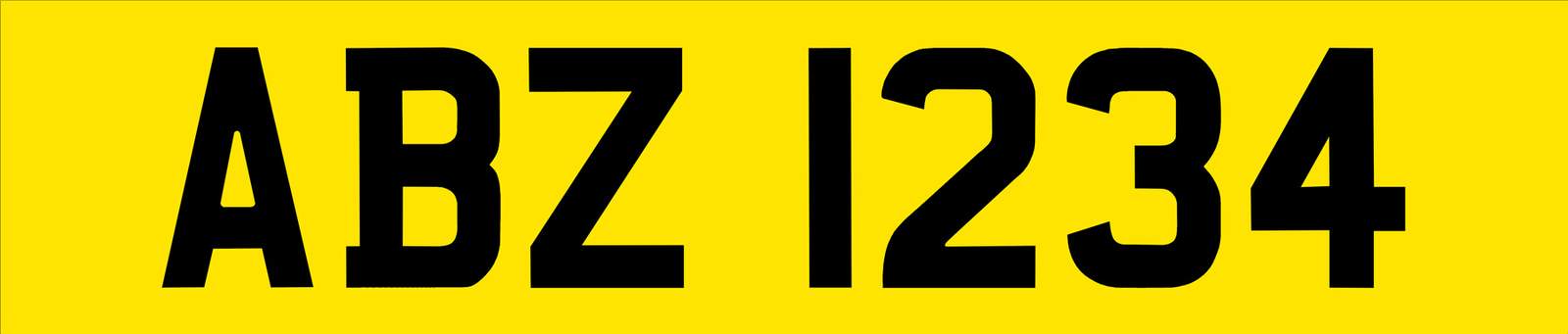
Northern Ireland uses a different format from the rest of the UK, both historically and at present. Current Northern Ireland plates follow the structure ABC 1234D — three letters, up to four numbers, then a final letter.
The first two letters identify the DVLA office in Northern Ireland where the car was registered. The number and final letter provide additional identifiers. Unlike Great Britain plates, the format does not encode the registration year, so the plate itself won't tell you when the car was first registered.
For any used car with a Northern Ireland plate, check the V5C directly for the registration date.
Why this all matters when buying a used car
The number plate is one of the few pieces of information about a used car that is independently verifiable before you pay for anything. Here's where it's specifically useful:
Verifying the car's age. The age identifier is stamped on the plate and registered with the DVLA. If a seller claims a car is a "2022 model" but the plate carries an identifier of 21, the car was registered in March 2021 — not 2022. These discrepancies happen often, sometimes accidentally, sometimes not.
Checking for misrepresentation. A plate that doesn't match the claimed registration year is a concrete, verifiable inconsistency. You don't need a mechanic to spot it.
Valuation. Used car prices are sensitive to registration year. A car registered in September 2021 (71 plate) will generally be priced higher than an otherwise identical car registered in March 2021 (21 plate), even with comparable mileage. Knowing what the plate actually says puts you in a position to question pricing that doesn't reflect reality.
Identifying transferred plates. Not every plate on a car is original. Private plates are often transferred from one car to another, which means the plate may give you no information about the car's age at all. If a plate looks unusual, doesn't follow the standard format, or the age identifier doesn't match what the seller is claiming, ask for the V5C logbook and cross-reference the registration date directly.
Even with personalised number plates, if the third and fourth digits (the year identifier) are newer than the car’s actual age, the plate cannot legally be put on the car – this is to stop sellers pretending a car is newer than it actually is.
Registrations are also tied to VIN numbers stamped in various places on the car (this varies depending on the model.) The same VIN should also be listed on the V5C along with the number plate registration, so it’s worth taking a look at this and cross-referencing to ensure a false newer number plate hasn’t been put on the car.
Older UK number plate formats
If you're buying an older car, the current format won't apply. Here are the three preceding systems you're likely to encounter.
Prefix format (1983–2001): e.g. A123 BCD
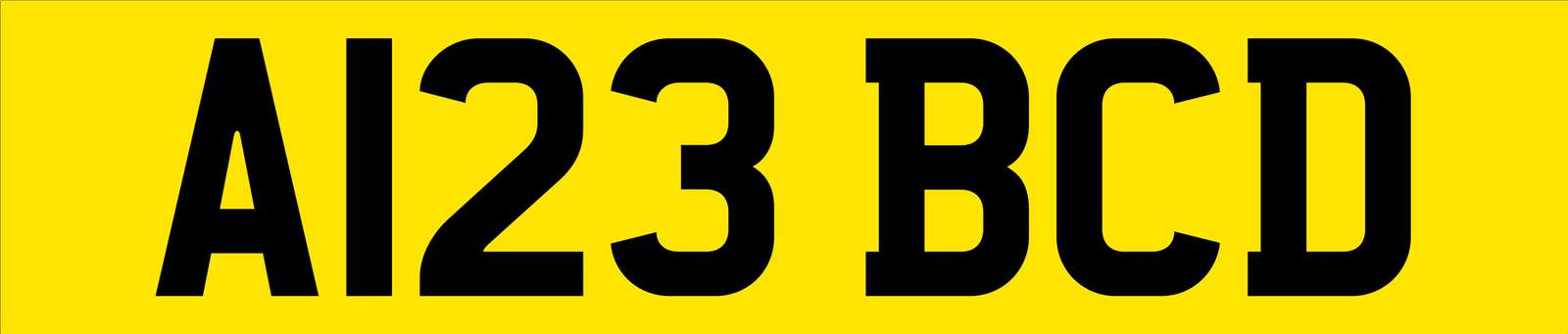
The prefix format reversed the structure, placing the year letter at the start. It ran from 1983 until the current system replaced it in September 2001. A plate beginning with A was registered between 1st August 1983 and 31st July 1984, and so on; Y was the final prefix letter, used for cars registered in 2001.
Confusingly, some of these can also be just five or six characters long, because the DVLA issued between one and three random numbers after the initial letter.
The final two letters of the registration plate also denoted the area where the car was registered (‘AB’ for London, for example).
A car carrying the plate P456 DEF was registered between August 1996 and July 1997.
Suffix format (1963–1983): e.g. ABC 123D

The suffix format ran from 1963 to 1983. The letter at the end — the suffix — indicates the year of registration. A was used for 1963, B for 1964, and so on through to Y for 1982. The preceding letters and numbers are the area code and serial number.
A car carrying the plate XYZ 999S was registered between August 1977 and July 1978.
You may also notice some cars with registrations from this period have black and silver plates front and back. These were changed in 1973 to be white with black text on the front and yellow with black text on the back, but historic vehicles from before 1975 are still permitted to have black and silver number plates for a period-correct feel. You may have to advise the DVLA beforehand to do this. More information on that here.
Dateless plates
Dateless plates predate the suffix system and carry no year information in the format itself. Many are now used as private plates precisely because they give nothing away about a car's age. If you see a plate that doesn't follow any of the above formats, it is either dateless or a private plate. In either case, the V5C logbook is the only reliable source for the registration date.
Personalised and private number plates
Private number plates — also called cherished plates or personalised registrations — are plates purchased separately and transferred onto a vehicle. They are legal and common. They are also, from a buyer's perspective, a source of confusion.
A private plate tells you nothing about the car's age. The plate may have been issued decades ago, transferred through several vehicles, or purchased specifically to obscure the car's registration year. This is not always the intent; plenty of people buy private plates simply for personal reasons, but the effect is the same.
If a car carries a private plate, the only way to verify the registration date is to check the V5C logbook, which records the date of first registration separately from the plate. Cross-reference this with an independent history check before proceeding. A personalised plate with a newer year identifier (the third and fourth digits) cannot be put onto an older car.
For example, if I wanted a plate that reads CH42 ZZA, I’d have to wait until I bought a brand new car in 2042, presuming the plate system remains the same by then!
What to do before buying any used car
Reading the number plate takes 30 seconds. It tells you the registration period and in most cases where the car was first registered. That information costs nothing to verify and can immediately flag inconsistencies in what a seller is claiming.
It won't tell you about the car's service history, previous accidents, or outstanding finance. For that, you need a full vehicle history check. But as a first filter that you can run standing on the pavement before you've even opened the door, it's one of the most direct tools a buyer has.
Browse used cars and check the plate before you check anything else. If you want any more information, there are plenty of online checkers where you can type in the registration of a car which will bring up details like the make, model and year of manufacturer, as well as MOT history and more.
Frequently asked questions
How do I find out what year my car was registered from the number plate?
On current-format plates (post-September 2001), look at the two digits in the middle. If the number is 50 or below, the car was registered in March of the corresponding year (e.g. 23 = March 2023). If the number is 51 or above, subtract 50 to get the year and note that it was registered in September (e.g. 73 = September 2023).
If the second character on the plate is a number, rather than a letter, you’re likely dealing with a car older than 2001, and should follow the older format to get the information you need.
Can a number plate tell me where a car was originally registered?
Yes, on current-format plates. The first two letters are the local memory tag, the first letter indicates the broad UK region, and the second narrows it down to a specific DVLA local office. This tells you where the car was first registered, not where it has been since.
What does it mean if a car has a private number plate?
A private plate has been purchased separately and transferred onto the vehicle. It carries no information about the car's registration date or origin. Always check the V5C logbook for the date of first registration if the car has a private plate.
Why don't Northern Ireland plates follow the same format as the rest of the UK?
Northern Ireland’s number plate registration system dates back to the same one that was used across the UK from 1904. When Ireland split from Northern Ireland in the 1920s, Northern Ireland chose to keep the system, which uses some letters to identify certain regions where a car was registered. When the UK ran out of combinations in 1963, there were plenty left for Northern Ireland, so there was no need to change it.
Northern Ireland uses a separate DVLA system with its own plate format: three letters, up to four numbers, and a final letter. The format does not encode the registration year. If you're buying a car with a Northern Ireland plate, check the V5C for the registration date.
What is a dateless number plate?
A dateless plate predates the suffix system introduced in 1963. Because the format carries no year information, dateless plates are often used as private plates. The V5C is the only reliable source of registration date for any car carrying one.
How do I check if a number plate matches the car it's on?
Cross-reference the plate against the V5C logbook. The V5C records the registration number, registration date, and vehicle identification number (VIN). If any of these don't match, treat it as a serious red flag.