Long-distance driving in an electric car: A charging guide
Planning a long trip in an electric car doesn't have to mean range anxiety. With a bit of planning around your route, charging stops and charging speeds, you can make any long-distance EV journey stress-free.
The Cazoo editorial team
Published on 31 July 2026 | 5 mins read
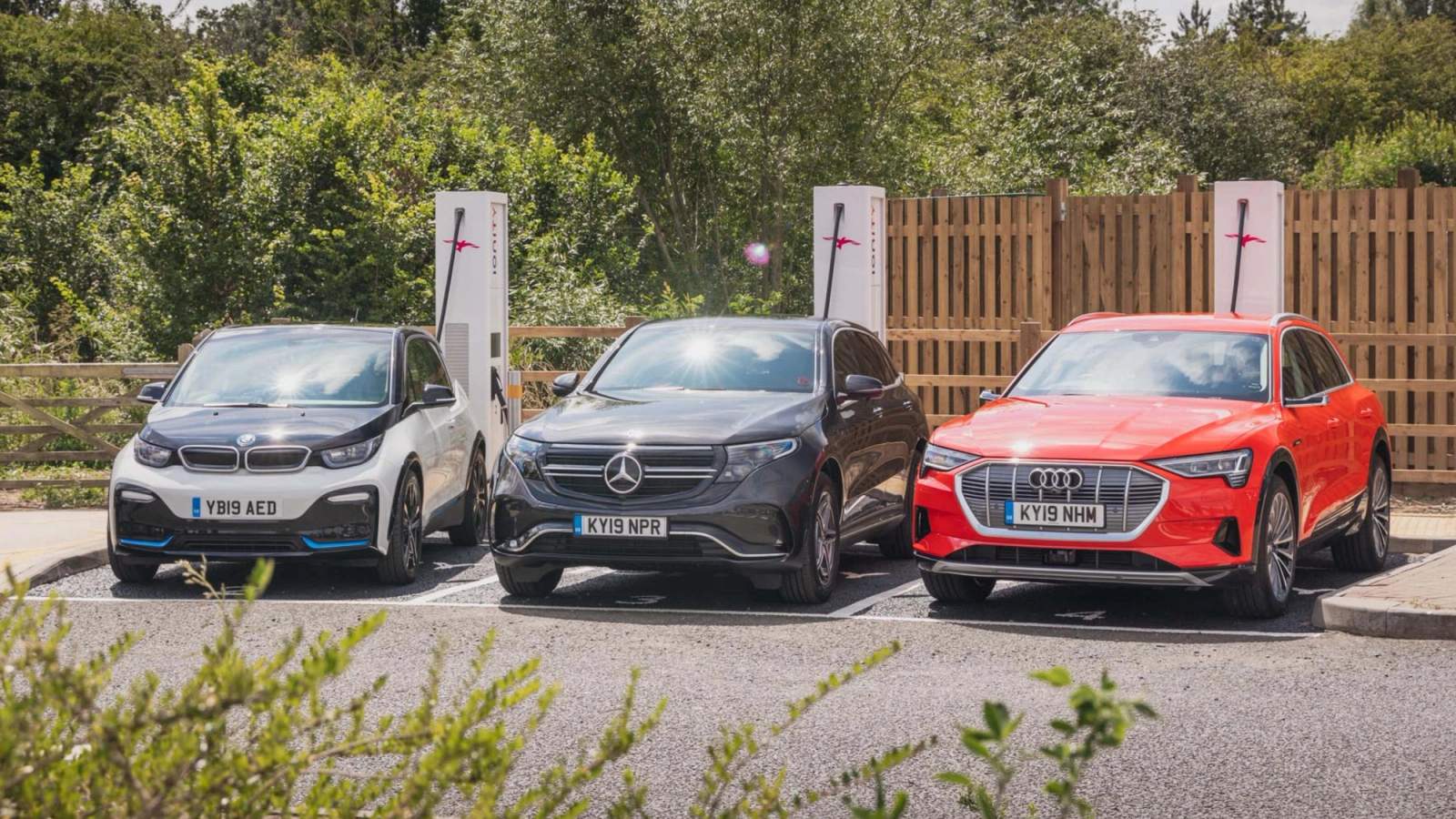
Long journeys used to be one of the biggest question marks for electric car owners, but with charging networks expanding fast and today's EVs offering more real-world range than ever, road trips are more straightforward than most people expect. A little planning goes a long way though, so here's what to consider before you set off.
If you're still weighing up whether an electric car is right for you, our guide to buying an electric car is a good place to start. If you've already made the switch, here's how to get the most out of a longer trip.
Know your real-world range
Most modern electric cars offer somewhere between 200 and 350 miles of range on a full charge, though the exact figure depends heavily on the model, the weather and how you drive. Motorway speeds, cold weather and a heavy right foot can all reduce your range noticeably compared with the manufacturer's official figure, so it's worth checking your car's live range readout rather than relying on the number quoted when it was new.
Our guide to electric car range has more detail on what affects range and how to get the most from a full charge, which is especially useful before a longer trip. A few simple habits can help too: removing a roof box or bike rack when you're not using it improves aerodynamics, and easing off to somewhere between 60 to 70mph on the motorway rather than pushing higher can make a noticeable difference over a long journey, without seriously affecting your ETA.
As a rule of thumb, it's worth planning to stop and charge once your battery drops to somewhere between 20 and 30 per cent, rather than pushing on and hoping you'll make it. This gives you a buffer if your first-choice charging stop turns out to be out of order or already in use when you arrive.

Plan your charging stops in advance
Rather than just heading off and hoping for the best, it's worth mapping out your route in advance using an app such as Google Maps, Zap-Map or A Better Routeplanner. These show live charger availability and status, so you can see whether a charger is actually working before you get there, rather than finding out when you arrive.
It's also worth having a backup charger in mind for each stop, just in case your first choice turns out to be broken, occupied or has a long queue. With more than 121,000 public chargers now installed across the UK, including over 27,000 rapid or ultra-rapid units, there are usually alternatives nearby if your first stop doesn't work out.
Most public chargers now accept contactless card payment as well as network apps, though it's still worth installing the relevant app and setting up your account in advance, as some rapid chargers are still app or membership-card only, or cost slightly more to use if you aren’t signed up.
Understand your charging speeds
Not all chargers are equal. Rapid chargers (50kW and above) and ultra-rapid chargers (150kW and above) are what you'll want for a long trip, as they can add roughly 150 to 200 miles of range in as little as 20 to 30 minutes, compared with several hours on a slower charger.
Charging speed also isn't constant. Most electric cars charge quickly up to around 80 per cent, then slow down considerably to protect the battery. On a long trip, it's often quicker overall to make two shorter stops between 20 and 80 per cent than to wait around for that last 20 per cent to trickle in.
Public rapid and ultra-rapid charging typically costs more than charging at home, roughly 55p to 92p per kWh compared with as little as 7p to 8p per kWh on a cheap home tariff. It's worth topping up as much as possible overnight before a long trip and treating public charging as a top-up rather than your main source of charge.
Make the most of your rest stops
A 20 to 30 minute charging stop lines up naturally with the breaks you'd want to take on a long drive anyway, whether that's stretching your legs, grabbing a coffee or letting the kids run around. Many EV drivers find that building in these regular stops actually makes long journeys feel less tiring than powering through in a petrol or diesel car.
If your car supports it, navigating to a rapid charger using the built-in sat nav can also help the battery precondition itself to the ideal temperature, so it's ready to charge at full speed the moment you plug in. Your EV will likely also have a charging limit that you can manually adjust, and it’s worth setting this appropriately. If you only need 60 per cent to get home, it’s worth setting the limit just above this so the charge stops automatically, saving you pricey extra charging if you are still enjoying a coffee or meal inside the services when it hits the target. Just be mindful, it’s good charging etiquette to unplug and move an EV soon after its charging session has finished, so that another EV driver can get a charge – in some cases there are even penalties for staying plugged in and ‘blocking’ a charger for too long after your charge has ended.
If you're planning a winter road trip, our tips for driving an EV in winter cover the extra checks worth making when the temperature drops.
Find your next electric car with Cazoo
We hope this guide has given you the confidence to plan your next long-distance trip in an electric car. If you're in the market for one, we work with a range of trusted dealers to help you find the right EV for your needs, with thousands of vehicles available to buy online.