How to get your car ready for summer road trips
Longer days and warmer weather mean it's road trip season, but summer puts real strain on your car's tyres, cooling system and engine oil too. Here's how to check your car is ready for the heat before you hit the road.
The Cazoo editorial team
Published on 31 July 2026 | 5 mins read

It's easy to assume winter is the toughest season for cars, but summer brings its own challenges. Hot tarmac, longer journeys and higher engine temperatures all put extra strain on your tyres, cooling system and oil, and a fault that's barely noticeable in cooler months can turn into a breakdown risk once the temperature climbs.
Whether you're planning a family holiday to Cornwall or just running errands in the heat, a few simple checks can help keep your car running reliably all summer long. Here's what to look out for – before you get going – to ensure your trip runs smoothly, without any unplanned detours or hiccups.
Check your tyres before you hit the road
Tyres are one of the first things to feel the effects of hot weather. As the temperature rises, so does the air pressure inside them. As a rule of thumb, every 10°C rise can increase pressure by around 1 to 2psi, and on a long, fast motorway drive in the height of summer, that figure can climb even further.
This is why it's worth checking your pressures when the tyres are cold, ideally before you've driven anywhere, rather than adjusting them straight after a journey when the reading will be artificially high. You'll find the correct cold pressure for your car in the handbook, on the fuel filler flap or on a sticker inside the driver's door sill.
It's also worth checking tread depth and condition. The legal minimum tread depth in the UK is 1.6mm, and you can get a rough idea using the 20p test: insert a 20p coin into the main tread grooves, and if you can see the outer band of the coin, your tread could be too worn. Look out for cracks, bulges or perishing in the sidewalls too, as expanding rubber in hot weather can turn an existing weakness into a blowout risk.
Keep an eye on your coolant
Your engine's cooling system works hardest in summer, when high ambient temperatures, stop-start traffic and long motorway stints all add to the load. If your coolant is low, or the mixture isn't right, your engine can run hotter than normal, increasing the risk of overheating and costly damage.
Most cars have a coolant reservoir under the bonnet with clear minimum and maximum markings, and the level should sit somewhere between the two. Always check this when the engine is completely cold, ideally before you've driven anywhere that day, as the system is pressurised when hot and can spray scalding coolant if you open the cap too soon.
Coolant is usually mixed 50/50 with water, which protects against both freezing and overheating. If you need to top up, use the correct type for your car and stick to that ratio. If your level keeps dropping, though, topping up alone won't fix it. That usually points to a leak somewhere in the hoses, radiator or radiator cap, so it's worth getting it looked at by a mechanic rather than simply refilling it again and again.
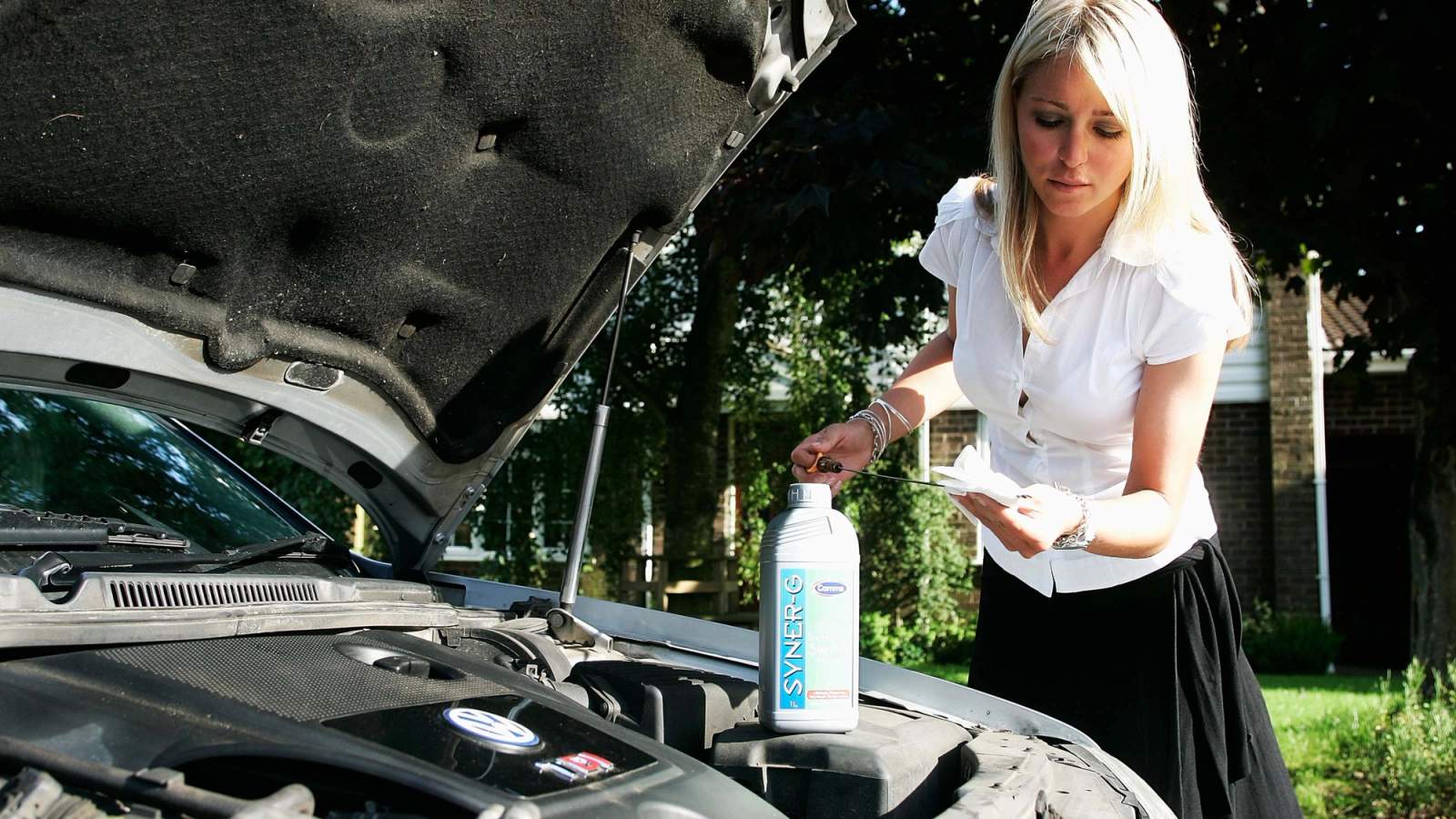
Don't overlook your oil levels
Engine oil thins as it heats up, and on longer journeys or in hot weather, it can thin out more than usual and burn off faster than it would in cooler conditions. If the level drops too low, your engine loses out on lubrication and cooling exactly when it needs it most, which raises the risk of wear and overheating.
Check your oil with the dipstick when the engine is cold and the car is parked on level ground, ideally first thing before you've driven anywhere. Wipe the dipstick clean, reinsert it fully, then pull it out again and check the level sits between the minimum and maximum marks. If you're planning a long road trip and your oil is due a change, it's worth getting this sorted beforehand rather than risking it running low hundreds of miles from home.
Test your air conditioning
Air conditioning isn't just about comfort on a hot day. It also helps keep you alert on long drives and demists the windscreen when it's humid. But AC systems aren't checked as part of an MOT or a routine service, so a fault can easily go unnoticed until the first heatwave of the year, exactly when you need it most.
Refrigerant gas naturally seeps out of the system over time, at a rate of around 10 per cent a year, so even a fault-free system will gradually lose some of its cooling power. Most manufacturers recommend having the system recharged every two to four years to keep it working efficiently, since this isn't something that's topped up automatically as part of a standard service.
It's worth testing your air conditioning before you need it. Turn it on and check that the air coming through the vents feels noticeably cold within a minute or so. Weak or lukewarm airflow, a musty smell, or a hissing or bubbling noise from under the bonnet can all be signs that the system is low on refrigerant or needs attention from a specialist. Running the air conditioning for a few minutes every couple of weeks, even outside of summer, also helps keep the seals lubricated so it's ready to go when the weather warms up.
Get road-trip ready
Once you've checked your tyres, coolant and oil, a few final checks can help your journey go smoothly. Test your air conditioning before you need it, top up your washer fluid, and pack a basic emergency kit with water, a torch and a phone charger, just in case. If you're planning a longer trip, our guide to motorway versus city driving has more tips on staying safe and comfortable on longer journeys.
A little preparation goes a long way. Spending ten minutes checking these three systems before a summer road trip could be the difference between a smooth journey and an unexpected stop on the hard shoulder.
Find your next car with Cazoo
We hope this guide has helped you get your car ready for summer. If you're thinking about upgrading before your next road trip, we work with a range of trusted dealers to help you find the right car for your needs, with thousands of vehicles available to buy online.