Abarth 600e review
The Abarth 600e certainly looks the part, and its striking presence alone could sway you, but a lacklustre range could be a dealbreaker

Author: Charlie Harvey
20th Jul 2026 – 15 mins read
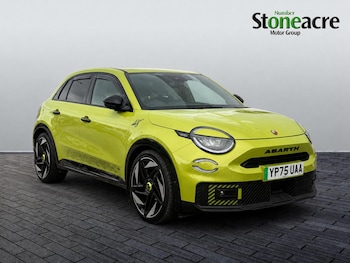
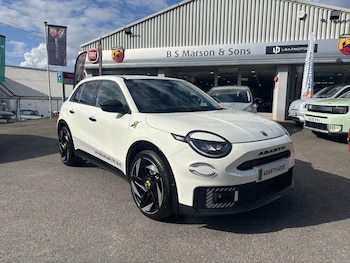
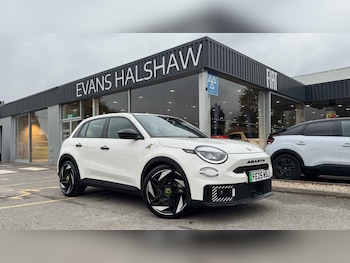
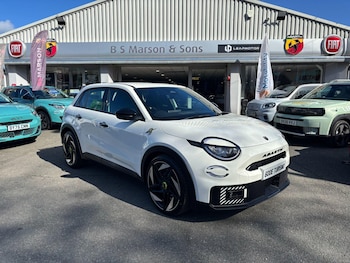
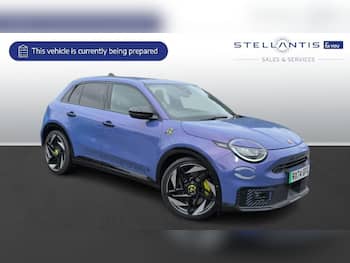
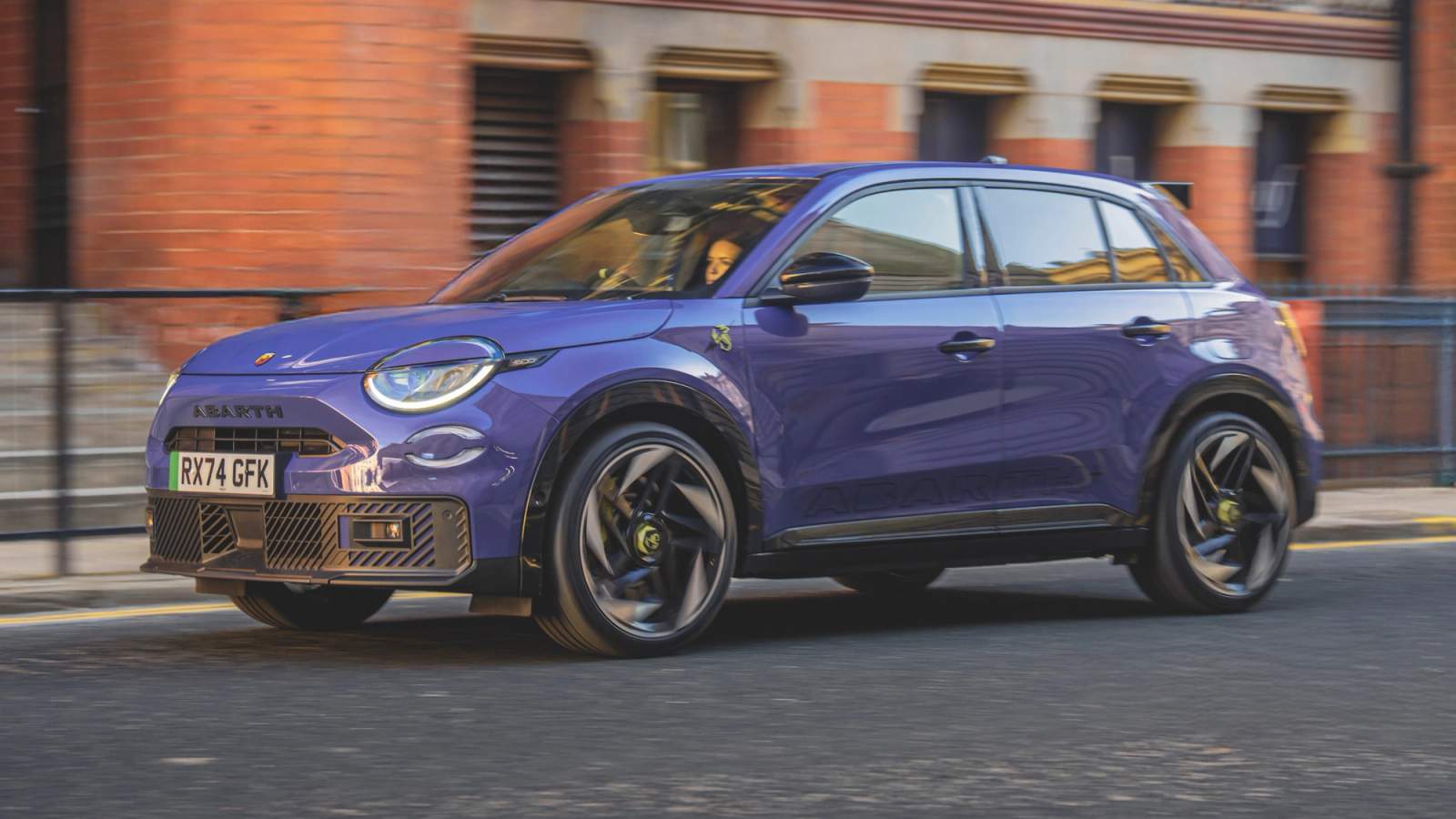
Following the launch of the Fiat 600 was the sporty Abarth version, known as the Abarth 600e. Unlike the Fiat 600, the Abarth 600e is offered solely as an EV, with a greater focus on driving feel, performance and fun. It certainly looks the part, because the aggressive body kit, large spoiler and giant wheels make it look like a scaled-up Hot Wheels toy. It really has presence on the road, and the lower stance completely transforms it when compared to the standard Fiat 600e. Once you get past that, though, the Abarth 600e is a mixed bag. While the interior quality feels much more premium compared with the standard Fiat, some of the important touchpoints still make use of cheap plastics which stick out next to the quality upmarket materials used elsewhere, such as the Alcantara on the steering wheel and seats. The Abarth 600e’s cheeky, fun side does come through, by way of the sound generator which emits a noise reminiscent of the burbling exhaust from an old petrol-powered Abarth 500, but the gimmick isn’t quite enough to make it an out-and-out driver’s car. Stiffer lowered suspension does improve driving feel compared with the spongey Fiat 600, but comfort is heavily compromised as a result. The steering still feels inconsistent and strange, and despite having an upgraded differential, the power through the front wheels seems to unsettle the car when you press on through corners. Living with the Abarth 600e might be a bit of a pain, too, because the real-world range of this EV is disappointing, especially if you use it as it’s intended, driving spiritedly through country backroads. Most of the time, you’ll be wanting to conserve range in the city in Eco mode, which heavily reduces performance. If you have a means to charge it cheaply at home via a home wallbox charger it will be cheap to run, but if you have to charge it on public street chargers or charging stations you’ll seriously have to weigh up whether living with an EV with such a short range works for you.
Pros
- Fantastic Hot Wheels-esque looks
- More engaging to drive than the Fiat 600e
- Fun and cheeky features, like the sound generator
Cons
- Some interior materials still feel low-end
- Skittish through corners when you put your foot down
- Range is very limited
Interior:
Dashboard & tech
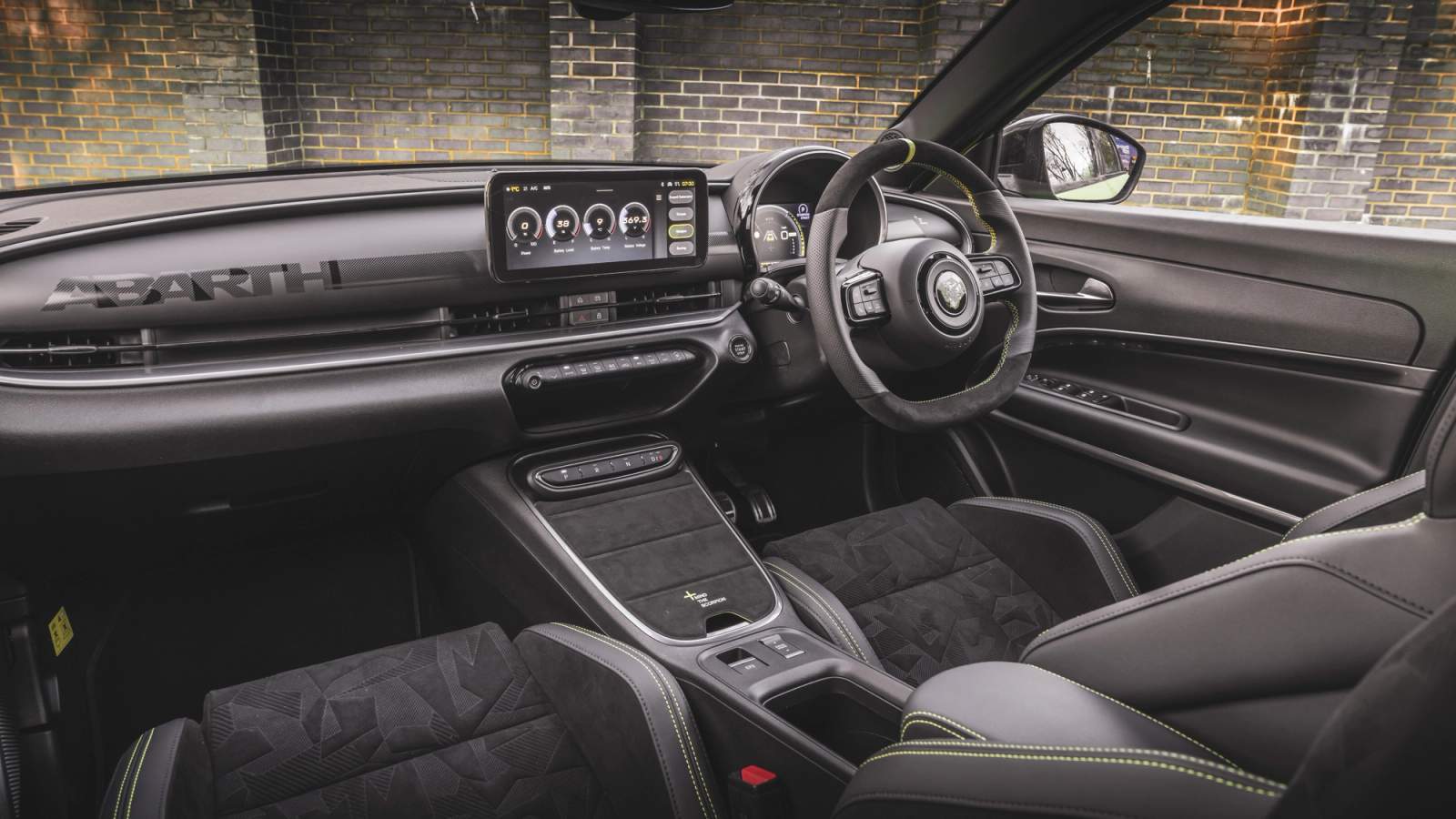
The Abarth 600e’s interior is based on the standard Fiat 600’s, which isn’t the best starting point. As it’s been out for a few years, the infotainment and digital gauge cluster tech isn’t the crispest, but it all works as you’d expect. In the Abarth, sportier, edgier graphics are used to make things look a little more unique, and you get a ‘Performance’ section on the home screen to access the sound generator option and other telematics, which might appeal to you if you’re a keen driver.
The infotainment also gets all the usual functions from the standard Fiat, including wireless Android Auto and Apple CarPlay – I prefer using these systems as the interface feels familiar and consistent if you’ve ever used it in another car. As in the Fiat, there’s always a virtual button in the top right-hand corner to switch in and out of the native system or this one, rather than having to navigate various submenus, which is a useful touch.
A set of piano-key-like physical buttons sit below the touchscreen so you can do so while driving with little distraction – this is much better than in other modern cars where it’s all accessed through the touchscreen, but I wish there were more physical switches.
It’s strange that the steering wheel controls incorporate an up/down switch for skipping and rewinding music, while the volume controls are individual buttons. It’s not very intuitive and would have made more sense for the volume to be controlled by the up and down switch so you can hold it, while the skip and rewind buttons make more sense as individual buttons.
Comfort
Compared with the standard Fiat 600, the Abarth 600e’s comfort is a little compromised in the name of sportiness. In my Competizione model, the seats had been traded for deep, supportive bucket seats – it did give a more purposeful driving position which was electronically adjustable, but they proved hard and uncomfortable on longer drives.
Alongside this, the Abarth 600e’s suspension is much firmer and the wheels are much larger than in the Fiat 600, so while you’re more connected to the road, you’re also more affected by its potholes around town.
Quality
The Fiat 600 serves as the basis on which the Abarth’s interior is built, which isn’t the best. While the design itself is charming, with swooping panels and round, retro-inspired binnacles and such, the material quality in the Fiat 600 is lacking when you take a closer look.
Happily, Abarth has definitely improved on this, with attractive, high quality materials including Alcantara around the steering wheel, centre tunnel cover and parts of the doorcards. A big, ‘Abarth’ graphic is plastered over the panel on the dash, and there are cheeky ‘Mind The Scorpion’ motifs (referencing Abarth’s scorpion badge) around the cabin, but the sense of quality is suddenly shattered when you touch the scratchy black plastics used on the majority of the doorcard panel and on the top of the dash. This really should have been swapped out from the standard Fiat 600.
As in the standard car, however, it’s at least all screwed together fairly well. I heard no squeaks or rattles in my test car, and that’s important in a quiet EV where these would be all the more noticeable.
Practicality & boot space:
Interior space
The Abarth 600 is marketed as a hot SUV, but the reality is that this doesn’t equate to the practicality you might expect of an SUV. Up front, space is satisfactory with the seats slid back, but rear-seat legroom is a bit lacking, made worse by the bucket seats in the Competizione version. If you need to give extra legroom for those in the rear by sliding the front seats forward, it can feel a little cramped all round. The floor is higher than you might expect, given the batteries in the floor of the 600e, and that’s why it feels more like a hatchback from the inside, rather than a high-up SUV. Headroom is plentiful in the 600e, which is a plus.
Boot space
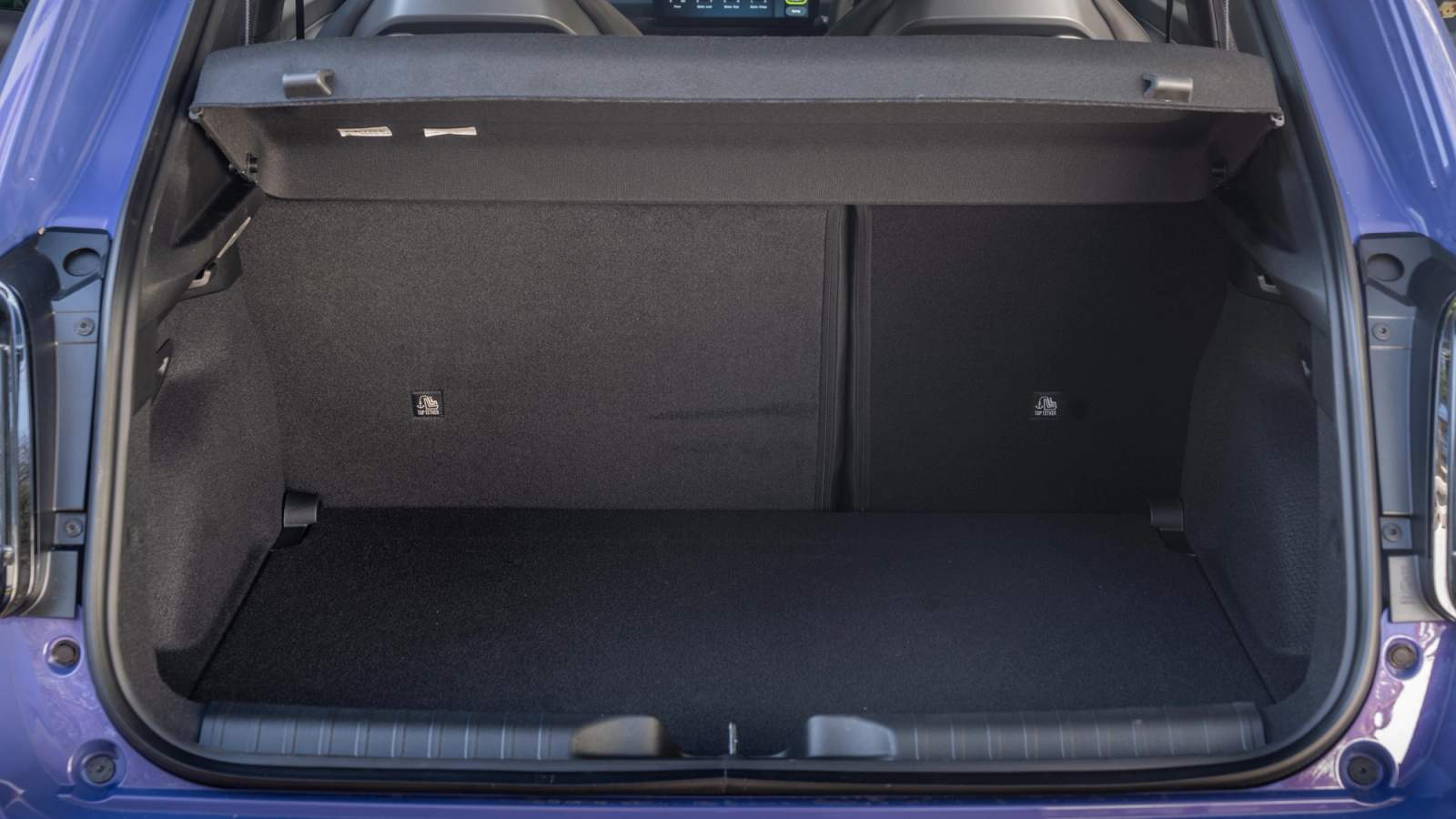
Like in the Fiat 600, the Abarth 600e’s boot space is a little disappointing. Most buyers will be fine with it for the weekly food shop, but if the reason to buy this hot SUV is for a cavernous load area, then you might feel let down. There’s just 360 litres to play with, although that’s a big chunk more than the 321 litres on offer in the Alpine A290 electric hot hatch.
The boot is a good shape, however, and the adjustable boot floor means you can eliminate any load lip, making it easier to get heavier items in or out. The hands-free powered tailgate is handy; with just a shake of your foot under the rear bumper, the boot opens and closes, which is just what you need when you’ve got your hands full.
Versatility
The Abarth 600e’s interior does include lots of useful storage space, although slightly fewer than in the Fiat 600. There’s a large centre console with adjustable dividers for large or small drinks bottles, and the doorcards are large enough for bottles, too. There’s also a deep bin just ahead of the wireless charge pad between the front passengers, with a simple Alcantara-lined foldable cover.
Because of the Competizione’s sporty bucket seats, there are no pockets in the back for rear-seat passengers, compared with those in the Fiat 600. In practice, I had issues with the wireless charge pad in the Abarth 600e, as well as in the standard 600. While it said my Samsung smartphone was charging, it ended up running out of juice on a long run, with Android Auto disappearing from the infotainment display – that meant I had to listen to good old fashioned radio, and was grateful for the in-built sat nav. It’s hard to say whether this was a problem with the car’s charge pad or my phone, but even when I removed my phone’s cover the problem persisted.
Driving:
Driving experience
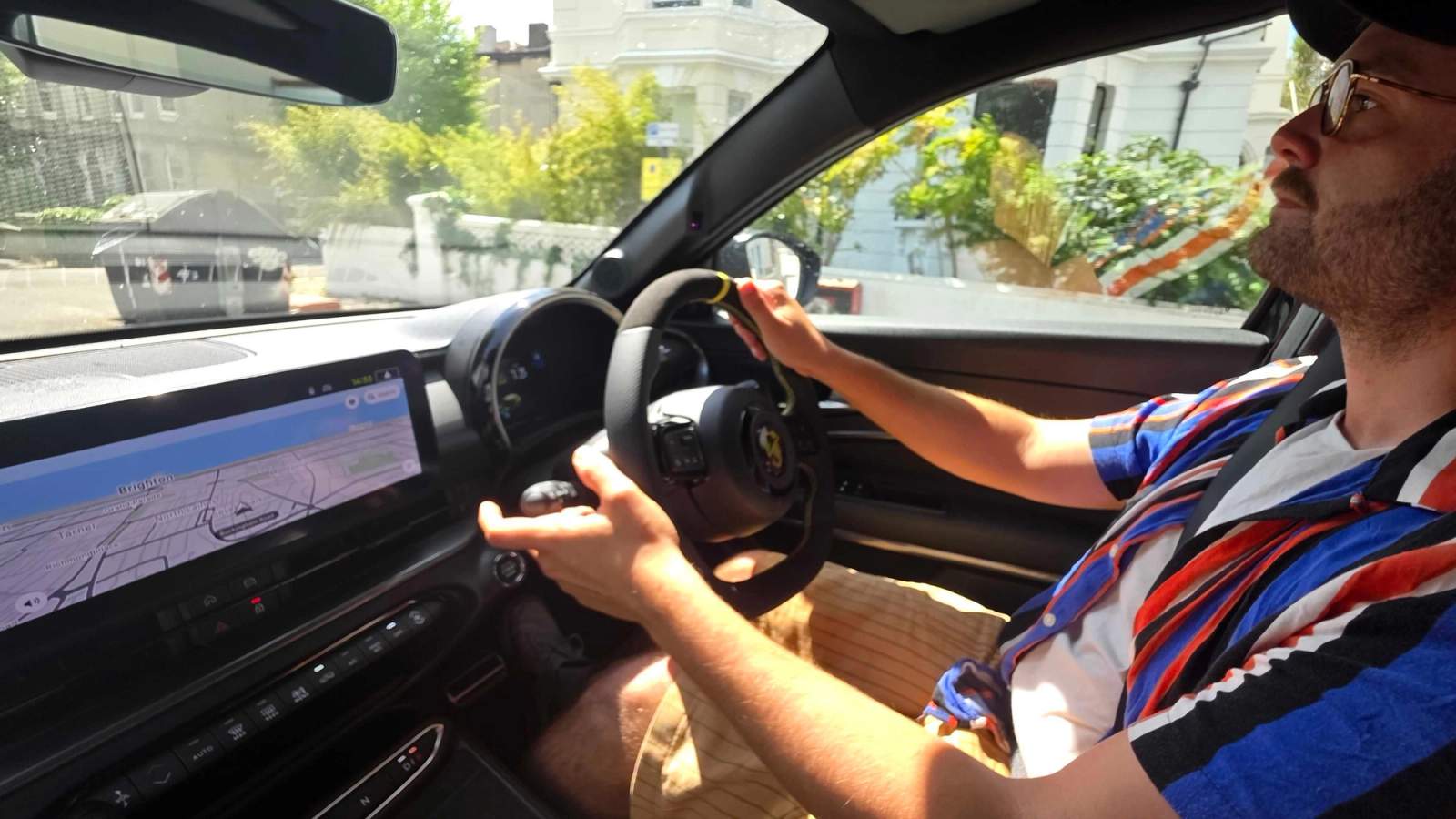
Here’s the main unique selling point of going for the Abarth 600e over its Fiat cousin, but the execution is a bit of a mixed bag. First of all, the Abarth 600e does feel like a completely different car to drive. The moment you step into it, the view from the cockpit is much more on par with that of a hatchback, thanks to the lowered suspension and the deep bucket seats make the Abarth feel purposeful and sporty.
The steering is much heavier than that of the Fiat 600, which is meant to make the car feel more responsive when winding through country lanes at speed. While the Abarth 600e does come with a more sophisticated differential that’s designed to eliminate that pulling feeling as you speed through corners, the 600e still felt rather skittish, and the steering felt as though it constantly required adjustments mid corner.
Compared with the standard Fiat 600, at least, there was much more communication through the wheel when on the move. The problem is that that does come at the expense of comfort. The suspension is hard, so you feel every pothole, especially on poor UK roads. That’s not helped by the large wheels and low-profile tyres on the Abarth, either.
On a long motorway run, the Abarth 600e’s ride did feel smoother and I didn’t feel significantly fatigued by the hard ride by the end of it, but that’s more likely down to the better state of motorway tarmac compared with the roads in the city.
Performance
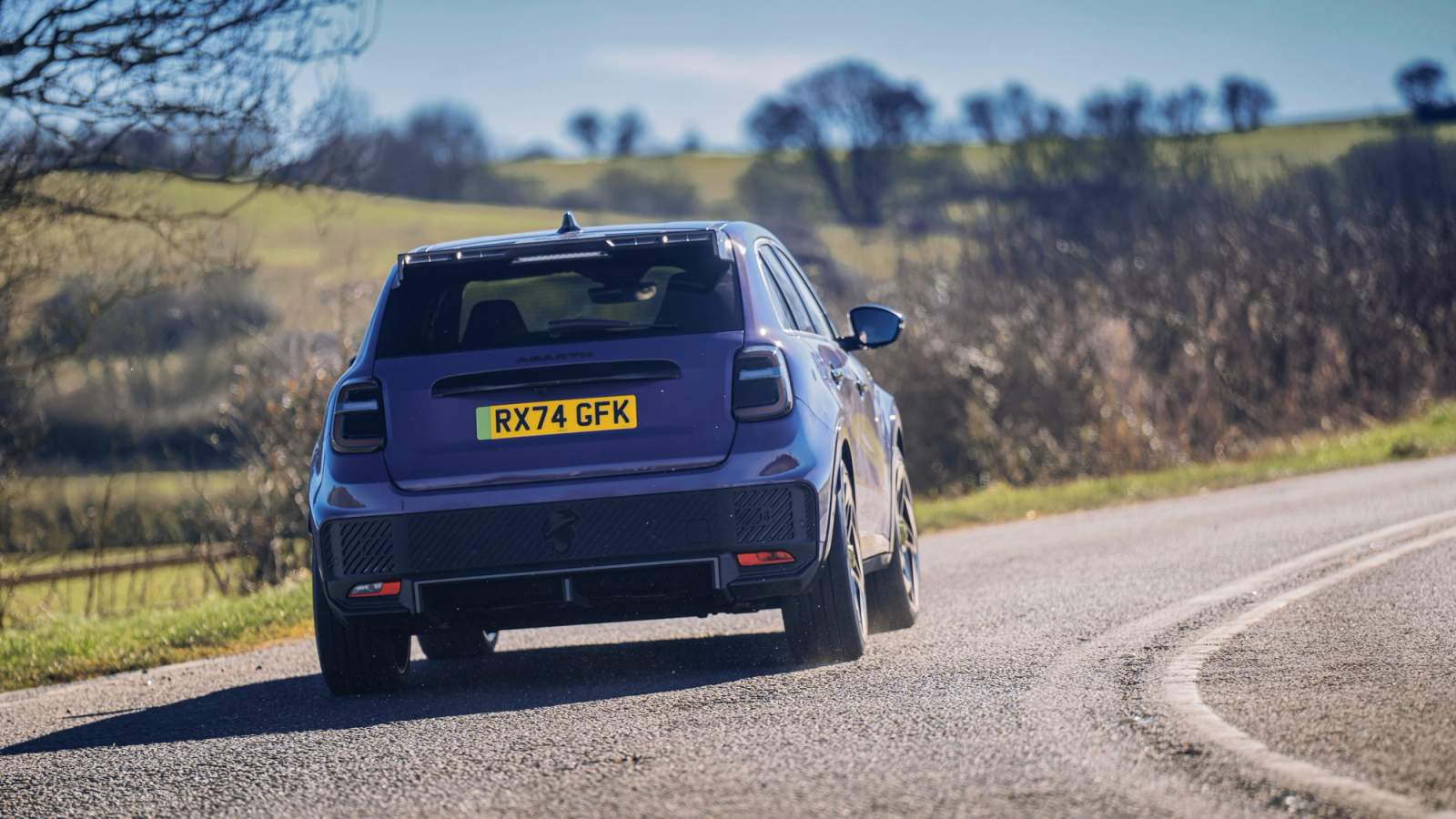
The Abarth 600e comes in two power outputs: 240bhp on the standard Turismo version, or 280bhp on Competizione models. These are both EVs, so unlike the standard Fiat 600 there is no option of hybrid or petrol power.
The Turismo will accelerate from 0-62mph in 6.2 seconds, while the Competizione’s more potent motor will do the same sprint in 5.6 seconds. That’s much quicker than in the standard Fiat 600e, which will do the sprint in about eight seconds, but it doesn’t feel as quick as some other rapid EVs. The goal here was to make a car with acceleration figures more akin to a hot hatch.
Switching between Eco, Scorpion Street and Scorpion Track really does make a difference to the car’s driving characteristics and performance, with power limited until you switch to the sportiest Track setting.
When you’re not putting your foot down, the car still has the familiar gauges showing when you’re driving economically or not, to help preserve range when you need to. There are different driving modes you can toggle between – the car starts in ‘Scorpion Street’ by default, but if you need to conserve some range, a button to your left can switch to ‘Eco’, which limits power and climate control to conserve electricity. Fancy going for it? Click up on the button and you can go into ‘Scorpion Track’, which gives you the full works, and the readouts adjust the estimated range figures accordingly.
Running costs:
Fuel economy & CO2 emissions
The great news is that the Abarth 600e, being a full EV, has zero tailpipe emissions, which will appeal to you if you’re eco conscious but also want a car with performance credentials. Unfortunately, the Abarth 600e’s range figures are rather disappointing. On paper it will do up to 207 miles on a charge, but this will depend on you driving it carefully and in one of the more sedate drive modes. The official figure on a full charge dropped to about 160 miles or so when I put the car into Scorpion Track.
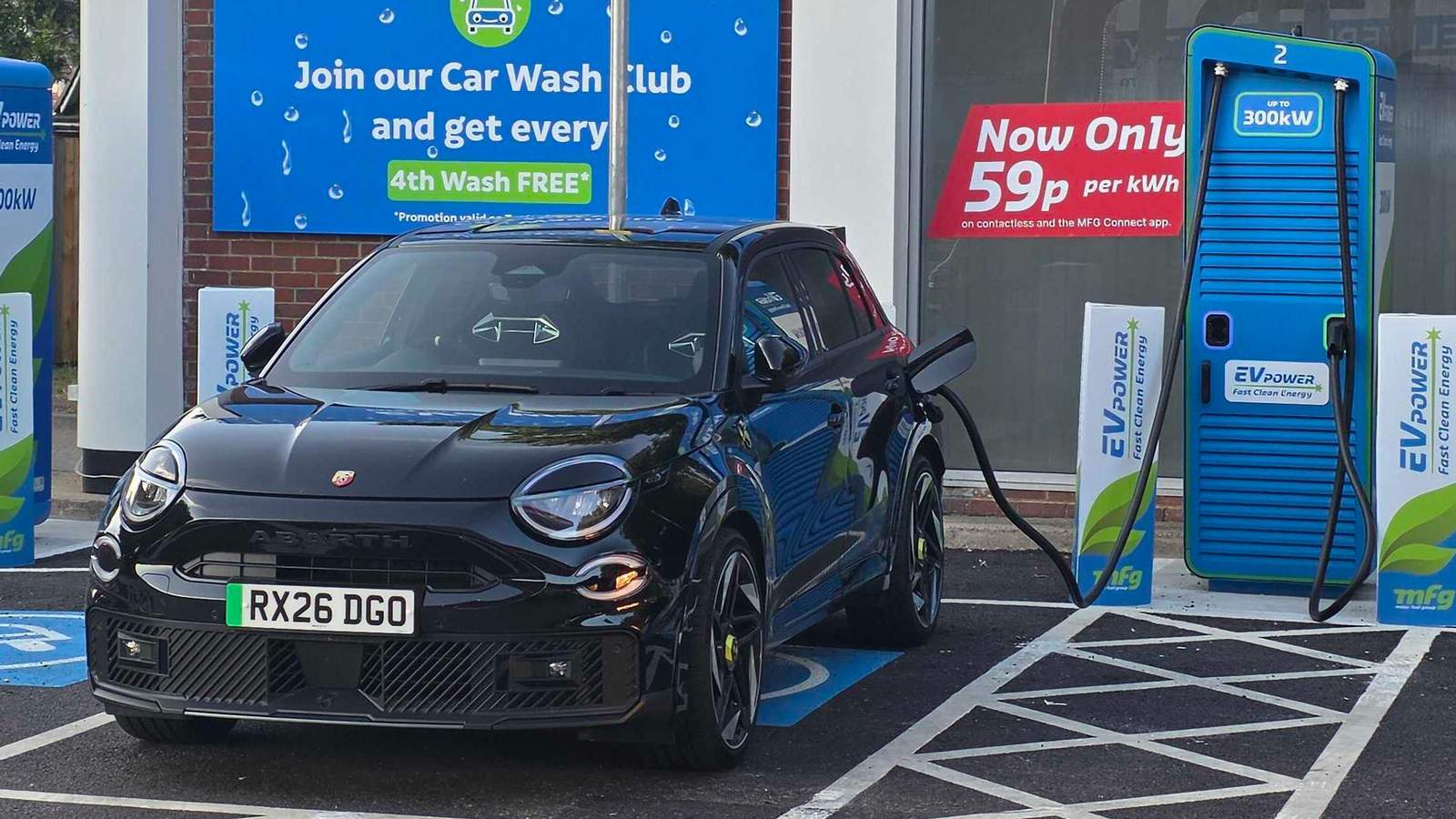
I also took the Abarth 600e on a long run from Brighton to Bristol, which was about 160 miles. I found that on a motorway run, the car would more realistically do about 160 miles on one charge – of course, you can’t let the car run to 0%, so I had to top it up about half way. This took around 30 minutes to get up to 80%. If you frequently do longer trips, you might find the constant need to stop and charge off putting in the Abarth 600e.
In Eco mode around town you’ll eek more out of it – Abarth estimates it could do up to 255 miles in this environment, although colder weather and driving style will dent range. Happily, the Abarth 600e comes as standard with a heat pump, which keeps the battery at optimal operating temperatures, which helps get slightly closer to those on-paper range figures.
You can put the Abarth 600e into ‘B’ mode, with a second click of the ‘Drive’ gear selector button. This increases the effect of regenerative braking, so you have to touch the brakes less when around town – simply let off the accelerator pedal and the system slows the car down by feeding energy back into the battery that would otherwise be lost. I found it best to drive in this mode, and range seemed to improve, too. It’s not full ‘one-pedal’ driving as it is in some other EVs (that is, being able to come to an absolute stop by letting off the accelerator pedal via brake regen) but it’s a useful, effective mode nonetheless.
It’s really worth noting that the Abarth 600e might not be all that cheap to charge if you rely solely on public street chargers or public charging stations. If you crunch the numbers, you might find that it’s just as expensive – and even more expensive in some cases – to charge an EV per mile than an economical petrol or hybrid car. The real savings come when you have the ability to install a home wallbox charger and have a cheap energy tariff. I live in a rented apartment in Brighton and unable to have a wallbox charger installed, so have to charge through public service providers, which can be expensive. This isn’t Abarth’s fault, but definitely has a bearing on how enticing living with an EV can be.
Reliability & warranty
Abarth is a sub brand of Fiat, which is also part of the Stellantis group using technology used across Peugeot, Citroen, Vauxhall, Jeep and lots of other brands. The good news is that it’s all widely tried-and-tested technology, and in my own experience I only noticed a few small glitches through the infotainment system.
Fiat’s never been a brand synonymous with reliability, but since being owned by the Stellantis group, which uses its parts and systems across Peugeot, Citroen, Vauxhall, Jeep, Alfa Romeo (the list goes on) the 600 does come with tried-and-tested engines and electric motors. In theory, the hybrid is more complicated than the EV with more to go wrong, but we’re yet to hear of any major issues.
As with Fiat, Abarth offers a standard warranty of three years’ cover should anything go wrong for up to 60,000 miles. That’s nothing to write home about and is pretty much the industry standard warranty. Whether you’re buying the car new or used, that warranty does carry over with the car. The 600e’s battery comes with an eight-year warranty for up to 100,000 miles as standard, which is on par with the offering for many other EVs, too – this covers it for replacement or refurbishment if its health drops to 70% of its original capacity.
Safety:
Safety features
There are lots of safety systems as standard on the Abarth 600e. It can get annoying when the excessive speed warning beep comes on, but this is an EU legislation requirement for all new cars.
The problem with this system is that on occasion the traffic sign recognition system reads the speed limit incorrectly, so you end up getting beeps and bongs telling you to slow down despite adhering to the speed limit. This can be deactivated through a series of submenus, but resets every time you restart the car – the 600e could do with a physical button at arms length to turn it off.
The driver fatigue monitoring system can also feel a little intrusive and seems to get set off even if you’re perfectly awake and alert at times. Adaptive cruise control and lane-keep assist can both take the stress out of motorway driving, though this combined system also kept alerting me to keep my hands on the wheel even when I did. In reality, I’ve yet to encounter any such system without that issue regardless of the car make or model.
The Abarth 600e has not yet been crash tested by Euro NCAP nor has the Fiat 600e, but it’s heavily based on the same underpinnings as the Jeep Avenger, which has been. That car achieved a pretty mediocre three-star crash test rating, with good scores in the child and general occupant protection tests, but fell behind in areas that rated the safety assistance tech and vulnerable road user protection.
Trims & engines:
Trim levels
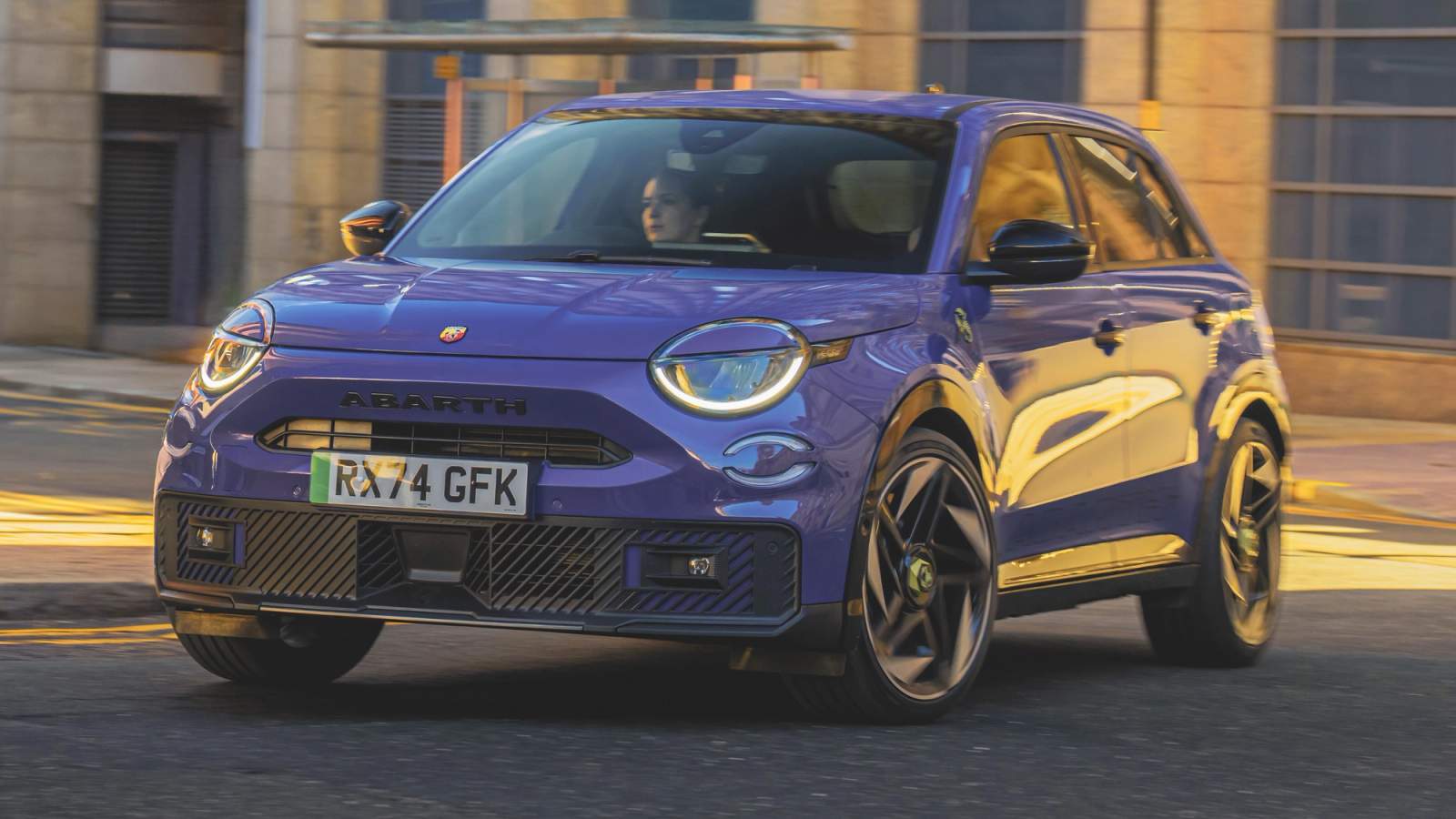
The Abarth 600e is available in two trims: the Turismo and Competizione. The main difference is the power output. Here are some of the main highlights and differences, but check Abarth’s official site for everything on offer:
- Turismo: Sabelt fabric sports seats, LED headlights, 10.25-inch infotainment screen, 20-inch alloy wheels, passive entry, exit and go among other features
- Competizione: Sabelt Alcantara racing seats, Abarth side graphics, 10.25-inch infotainment with sat nav, gloss black exterior bodykit, privacy glass, Abarth interior dashboard graphics and more
Engines
There’s just one electric motor offered with the Abarth 600e, though this is rated to 240bhp in the Turismo, and gets an extra 40bhp for a total of 280bhp in the Competizione version. On paper, the range offered in both versions is the same, at up to 207 miles.
Decided the Abarth 600e is for you?
There are already plenty of Abarth 600e examples for sale nearly new and used on Cazoo