What Is ULEZ? London's Ultra Low Emission Zone Explained
ULEZ charges non-compliant cars to drive in London, but who's exempt, how much could it cost you, and is charging drivers really the best way to clean up city air? Here's our complete guide.
The Cazoo editorial team
Published on 28 August 2026 | 10 mins read

ULEZ stands for Ultra Low Emission Zone. It's the charge that applies to older, more polluting cars, vans and motorbikes driving anywhere in Greater London, and if your vehicle doesn't meet the required emissions standard, you'll pay £12.50 a day to drive within it. The zone now covers every London borough, right out to the M25.
Poor air quality in London has long been linked to thousands of premature deaths a year, which is why understanding ULEZ, and whether your car is compliant, matters if you're planning to drive in or buy a car for use in the capital. In this guide, we'll explain what ULEZ is, what it costs, which vehicles are exempt, and take a look at how London's charging approach compares with the very different route taken in Greater Manchester.
What does ULEZ mean and why was it introduced?
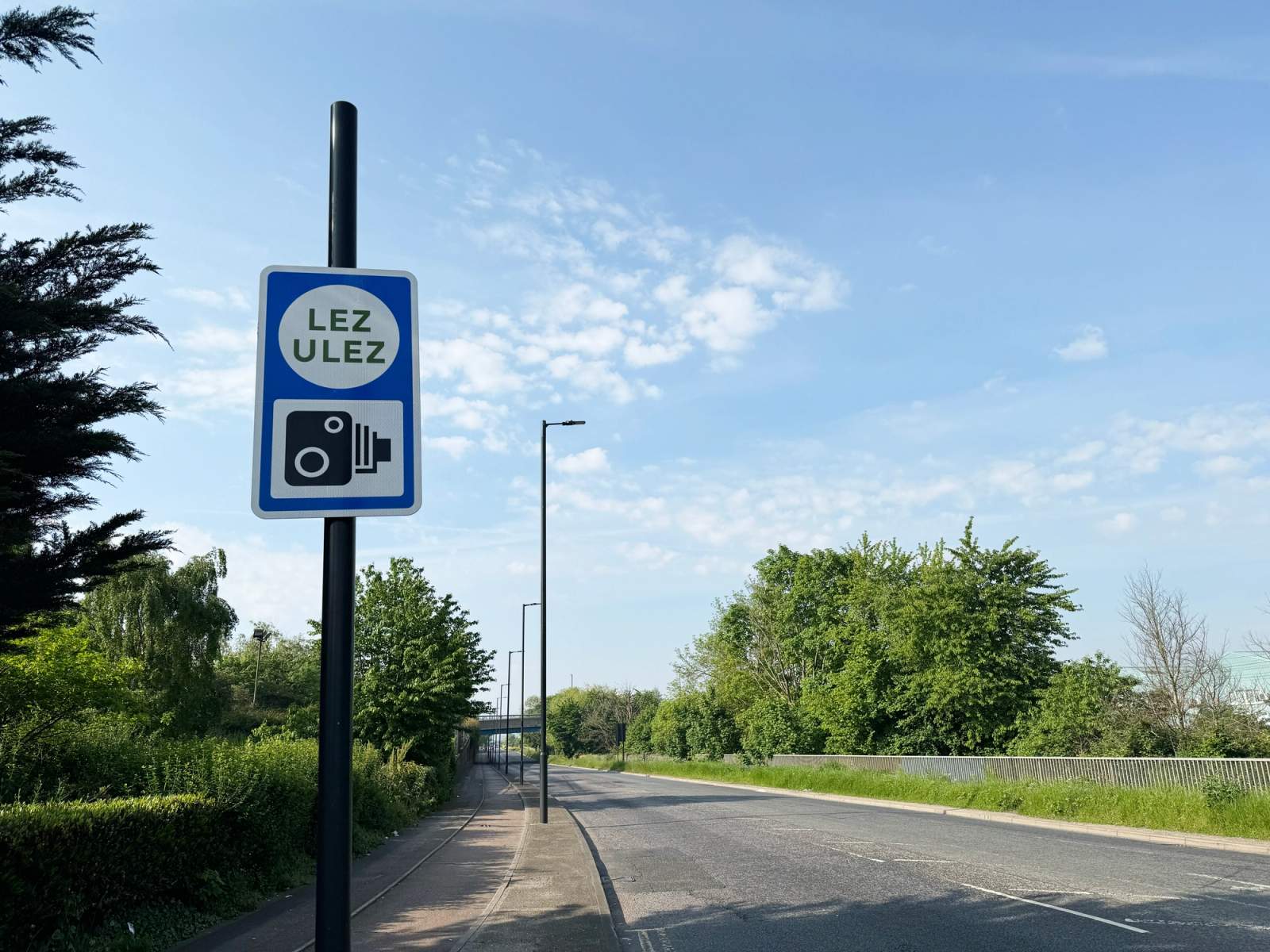
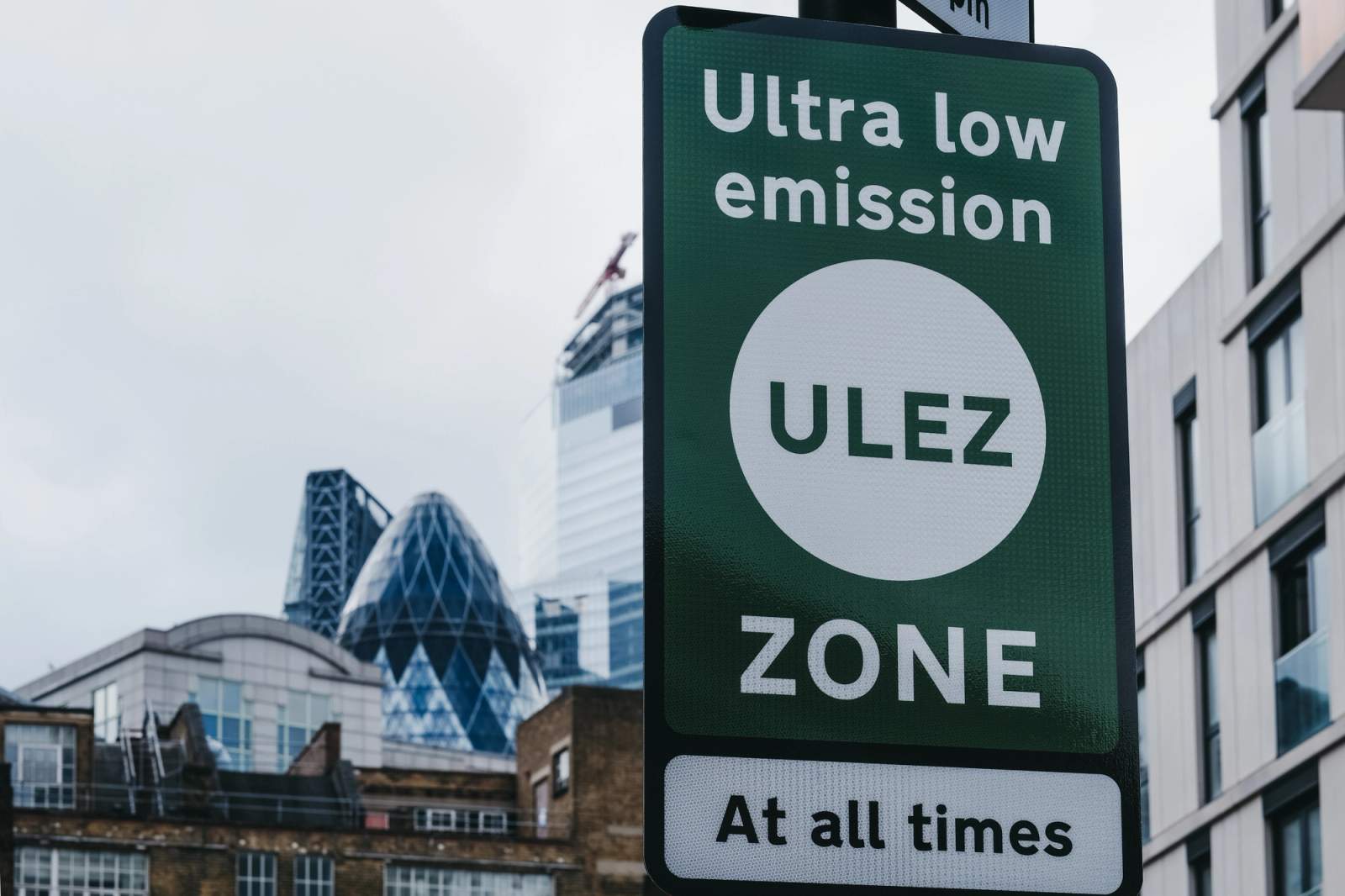
ULEZ stands for Ultra Low Emission Zone. It's an area covering the whole of Greater London where cars, vans and motorcycles must meet minimum emissions standards or pay a daily charge of £12.50 to drive within it. ULEZ operates 24 hours a day, every day of the year, with the exception of Christmas Day (25 December).
The scheme was first proposed in 2015 under the then-Mayor of London, Boris Johnson, with the aim of improving air quality in the capital and reducing the number of older, more polluting vehicles on London's roads.
ULEZ launched in April 2019, initially covering the same central area as the Congestion Charge zone. It expanded out to the North Circular and South Circular boundary in October 2021, before expanding again on 29 August 2023 to cover every London borough.
What vehicles are ULEZ compliant?
To be able to drive around London’s Ultra Low Emissions Zone without incurring a daily charge, your vehicle must either be compliant or exempt from the scheme.
What does ULEZ compliant mean?
ULEZ compliance refers to a vehicle's ability to meet the emissions standards necessary for driving within London's ULEZ without incurring the daily charge. The specific standard required depends on the type of vehicle, as set out below. You can use Transport for London's (TfL) own vehicle checker to see whether your specific vehicle is compliant, or read our euro emissions standards for more on how the Euro standards work and what they mean for a used car you're considering.
ULEZ-compliant petrol vehicles
To be considered ULEZ-compliant, a petrol vehicle must adhere to Euro 4 standards. Generally, this includes most petrol vehicles registered with the DVLA after January 2006.
ULEZ-compliant diesel vehicles
For diesel vehicles to be deemed as ULEZ-exempt, they must comply with Euro 6 standards. In general, this covers most vehicles registered with the DVLA after September 2015.
ULEZ-compliant hybrid vehicles
Hybrid vehicles are not automatically exempt from paying the ULEZ charge. They are regulated in the same way as petrol and diesel vehicles. Therefore, petrol hybrid vehicles must meet at least Euro 4 standards, while diesel hybrid vehicles must meet at least Euro 6 standards. It is worth noting that the vast majority of hybrid vehicles meet these standards.
ULEZ-compliant motorcycles
For a motorcycle, moped, motorised tricycle or quadricycle (an L-category vehicle) to be ULEZ compliant, it needs to meet Euro 3 standards, generally covering vehicles registered from July 2007 onwards.
Other vehicles exempt from ULEZ
As well as ULEZ-compliant vehicles, several other categories are exempt from the charge altogether. These include fully electric vehicles, vehicles registered with a historic tax class, lorries, vans and specialist heavy vehicles over 3.5 tonnes gross vehicle weight (GVW), and buses, minibuses and coaches over 5 tonnes GVW.
The ULEZ charge
If your vehicle is not ULEZ-compliant, and you aren’t eligible for an exemption or discount, you’ll be required to pay the ULEZ charge each day you drive within the zone.
How much is the ULEZ charge?
The ULEZ daily charge is £12.50.
This must be paid by the drivers of cars, motorbikes, vans, specialist vehicles (up to and including 3.5 tonnes), and minibuses (up to and including 5 tonnes) that do not meet the minimum emissions standards.
How to pay the ULEZ charge
There are several ways to pay the ULEZ charge. You can register for Auto Pay to have any charges you owe paid automatically, pay online through TfL's official payment portal, or use the free 'Pay to Drive in London' app, available from the Apple App Store and Google Play Store, which also covers the LEZ and Congestion Charge and lets you set up Auto Pay, pay a penalty charge notice, or check which postcodes fall within each charging zone. Alternatively, setting up a London Road User Charging account lets you register up to five vehicles for Auto Pay, make faster payments, and give up to five people access to the account.
Fines for ULEZ
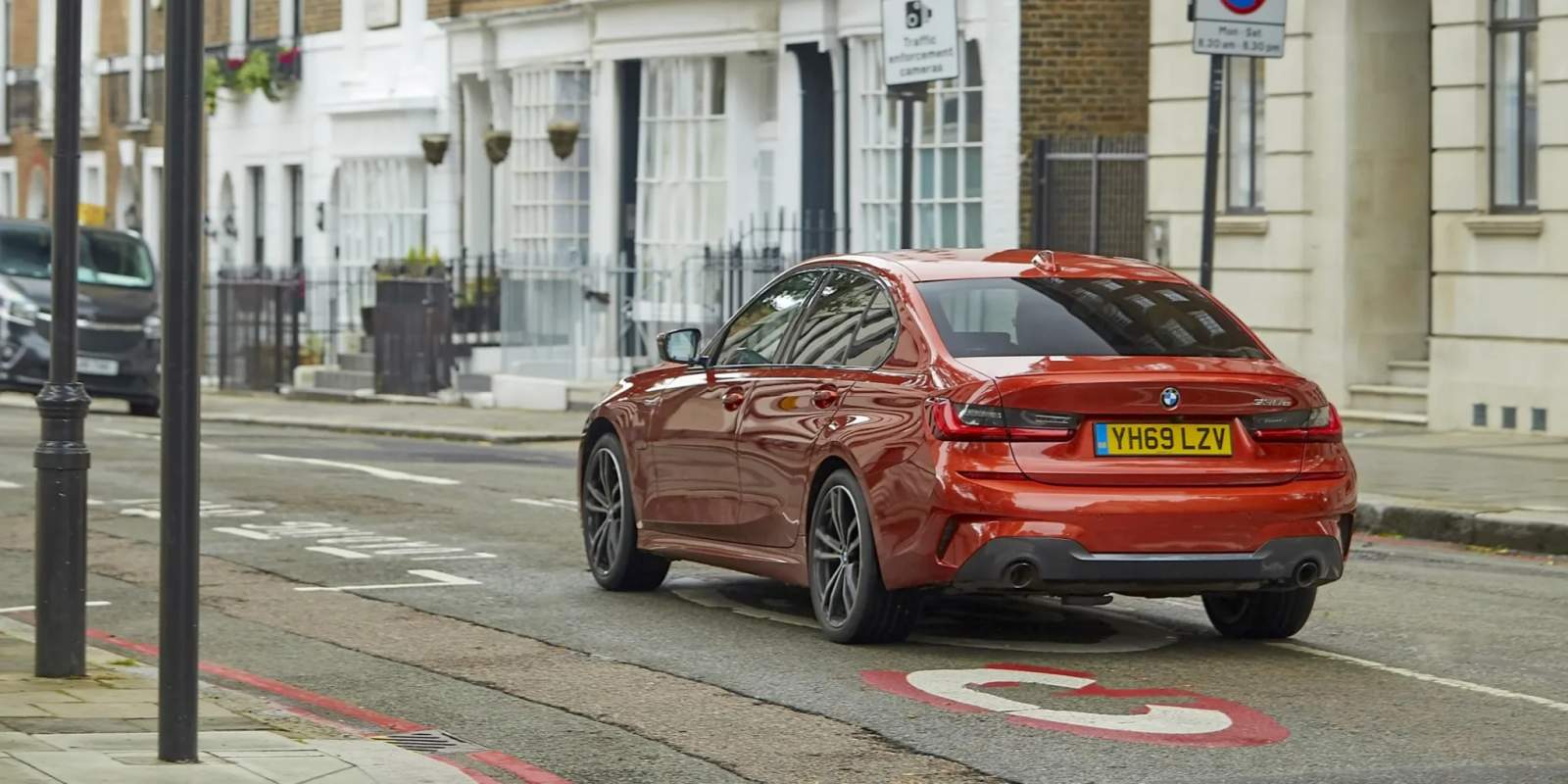
TfL uses Automatic Number Plate Recognition cameras throughout the ULEZ to detect vehicles entering and leaving the zone and identify which ones need to pay the charge.
You have three days from driving in the zone to pay the charge if you're not exempt, your vehicle doesn't meet the emissions standards, or you haven't registered for a 100% discount.
Failing to pay can result in a Penalty Charge Notice (PCN) of £180. You have 28 days to pay this, though it's reduced to £90 if paid within 14 days. If you don't pay within the 28-day window, it rises to £270 and follows the standard enforcement process.
You may also receive a PCN if you paid the ULEZ charge for the wrong number plate, paid for the wrong day of travel, or paid by post less than 10 days before your date of travel, so it's worth double-checking these details whenever you pay.
ULEZ charge discounts and exemptions
Alongside vehicles that meet the emissions standards, several drivers and vehicle types qualify for at least a temporary 100% discount from the ULEZ charge. These include lorries, vans and specialist heavy vehicles over 3.5 tonnes GVW; buses, minibuses and coaches over 5 tonnes GVW; London-licensed taxis; showman's vehicles, specialist agricultural vehicles, military vehicles, non-road-going vehicles and certain mobile cranes; and historic vehicles built before 1 January 1973, or registered with the DVLA under a historic vehicle tax class (broadly, vehicles over 40 years old) — if your classic is registered outside the UK, you'll need to register it separately to claim the exemption.
Disabled drivers whose vehicles are registered with the DVLA under a 'disabled' or 'disabled passenger vehicle' tax class, and people receiving certain disability benefits who successfully apply for a grace period, won't need to pay the ULEZ charge until 24 October 2027, provided the vehicle's tax class doesn't change in the meantime.
Wheelchair-accessible vehicles that don't meet ULEZ standards but have been converted by mobility specialists to allow a disabled person to travel as a driver or passenger benefit from the same type of grace period until 25 October 2027. NHS patients clinically assessed as too unwell to travel to an appointment by public transport may also be able to claim back any ULEZ charge paid.
Not-for-profit organisations running minibuses for community transport have previously been able to register for a temporary 100% discount, though this ran until 26 October 2025, so it's worth checking TfL's current discounts and exemptions guidance directly if this applies to you, since eligibility windows like this are reviewed and can change. Registration or an application is required for most grace periods and exemptions, so check Transport for London's discounts and exemptions guidance before assuming you qualify.
The ULEZ charge and the Congestion Charge
The ULEZ charge and the Congestion Charge are two separate payments. The ULEZ charge is a £12.50 daily fee for driving in any London borough if you aren't exempt and your vehicle doesn't meet the emissions standards. The Congestion Charge is a £15 daily charge for driving within the smaller central Congestion Charge zone, applying between 07:00 and 18:00 Monday to Friday, and 12:00 to 18:00 on Saturdays, Sundays and bank holidays.
As they're separate charges, a non-compliant vehicle driving in the Congestion Charge zone will need to pay both. If your vehicle is ULEZ compliant, or you're exempt from ULEZ, you'll still only need to pay the Congestion Charge if you drive within that specific zone.
One recent change worth knowing about, especially if you're considering an electric car partly to dodge charges: fully electric vehicles remain exempt from ULEZ, but they lost their exemption from the Congestion Charge from 25 December 2025, when TfL ended the Cleaner Vehicle Discount that had previously let EV drivers pay a reduced annual rate. If you're weighing up an EV for regular driving in central London, it's worth factoring the Congestion Charge into your running costs rather than assuming electric means charge-free. Our best electric cars guide is a good place to start if you're comparing your options.

The ULEZ scrappage scheme
London's ULEZ scrappage scheme offered financial help to residents, small businesses and charities to scrap or retrofit non-compliant vehicles when the zone expanded. It's no longer possible to apply, though, as TfL closed the scheme to new applications on 7 September 2024. By the time it closed, the scheme had paid out more than £180 million in grants to almost 54,000 successful applicants, on top of separate funding tied to the 2023 zone expansion.
While you can no longer apply, it's useful background if you're weighing up a used car purchase: the scheme previously offered grants of up to £2,000 towards scrapping a non-compliant car, up to £1,000 for a motorcycle, and up to £10,000 for a wheelchair-accessible vehicle, alongside separate grants for vans and minibuses. With the scheme closed, the most straightforward way to move to a compliant vehicle now is simply to budget for one when you're changing cars. Cazoo’s listings include plenty of ULEZ-compliant options across petrol, diesel and electric, so it's worth browsing what's available before you commit to paying the daily charge long-term.
Is charging drivers the right way to clean up city air? London and Manchester take different approaches
ULEZ remains one of the most debated policies of Sadiq Khan's time as Mayor of London, and it's become topical again following a City Hall announcement in June 2026 setting out its impact. According to that report, estimated deaths linked to toxic air in London fell by around 40% between 2019 and 2024, roadside nitrogen dioxide (NO2) is down 41% and fine particulate pollution (PM2.5) down 28% over the same period, with ULEZ itself credited with roughly a 27% cut in roadside NO2. The report also states London met legal NO2 limits in 2024, and that zero-emission buses have grown from around 30 in 2016 to more than 3,000 by mid-2026.
That's not the full picture, though. Earlier TfL monitoring covering the 2021-22 expansion found no measurable change in some pollutant levels and NO2 reductions falling well short of targets, and the scheme has faced ongoing criticism, particularly from residents and businesses in outer London and neighbouring counties who rely on cars and can't easily switch to a compliant vehicle or public transport, given the £12.50 daily cost falls hardest on those with older, cheaper cars.
Greater Manchester took a very different route. In 2022, Mayor Andy Burnham dropped plans for a charging Clean Air Zone similar to ULEZ, arguing that a charge risked causing hardship for residents and businesses who depend on their cars, and that his modelling suggested a charging zone wouldn't hit the government's legal compliance target any faster than an alternative, investment-led plan. Instead, Greater Manchester committed £86.7 million to measures including 64 zero-emission buses, a Clean Taxi Fund worth £30.5 million to help taxi drivers upgrade to cleaner vehicles, and £5 million for traffic management improvements, funded through central government's Clean Air Fund rather than charges on drivers.
The results, as of the most recent figures reported in 2026, are genuinely striking: the number of roads breaching legal NO2 limits fell from 129 in 2019 to just 11 in 2025, and for the first time, no locations near homes, schools, hospitals or care facilities are reporting illegal pollution levels. That said, Greater Manchester hasn't yet reached full legal compliance everywhere, unlike London, which met its target in 2024; nine of the 11 remaining problem roads are in Manchester itself. Total spend on the plan had reached around £110.7 million by March 2026, against £188.4 million in available government funding.
So, is one approach "right" and the other wrong? Both have delivered real, measurable improvements in air quality, and both come with genuine trade-offs. London's charging model reached full legal compliance faster and is backed by the larger, more established set of health data, but it does so by putting a direct daily cost on drivers of older vehicles, a cost that inevitably falls hardest on those who can least afford to change their car. Greater Manchester's investment-led approach avoided charging residents and businesses directly and has dramatically cut the number of polluted roads without that cost falling on lower earners, but it's taken longer and, on the latest figures, hasn't fully closed the gap yet. Which approach you'd call "right" probably depends on whether you think speed of compliance or protecting drivers from a direct daily cost should take priority, and if you're a driver, the more practical question is simply which zone you actually need to drive in, and whether your car meets the standard required.
FAQs
What is ULEZ?
ULEZ stands for Ultra Low Emission Zone. It's the area covering all of Greater London where cars, vans and motorcycles that don't meet minimum emissions standards must pay a £12.50 daily charge to drive.
Is my car ULEZ compliant?
Petrol cars generally need to meet Euro 4 standards and diesel cars Euro 6. The quickest way to check is TfL's own vehicle checker using your registration number.
Is the ULEZ scrappage scheme still open?
No. TfL closed the scheme to new applications on 7 September 2024, having paid out more than £180 million in grants to almost 54,000 successful applicants.
Do electric cars pay the ULEZ charge?
No, fully electric vehicles remain exempt from ULEZ. They do now need to pay the separate Congestion Charge if driving in that specific zone, following the end of the Cleaner Vehicle Discount on 25 December 2025.
Find a ULEZ-compliant vehicle with Cazoo
London's Ultra Low Emission Zone was designed to improve air quality in the capital, and whichever side of the charging debate you lean towards, having a compliant car makes life easier if you drive in London regularly. Increasingly, cars are built to meet ULEZ standards as a matter of course, letting you enter low-emission zones without paying a charge.
At Cazoo, we offer a wide range of used vehicles, including plenty of electric and other ULEZ-compliant options, and our reputable dealers are ready to help you find your perfect match. Search our full range of used cars to get started.