Volvo EX30 review
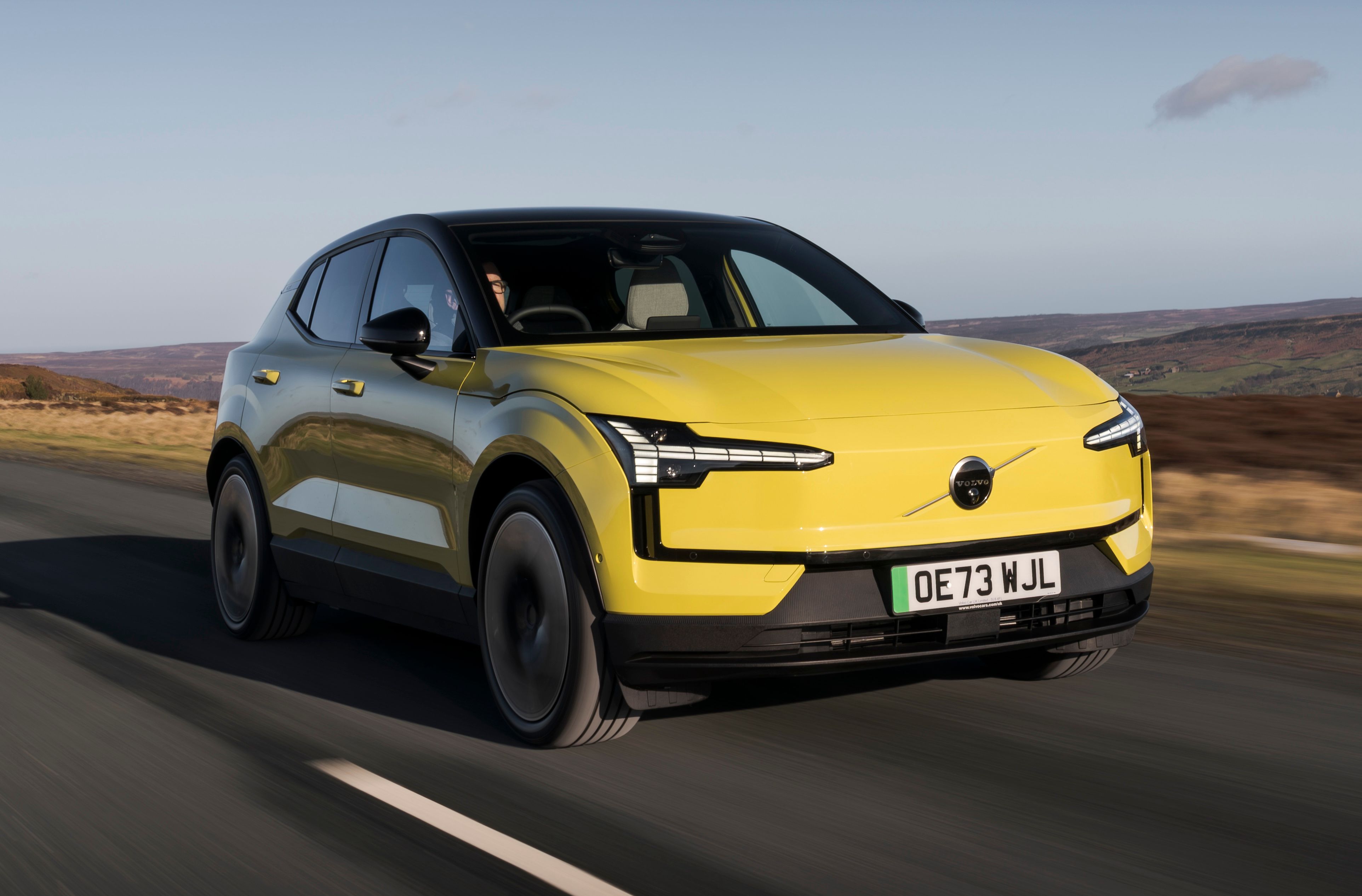
The EX30 is an important car for Volvo as it’s the entry point into the firm’s electric model line-up, bringing a sustainable interior and a premium image.

Author: The Cazoo editorial team
30th Mar 2026 – 8 mins read
Volvo is taking its electrification strategy seriously and the EX30 is the entry point into the firm’s EV line-up. The EX30 offers a premium, minimalist interior with many sustainable materials, along with a stylish exterior design.
Pros
- Great looks
- Comfortable driving experience
- Lots of sustainable materials
Cons
- Interior ergonomics are not user-friendly
- Not the most practical car in its class
- It isn’t the most dynamic car to drive in this sector
Interior
Dashboard & tech
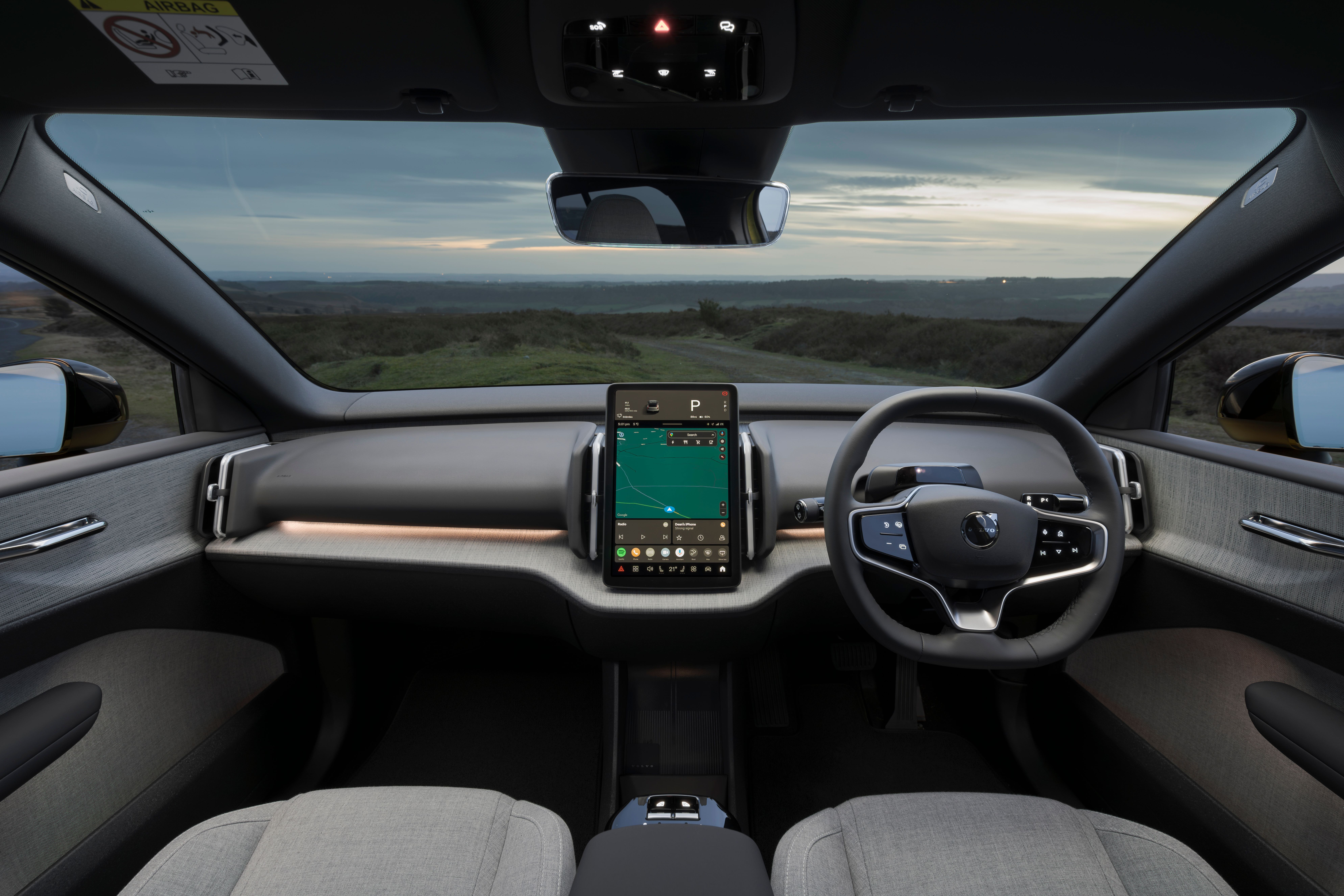
Volvo interiors have always focused on quality, refinement and luxury and the EX30 follows those footsteps.
The EX30 is all about providing a modern and minimalist approach with fewer buttons, while still looking distinctively like a Volvo interior.
All models come with a portrait 12.3-inch infotainment system with Google Assistant. Most of the car’s functions are controlled via the touchscreen interface, which makes even the simplest of tasks difficult to operate on the move.
Even operating the windows is more complicated than it needs to be with the switches located lower down on the centre console.
Comfort
Volvo has built up a great reputation for producing cars that focus on comfort and the EX30 is no exception.
Out on the road, the car’s suspension does a great job of smoothing out the imperfections and the seats are just as supportive and comfortable to sit in like other Volvo models.
Quality
Lots of materials found inside the EX30 are sustainable, which gives a much higher quality feel.
There are lots of pale trims, and the doors give a reassuring thud when they’re closed. Even the door panels use a fabric trim, making the whole cabin feel much more premium than a lot of the EX30’s rivals.
Practicality & boot space
Interior space
Volvos tend to offer lots of space inside for occupants, though the EX30 is a mixed bag in this department.
Up front, there is plenty of room for passengers, while in the rear, there is ample amounts of headroom; however, legroom is tight for a car in this class, with a Hyundai Kona Electric offering more space in the back.
Boot space
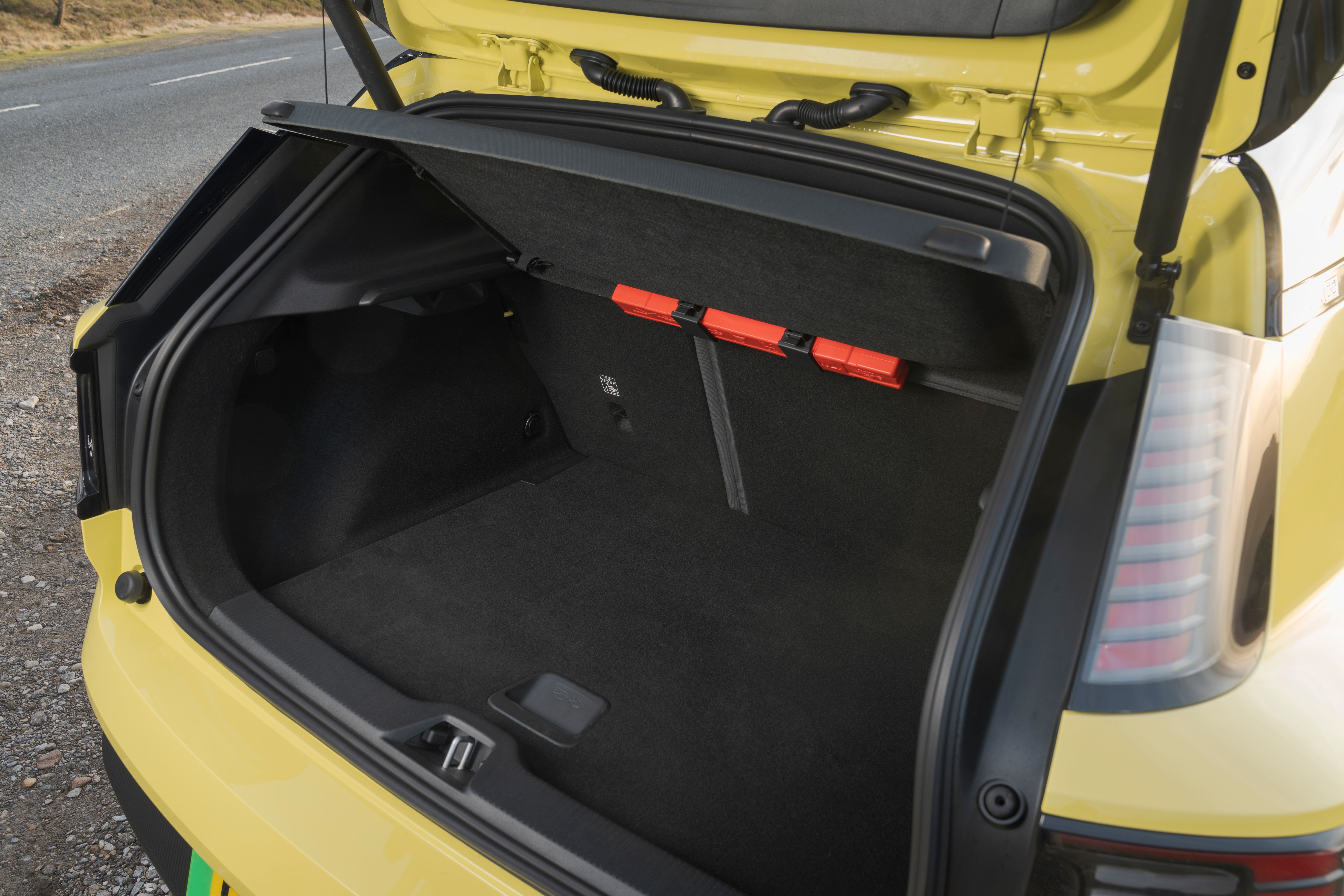
The EX30’s boot capacity isn’t class leading either. Measuring at just 318 litres, that’s 45 litres less than what you’ll find on an MG4 and 142 litres behind the Kia EV3.
Fold the 60:40 rear seats down and that space triples to 1,000 litres, which is still off the pace set by cars like the Skoda Elroq, which provides up to 1,580 litres.
Versatility
Inside, the EX30’s light and airy cabin makes it feel bigger than it is, while there are sufficient storage areas around the interior, including deep door pockets, a centre armrest compartment and a glove box. Plus, under the bonnet, there is a 61-litre ‘frunk’, which is ideal for stowing the charging cables.
Driving
Driving experience
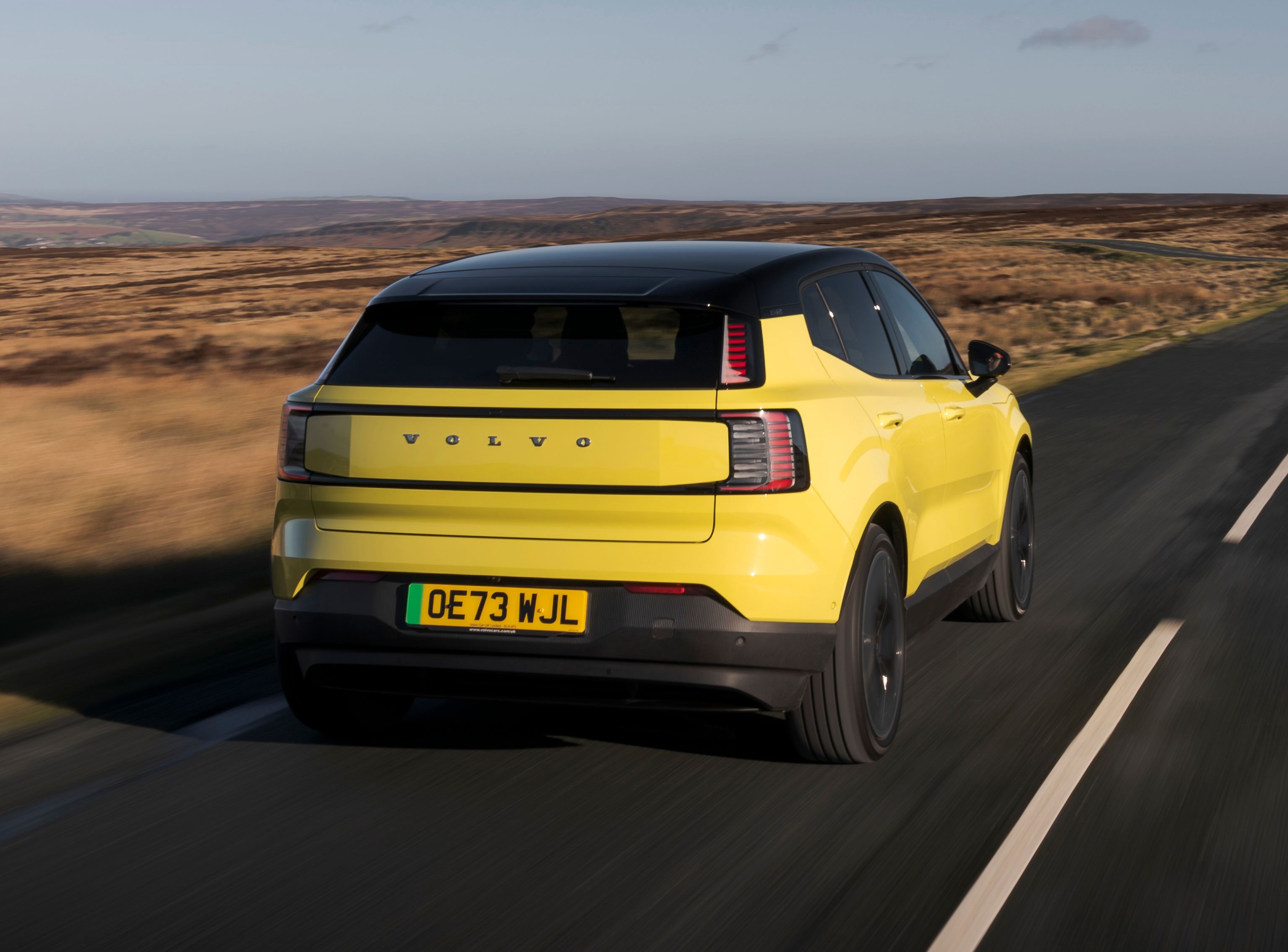
As for the driving experience, the EX30 feels most at home around town thanks to its smaller exterior dimensions.
The steering is light, but very quick and the suspension is well-damped, making it absorb lumps and bumps with no fuss.
However, rear visibility is impaired due to the narrow back window, though thankfully, a reversing camera does help out.
Performance
The EX30 is available with two different battery packs and three guises. The entry-level 51kWh ‘P5’ produces 268bhp and can accelerate to 60mph in 5.5 seconds.
There is a larger 69kWh model, badged ‘P5 Long Range’, which produces the same 268bhp and can hit 60mph in 5.1 seconds.
The top-of-the-line ‘P8 AWD’ comes with dual electric motors, all-wheel drive, 422bhp and can do 0-60mph in 3.4 seconds.
Running costs
Fuel economy & CO2 emissions
As the EX30 is electric, it should be a lot cheaper to run than the equivalent petrol and diesel SUV.
The 51kWh ‘P5’ model can travel up to a claimed 209 miles between charges, while the 69kWh ‘P5 Long Range’ can manage up to a claimed 295 miles and the ‘P8 AWD’ model will need charging after a claimed 280 miles.
There’s no CO2 emissions to worry about, though the EX30 is still capped at the fixed rate of £195 for 12 months' road tax.
Value for money
No matter which EX30 you go for, it will come with lots of standard kit and safety equipment.
All cars boast adaptive cruise control, heated front seats and steering wheel, a 12.3-inch portrait-style touchscreen, as well as front and rear parking sensors.
When new, prices started at £33,060, which is £500 cheaper than the entry-level Hyundai Kona Electric.
Second-hand values are strong, with a two-year-old example on the market for £25,000.
Reliability & Warranty
When it comes to reliability, Volvo was ranked 13th in the 2025 JD Power customer satisfaction survey, but some EX30 owners have reported software glitches on the infotainment systems.
Every Volvo comes with a three-year or 60,000-mile warranty and an eight-year or 100,000-mile warranty for the battery on the electric models.
Safety
Safety features
Volvo has been at the cutting edge of car safety for decades and the EX30 scored the maximum five stars in the Euro NCAP crash tests.
It scored highly for adult protection, achieving an 88 per cent rating, while child protection was ranked at 85 per cent.
As standard, the EX30 comes with a flurry of driver safety assistance systems such as lane-keep assist, lane-departure warning, traffic sign recognition and autonomous emergency braking.
Trims & Engines
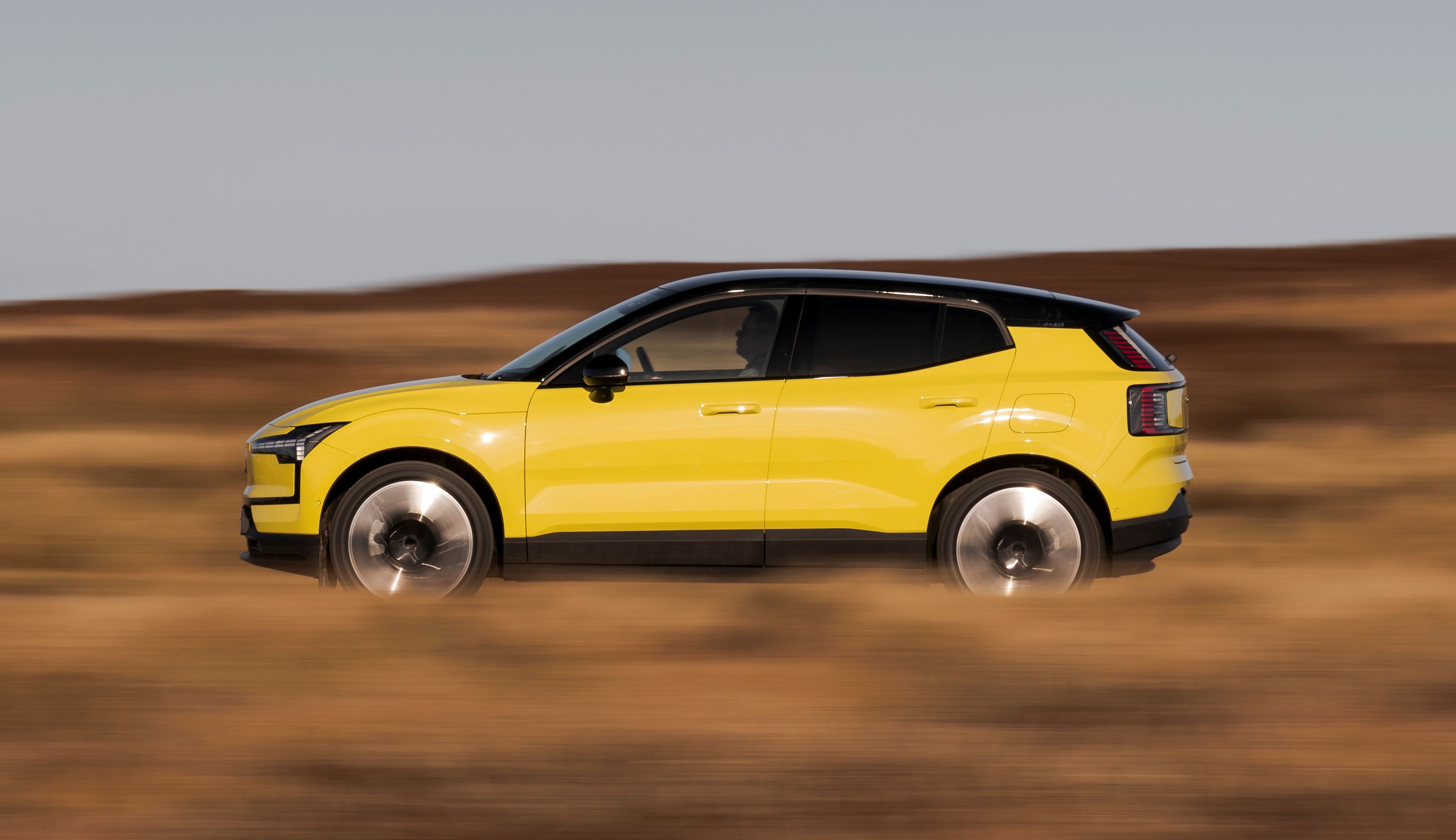
Trim levels
The trim levels on the EX30 are simple, as there are just three: Core, Plus and Ultra.
- Core: This is the entry-level model and features equipment such as adaptive cruise control, a 12.3-inch infotainment system with Google Assistant and LED headlights.
- Plus: The mid-level Plus adds even more kit for the money with a powered tailgate and ambient interior lighting.
- Ultra: The flagship Ultra boasts extras such as a panoramic glass roof and a 360-degree parking camera.
Engines
Just like with its combustion-powered models, Volvo uses letters and numbers to identify its powertrains.
The EX30 is available with a ‘P5’ 51kWh setup, while there is a ‘P5 Long Range’ model that uses a larger 69kWh battery pack with an electric motor. At the top of the model line-up, there is the ‘P8 AWD’, boasting the same 69kWh battery pack as the ‘Long Range’ variant, but uses a dual-motor setup.