Ford Explorer review
The Explorer name is back, not as some rugged four-wheel-drive, but instead as a family-focused electric car

Author: The Cazoo editorial team
30th Mar 2026 – 9 mins read
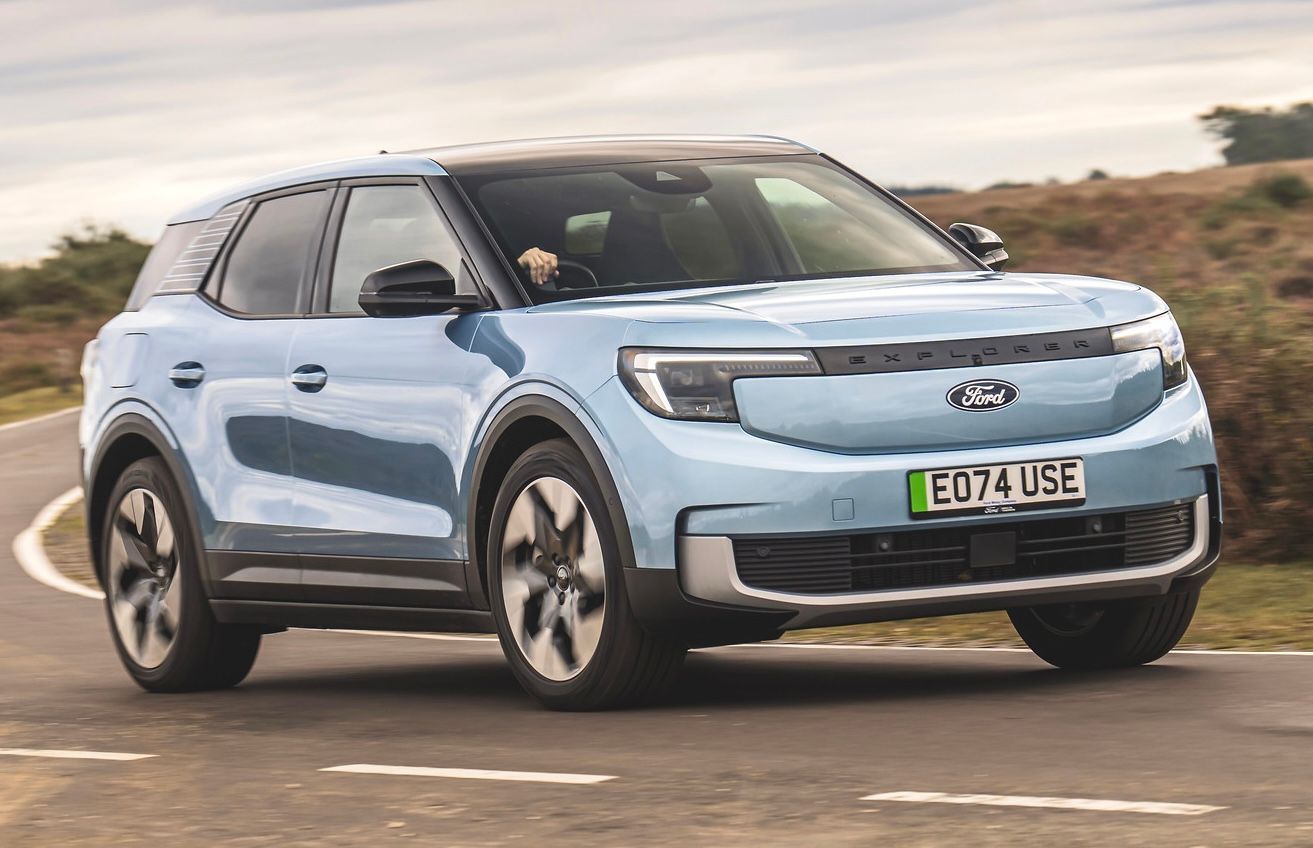
Ford has been in the habit of reviving old nameplates for its latest EVs, and while we’ve already seen the likes of the Capri returned to much controversy, the Blue Oval continued the theme by introducing the Explorer. While the original Explorer was a rather boxy combustion-engined four-wheel-drive, the new model introduced electric power and an altogether more futuristic look. It’s one of a number of arrivals into the busy battery-powered SUV segment, too.
Pros
- Good legroom and headroom
- Lots of practical features inside
- Steering is nicely judged
Cons
- Rather mundane styling may not be for everyone
- Boot is smaller than in rivals
- Some interior plastics aren’t the best
Interior:
Dashboard & tech
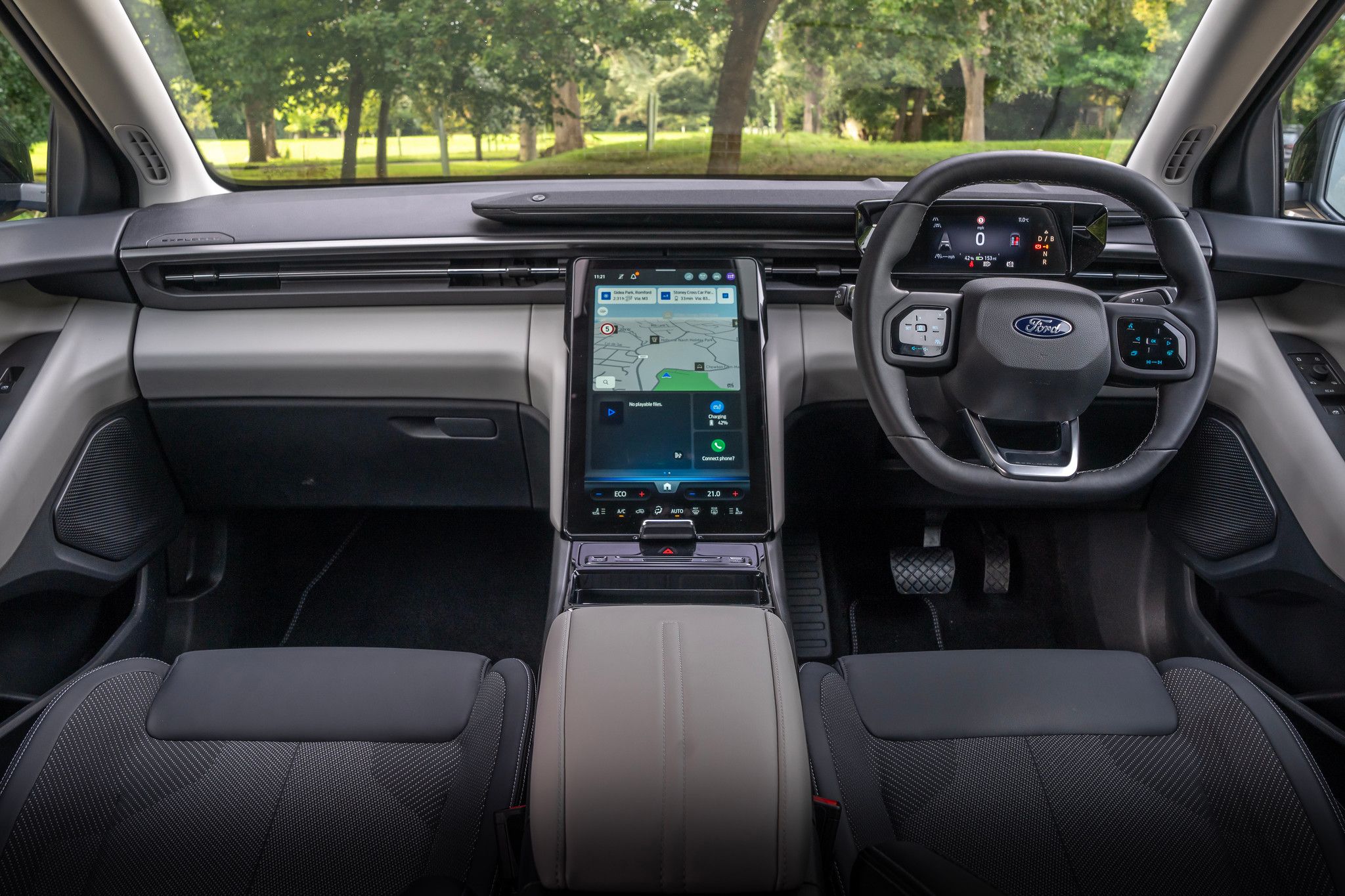
As we’ve seen on other recent Ford models, the Explorer gets a huge central screen. It measures in at 14.6 inches, in fact, and is portrait-oriented to help display as much as possible. It can also be adjusted forward or back to help reduce glare, which will be particularly useful on sunny days. Sadly, there aren’t any physical controls aside from the large volume switch, but thankfully, a main bar for heating and ventilation remains along the bottom of the screen, regardless of the feature that you’re using.
The main screen is responsive, but the graphics themselves are a little small and fiddly. However, with both Apple CarPlay and Android Auto included as standard, you can use these more intuitive apps in an instant.
Comfort
The Explorer is an easy car to get comfortable in. The seats up front have a nice amount of cushioning and they’re easy to adjust, too. Higher-spec cars get more in the way of seat adjustability, but even base-trim models are still easy to position.
You may notice something a little strange about the Explorer’s interior, though - the wheel. It’s got a rather odd square shape to it, which might take a little getting used to for some drivers. That said, it’s packed with features and has plenty of quick-access controls on it.
Quality
The Explorer uses the same MEB platform that you’ll find underpinning many Volkswagen Group cars, including the ID. 4 and Skoda Enyaq. The good news is that Ford has put its own spin on things, so while there are some obviously VW parts inside the Explorer, there’s plenty to see which feels more ‘Ford’.
Quality is, for the most part, quite good. However, things are let down by some rather scratchy plastics, while the shiny, gloss-black trim lower down the cabin attracts dust and fingerprints easily.
Practicality & boot space:
Interior space
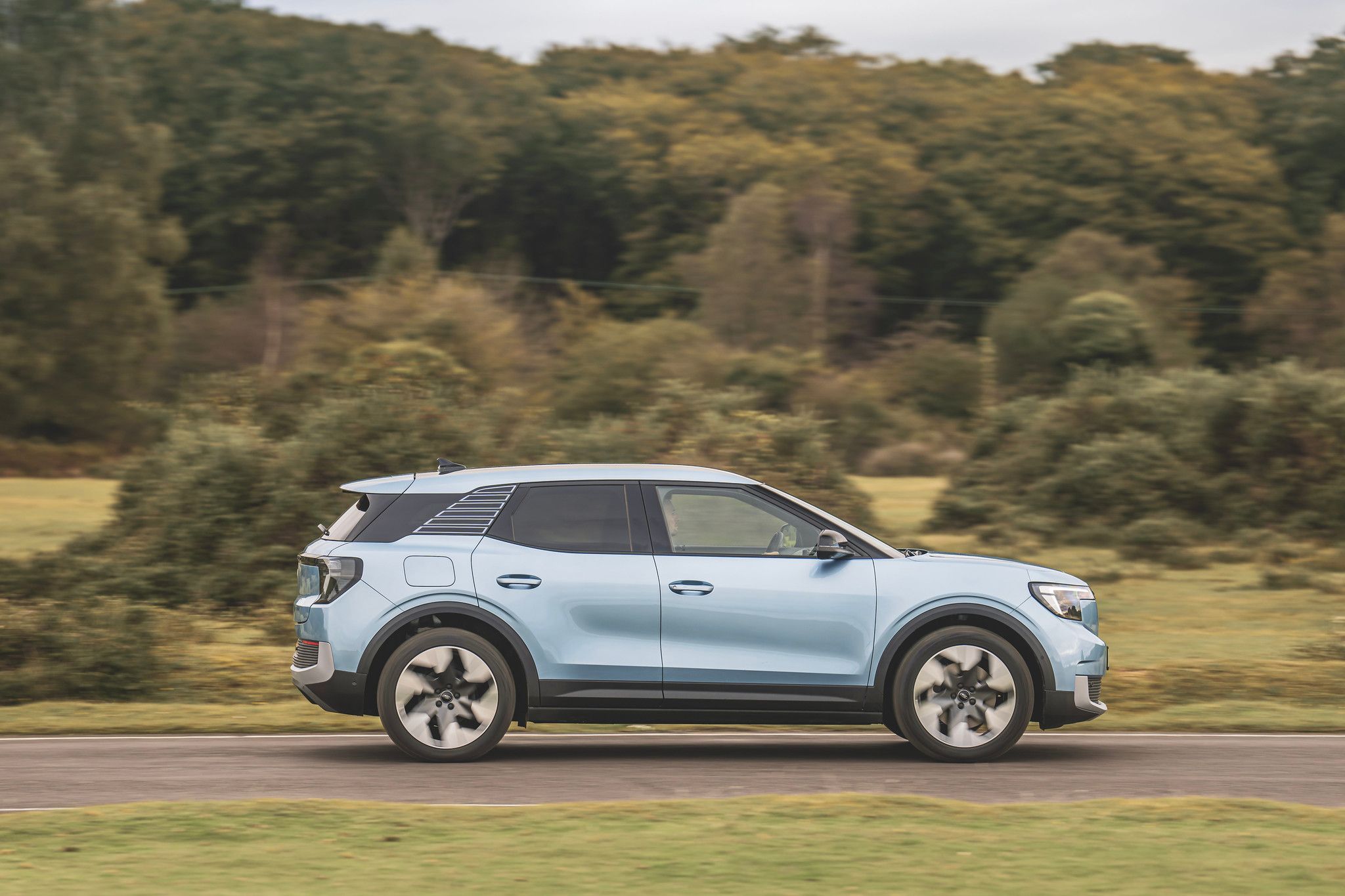
With its boxy proportions, the Explorer does have all of the interior space that a family could need. Rear-seat legroom is more than good enough thanks to a completely flat floor, and even taller passengers in the back should be able to get comfy thanks to plenty of headroom.
There’s no penalty for picking the panoramic sunroof, either, which can sometimes eat into space on certain cars.
Boot space
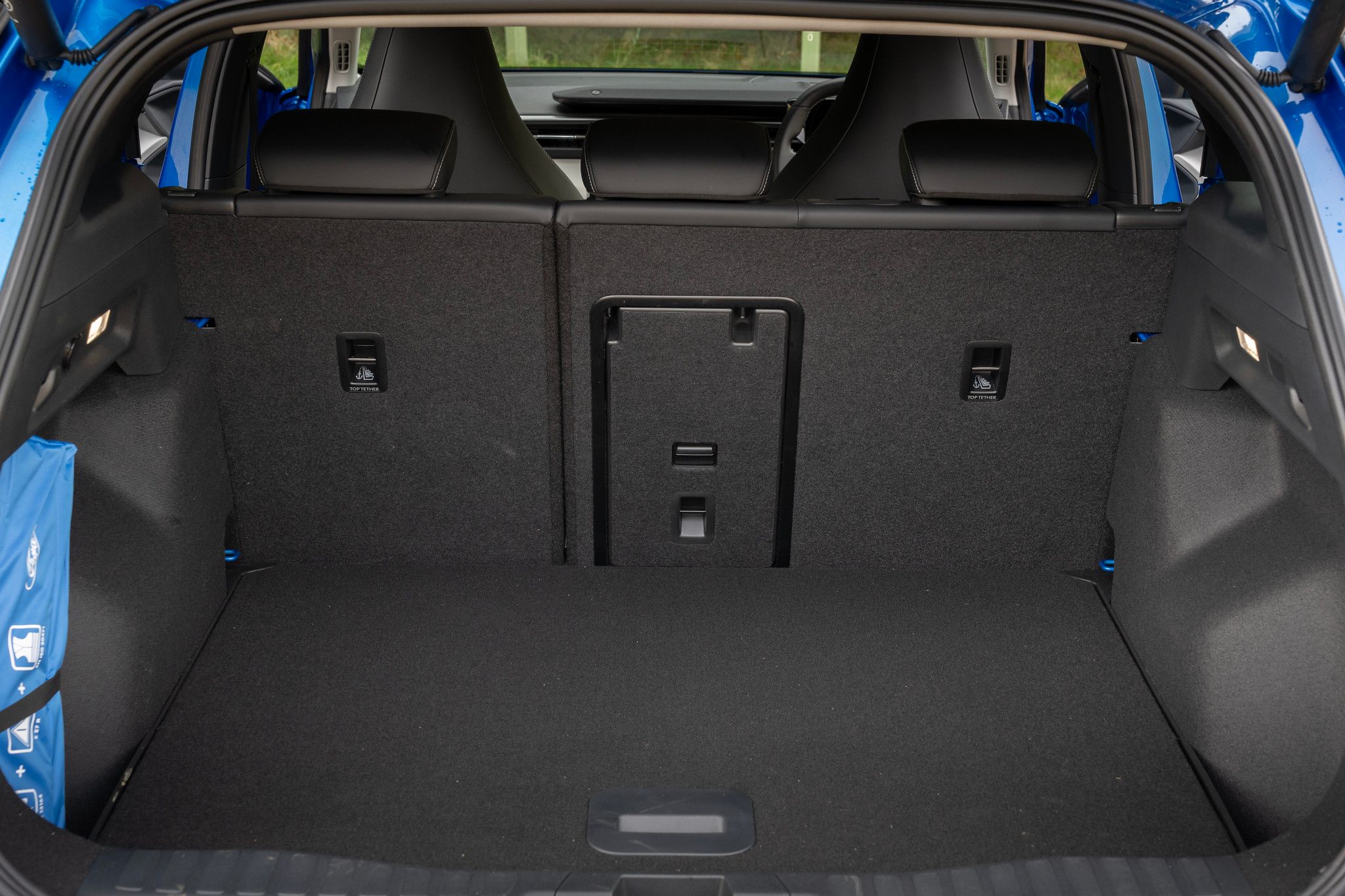
Boot space is actually a little less than you might expect, but it’s still not bad. At 470 litres, it’s less than you’ll get from key rivals - the Renault Scenic, for instance, offers 545 litres - but you can fold down the rear seats to expand this area further.
The boot also includes an adjustable-height floor, under which you can store the Explorer’s charging cables when not in use.
Versatility
If you’re after a car that’ll handle all of the loose, rolling-about items you could bring, then the Exporer is the model for you. There are loads of storage areas dotted about the place, including a clever MegaConsole central cubby between the front seats which brings a huge 17-litre storage area.
There’s also a useful ‘secret’ compartment underneath the main screen, which is covered by the display when the car is locked, to help keep valuables out of sight.
Driving:
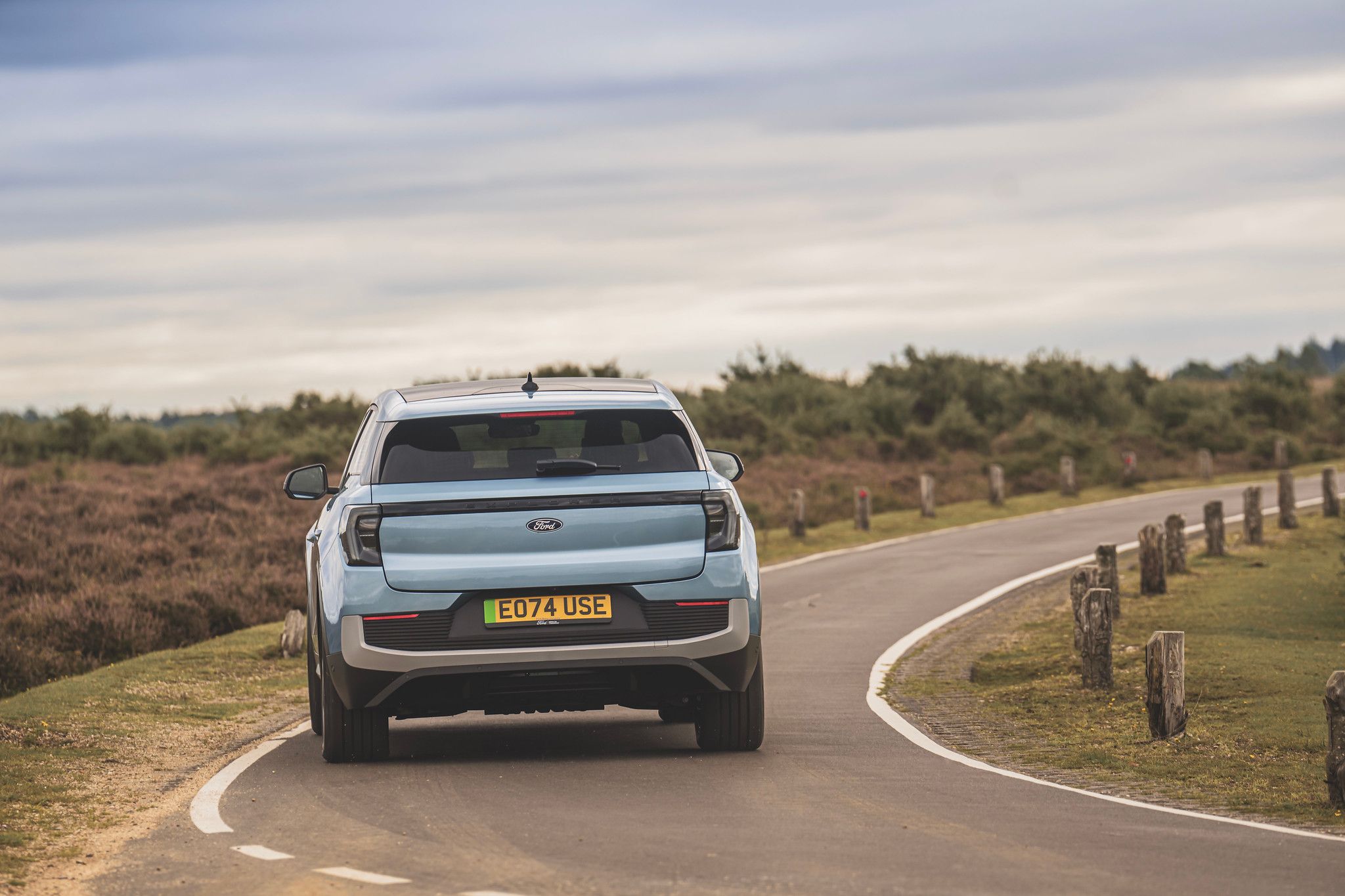
Driving experience
The driving experience in the Explorer is comfortable and easy-going. As with nearly all electric cars, there’s a decent amount of punch away from the lights and even entry-level models will manage 0-60mph in 8.4 seconds, while twin-motor versions see that drop to just over five seconds.
However, all versions do a good job of flattening out the worst of the lumps and bumps in the road, and it doesn’t lean too much through the bends, either. Plus, once you’re up to speed, there’s not too much wind or road noise to speak of, making the whole car relaxing and quiet to do long distances in.
Performance
The amount of performance that you get depends on the version of Explorer you choose. As we’ve mentioned, standard single-motor cars will go from 0-60mph in 8.4 seconds, while more powerful Extended Range Rear Wheel Drive cars see this drop to 6.1 seconds.
Either model provides more than adequate performance for daily driving. Those after the highest level of performance will want the dual-motor car, which brings a hefty 355bhp and that lower zero to 60mph time, too.
Running costs:
Fuel economy & CO2 emissions
How cheaply you can run the Explorer really depends on your charging situation. If you’re able to top up at home, then you’ll be able to run the Explorer for a fraction of what it would cost to fuel a conventional petrol or diesel car. However, rely on public charging and things will get more expensive.
In terms of range, the Explorer does very well. Even standard, small-battery cars will manage up to 239 miles between charges, while larger Extended Range cars should do up to 374 miles. Dual-motor cars see this drop to 329 miles as a result of their extra performance.
Value for money
Prices for the Ford Explorer start from £35,285, rising to £41,885 for a Select-grade car. However, since the Explorer has been on sale for a little while now, it’s widely available on the used market, where you could make some serious savings - even on nearly-new models.
Reliability & warranty
Given that the Explorer shares a platform with many of Volkswagen Group’s cars, we can’t see it being too much trouble reliability-wise. All Explorers are covered by a standard three-year or 60,000-mile warranty - whichever comes first - while the battery is covered by an eight-year or 100,000-mile warranty separately from the rest of the car.
Safety:
Safety features
Ford has equipped the Explorer with plenty of safety equipment, including lane keeping aid and lane departure warning, blind-spot detection and a Thatcham-approved alarm system to help keep things secure.
When it was crash-tested by Euro NCAP in 2024, the Explorer was awarded a five-star safety rating, too.
Trims & engines:
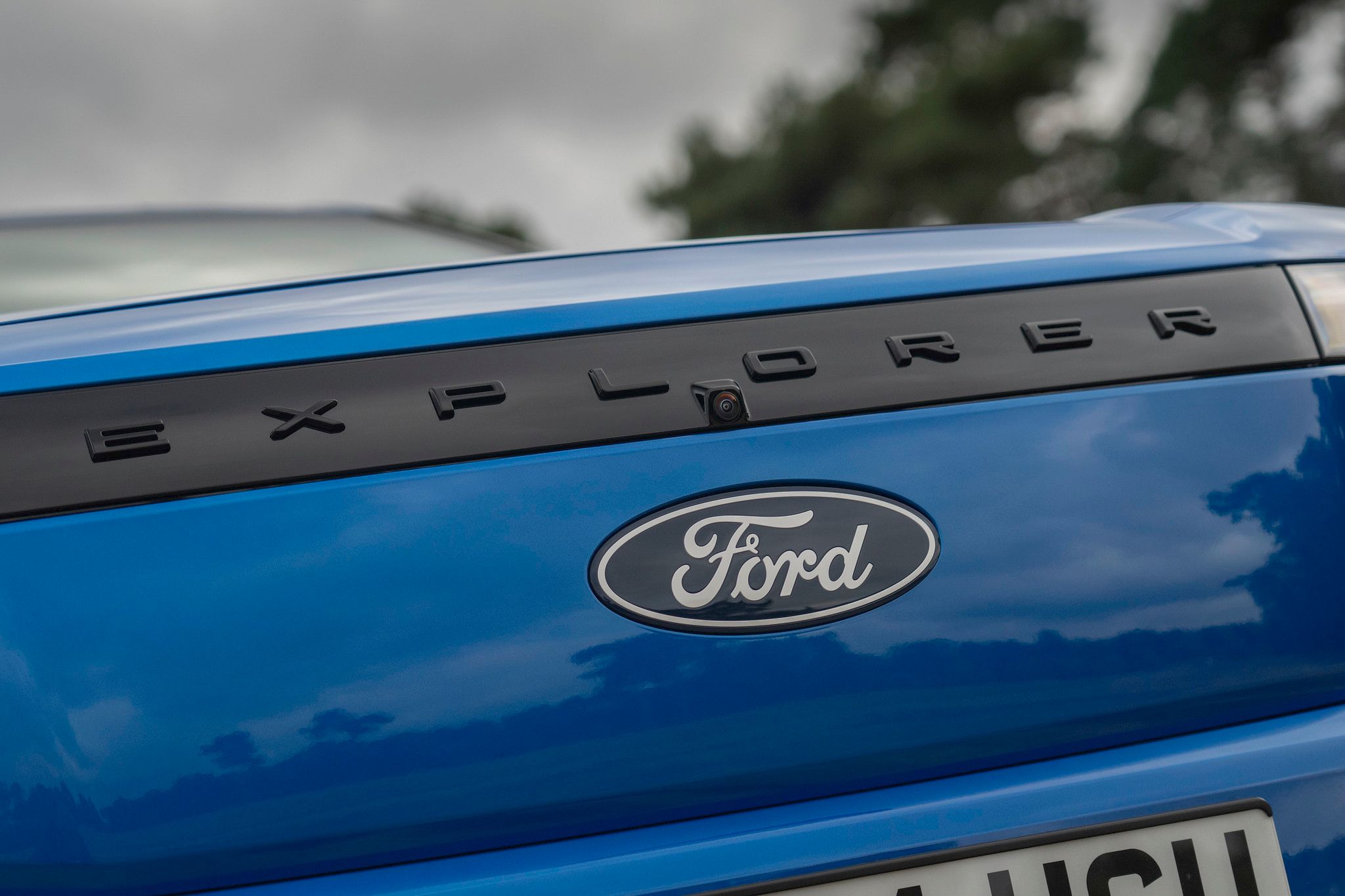
The Explorer is available in three key specifications - Style, Select and Premium.
Trim levels
- Style: This is the entry point to the Explorer range, but still gets loads of features such as dual-zone climate control, a 14.6-inch infotainment system with Ford’s SYNC software and front and rear parking sensors.
- Select: Upgrade to Select and you’ll add a 12-way power adjustable driver’s seat, keyless entry and start, and a heated steering wheel. Wireless phone charging is also introduced at this grade.
- Premium: This grade gets all of the bells and whistles that you could want, including LED ambient lighting for the interior, a powered tailgate and upgraded Matrix LED headlights for better visibility at night.
Engines
The Explorer is available with both single- and dual-motor setups, but the real difference comes in battery size. Entry-level cars get a compact 52kWh battery for a range of 239 miles, while Extended Range cars get a larger 77kWh battery which unlocks a range of 374 miles. Dual-motor cars also get the larger battery size.