Land Rover Defender review
The classic Land Rover Defender is a true automotive icon, offering legendary off-road ability and a rugged, back-to-basics charm that's impossible to replicate.
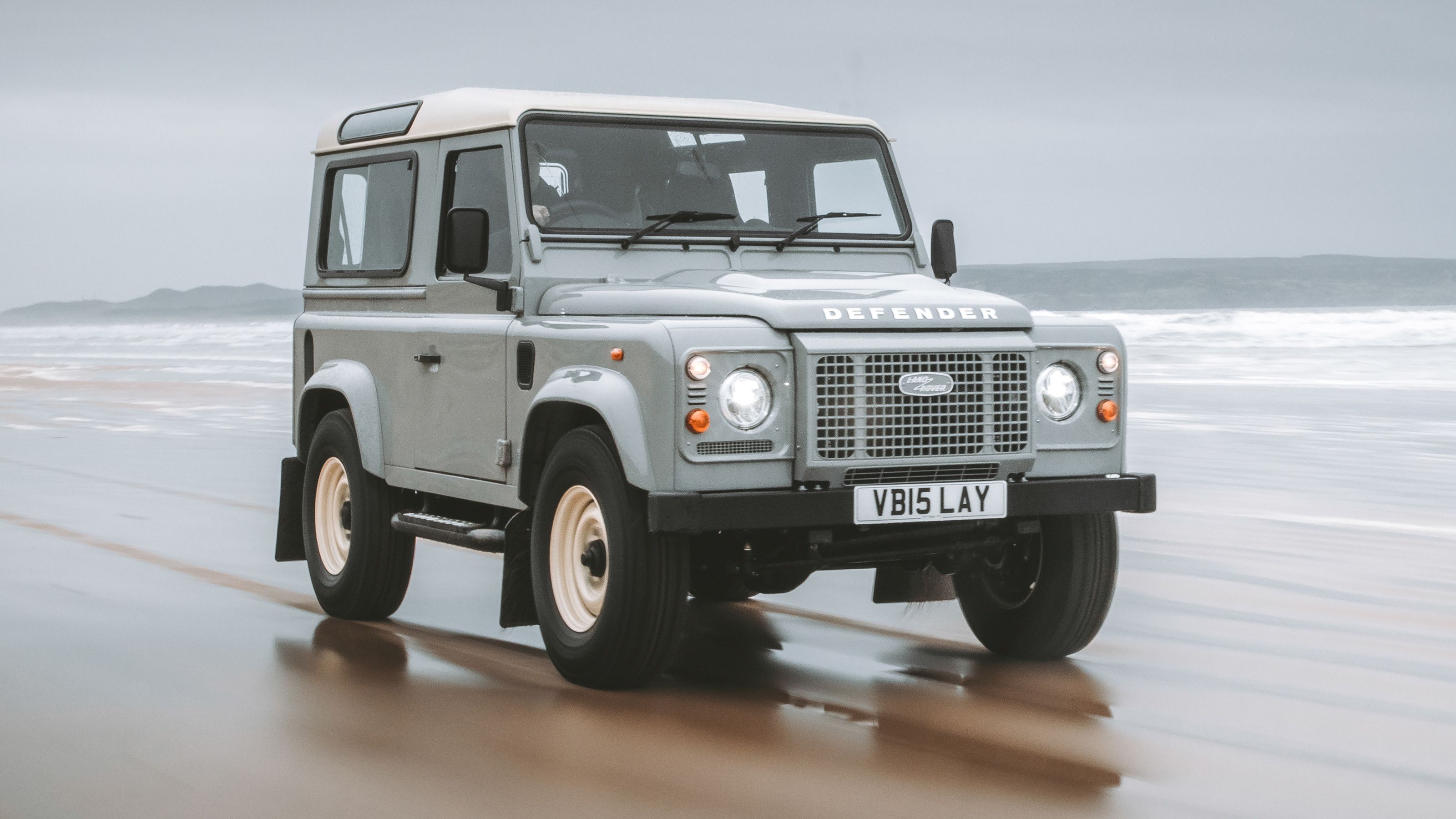

Author: The Cazoo editorial team
6th Jan 2026 – 8 mins read
There are few vehicles as instantly recognisable as the classic Land Rover Defender. Its boxy shape is a true icon of British motoring, representing adventure, durability, and a go-anywhere spirit. For decades, it was the definitive off-roader, a simple, tough workhorse beloved by farmers, explorers, and even the Queen. This isn't a car you buy with your head; it's a car you buy with your heart. It was designed for a purpose, and that purpose was to conquer the toughest terrain on the planet. As a result, it’s not particularly comfortable or refined on the road, and the interior is very basic. But that’s all part of its charm. The Defender is an experience, a throwback to a simpler time of mechanical, analogue driving. If you want a characterful classic that’s unstoppable off-road, nothing else comes close.
Pros
- An undisputed automotive icon with a legendary reputation
- Genuinely incredible off-road ability
- Holds its value extremely well on the used market
Cons
- Very poor to drive on normal roads
- Expensive to run with inefficient engines
- Extremely basic interior with few creature comforts
Interior
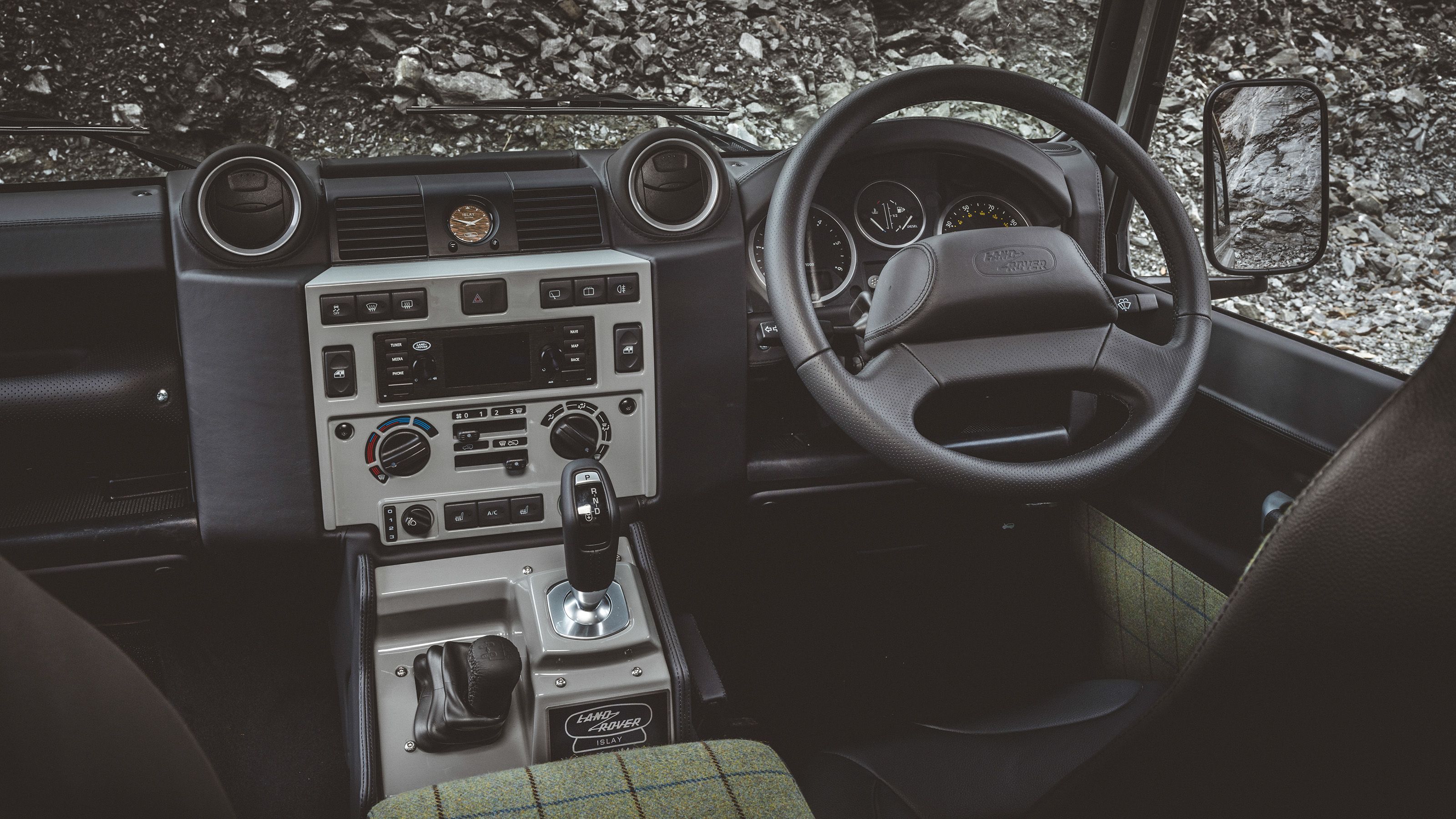
Dashboard & tech
Step inside a classic Defender and you’ll find an interior that’s best described as functional. It’s a world away from modern, tech-filled SUVs. The dashboard is simple and utilitarian, with chunky, durable controls designed to be used with gloves on. Most models are very spartan, with even a radio not being standard on some entry-level versions.
This is a cabin built for a purpose, and that purpose is not luxury. The driving position is famously quirky and a bit cramped, with limited adjustment. However, its simplicity is a huge part of its appeal. There are no complicated touchscreens or confusing menus, just honest, mechanical controls. Many used examples will have been modified by previous owners, with upgrades like more comfortable seats or a modern stereo system.
Comfort
Comfort is not the Defender’s strong suit. The ride on the road is harsh and bouncy, and you’ll feel every bump and pothole. It’s a noisy car, with plenty of wind, road, and engine noise making its way into the cabin.
The seats are basic, and long journeys can be tiring. But again, this is all part of the authentic Defender experience. It’s a vehicle that connects you directly to the road (and the trail) in a way that modern cars simply can’t. If you’re looking for a smooth, relaxing ride, this is not the car for you.
Quality
The Defender’s interior is built to be tough, not plush. It’s made from hard-wearing, robust materials that are designed to withstand a lifetime of mud, water, and hard work. The floors are often rubber for easy cleaning, and everything feels solid and built to last. It’s a world away from the soft-touch plastics and fancy trim of a modern Land Rover, but its rugged construction is exactly what owners love about it.
Practicality & boot space
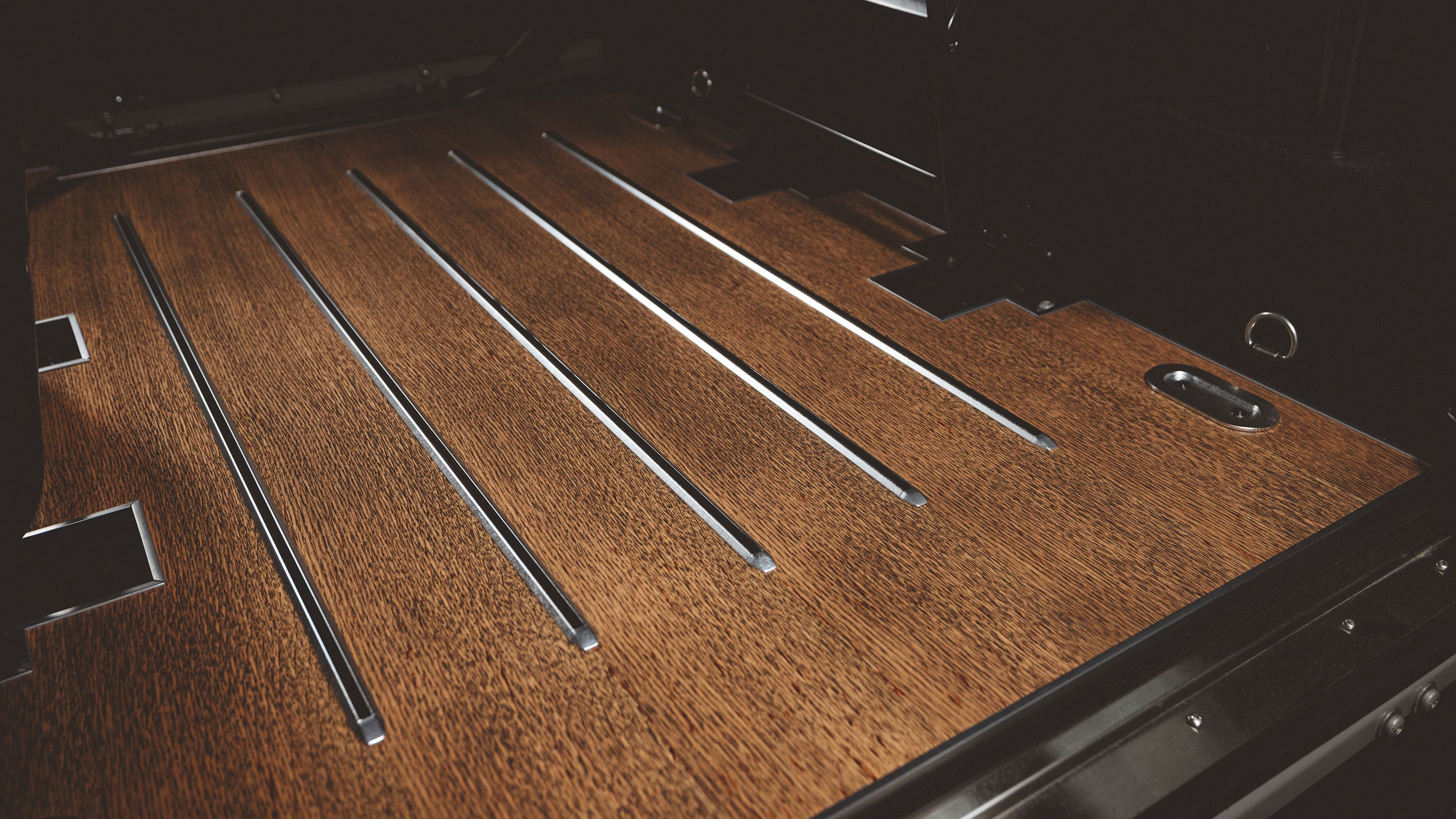
Interior space
The Defender’s practicality depends entirely on which version you choose. The short-wheelbase ‘90’ models have limited space in the back, while the long-wheelbase ‘110’ and ‘130’ versions are much more practical. These longer models can be configured in various ways, with some even capable of seating up to 11 people on simple bench seats. It’s incredibly versatile, if not particularly comfortable for all those passengers.
Load space
There isn't one set boot size for the Defender, as it was available in so many different body styles, including as a pick-up, a hard-top van, and a station wagon. The long-wheelbase versions offer a huge amount of load space, especially with the rear seats removed or folded away. It’s a vehicle that can swallow an enormous amount of kit, which is why it’s so popular with adventurers and for commercial use. The final models could also tow up to 3,500kg.
Versatility
Versatility is the Defender’s middle name. It was designed to be adapted for any task, from being a farm vehicle to an overlanding expedition truck. With a huge range of aftermarket parts and accessories available, you can customise a Defender to do almost anything you want. Its primary function is as the ultimate off-road tool, and in that role, it remains almost unbeatable.
Driving
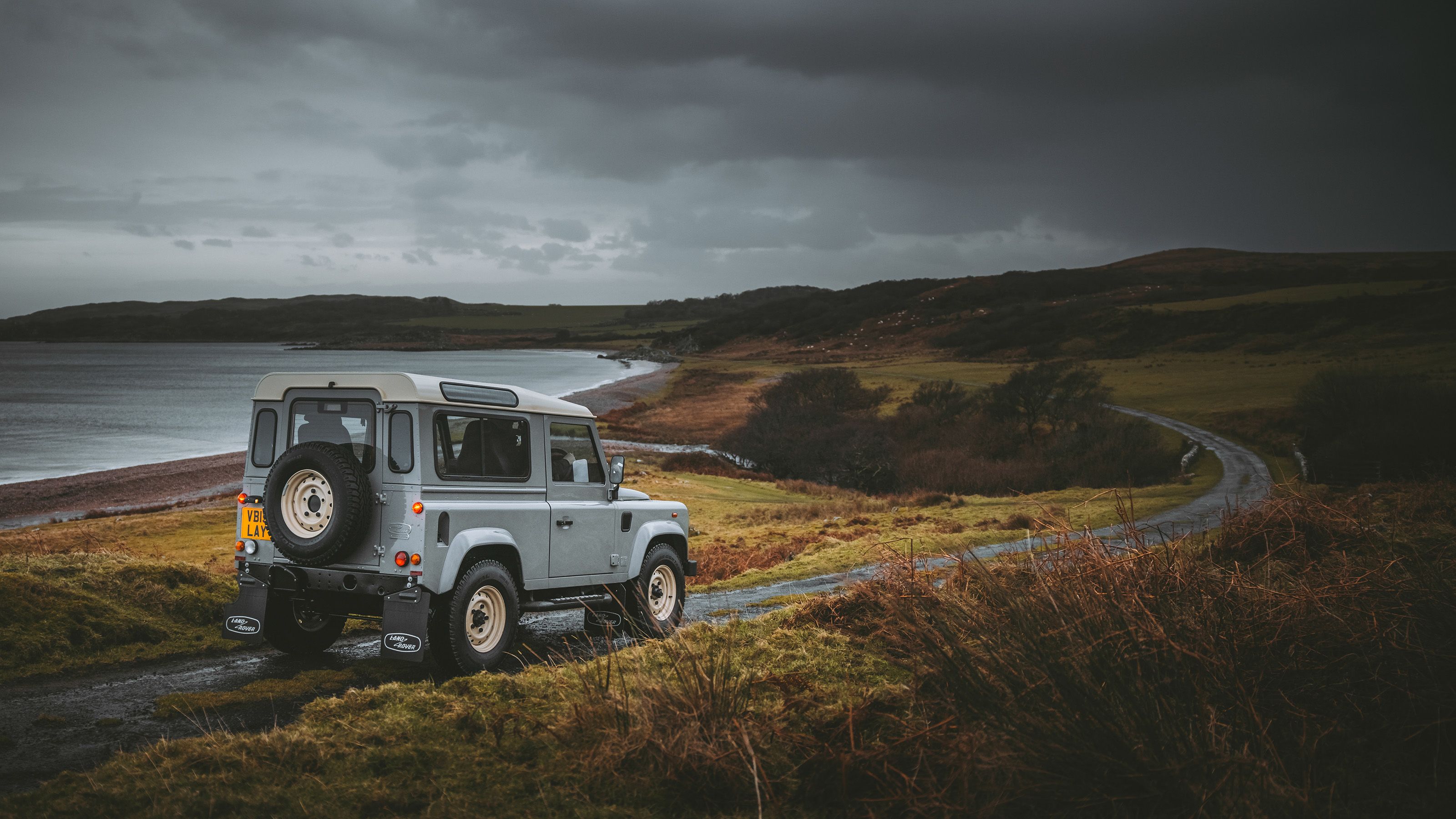
Driving experience
The Defender has a split personality when it comes to the driving experience. Off-road, it is simply imperious. With its sturdy chassis, impressive ground clearance, and permanent four-wheel-drive system with low-range gears, it can tackle obstacles that would stop most other vehicles in their tracks. It remains a benchmark for off-road performance.
On the road, however, it’s a different story. It feels unwieldy and agricultural compared to any modern car. The steering is heavy and slow, there’s a huge amount of body roll in corners, and the ride is bumpy on almost any surface. Driving a Defender requires your full attention, but for many, this engaging, mechanical feel is a key part of its charm.
Performance
The final versions of the classic Defender, sold until 2016, came with a single engine option: a 2.2-litre four-cylinder diesel engine paired with a six-speed manual gearbox. It’s a noisy and unrefined engine, but it produces plenty of low-down torque, which is perfect for off-roading and towing.
Performance is not a priority. The 0-60mph sprint takes a leisurely 15.8 seconds, and the top speed is just 90mph. Most modern family hatchbacks will leave it for dead in a drag race, but that’s missing the point. This engine is a workhorse, designed for pulling power, not outright speed.
Running costs
Fuel economy & CO2 emissions
The Defender’s inefficient setup was one of the main reasons it was eventually discontinued. The 2.2-litre diesel engine struggles to achieve 30mpg, and CO2 emissions are very high. This makes it an expensive vehicle to run day-to-day. If you’re looking for a frugal commuter car, you should definitely look elsewhere. However, since all models are now used, road tax is a standard flat rate.
Value for money
The Defender is a unique proposition when it comes to value. While it’s expensive to run, it holds its value incredibly well. Because of its iconic status, demand for good-quality used examples is very high, and prices have remained strong since it went out of production. It can be seen as a solid investment, as it’s unlikely to lose much money, and prices for the best examples may even rise.
Reliability & Warranty
The Defender’s simple, back-to-basics construction means that it is relatively easy to fix, and a huge community of specialists and enthusiasts exists to help keep them on the road. They are known for being tough, but they do require regular maintenance, especially if used for serious off-roading. Look for signs of a hard life, check the chassis for rust, and always insist on a full service history.
Safety
Safety features
This is an area where the Defender shows its age. It was designed long before modern safety standards came into effect. It has never been officially crash-tested by Euro NCAP, and it lacks the safety features we take for granted today, such as airbags and advanced driver assistance systems.
The most recent models from its final years of production did come with ABS, traction control, and dynamic stability control, but it still falls far short of the safety offered by any modern SUV. This is a significant consideration, especially for those thinking of using a Defender as a family car.
Trims & Engines
Trim levels
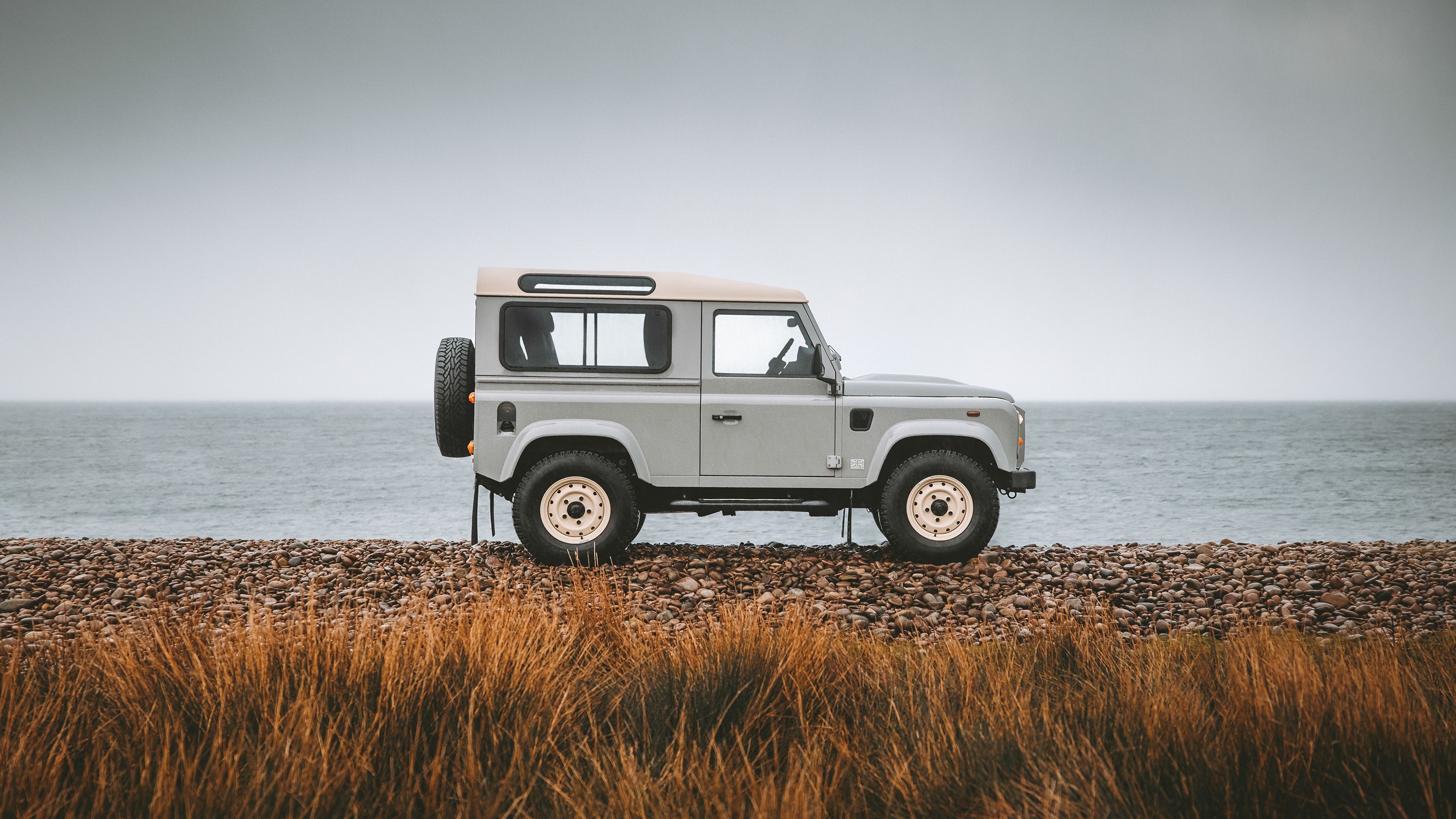
The Defender was famous for its simplicity, and the trim levels reflected this. The base models were extremely basic, with steel wheels, a rubber floor, and not much else. Over its long life, Land Rover offered a huge number of specifications and special editions.
Higher-spec models like the XS added features like air conditioning, heated seats, and part-leather trim. Towards the end of its life, Land Rover launched several special editions like the Adventure, which came with extra underbody protection and a roof rack, celebrating the model’s heritage. The sheer number of variations and modifications means that almost no two used Defenders are exactly alike.
Engines
While various engines were used over the Defender’s 33-year lifespan, the final models produced until 2016 all used a 2.2-litre TDCi four-cylinder diesel engine. This was exclusively paired with a six-speed manual gearbox and a permanent four-wheel-drive system with a selectable low-range transfer box for serious off-roading. Earlier models used a 2.4-litre diesel engine, and older versions still can be found with a range of different petrol and diesel units.