Tips for driving EVs in winter
When it comes to driving your EV in winter, there are several tips to help make your electric vehicle more efficient and go further on a single charge.
The Cazoo editorial team
Published on 27 February 2026 | 1 min read
Driving an EV in winter involves a lot more planning and can be time-consuming for many drivers.
The drop in temperatures means that an EV’s battery won’t be as efficient compared to the summer months. This also means that your electric vehicle may not go as far on a single charge as it would when it’s warm outside.
Plus, slippery road conditions mean your vehicle will have less traction if you find yourself in an emergency situation, which could lead to an accident.
So, if you daily drive an EV and want to know how to get the best out of it and stay safe on the roads, here are some useful tips you should know for driving your electric vehicle in the winter.
Use regenerative braking
Regenerative braking is used in EVs as a way of capturing and storing kinetic energy from a car’s momentum and converting this into electricity in order to slow the vehicle down.
There are several positives to regenerative braking, and it’s a great way to increase your vehicle’s range in the winter.
The benefits are that the energy stored from regenerative braking is then converted back into the electrical system, which charges up your EV’s battery as you drive, which increases the range.
Regenerative braking also reduces wear and tear on your car, as brake discs and pads are used less frequently, which means that they can last longer, making it cheaper to run.
On certain electric vehicles, there’s a ‘One-pedal’ drive mode, allowing the regenerative braking to gradually slow your car down to a standstill. With this mode activated, there’s very little need to use the ‘traditional’ brakes unless you need to make an emergency stop. This takes the strain out of daily driving, particularly in stop-start city traffic.
Search for used cars on Cazoo
Make use of your car’s preheating function
Lots of EVs come with a preheating function, which allows you to control your car’s heater via an app on your phone provided by the vehicle manufacturer.
This allows you to set the car’s cabin to a certain temperature at a particular time of day, which means by the time you get in the vehicle, it’s nice and toasty. The preheating function not only warms the interior up, but it also preheats the battery too, so it’s at its most efficient temperature before you set off on your journey, meaning its range will be better, allowing you to go further on a single charge.
Also, having a preset cabin temperature not only makes it warmer for you, but it uses less energy from the battery if you were to turn the heater up.
Search for used cars on Cazoo
Plan your journey
Whether it’s winter or not, always plan your journey, as it gives you a better idea of where to stop for breaks and charging stops.
By planning your journey, you can work out the most efficient route for your EV, where there is heavy traffic, and, if it's predicted to snow, the best routes that avoid non-gritted roads.
It’s important that you make sure that you know where the public chargers are. If you’re travelling hundreds of miles, you’ll need to find reliable, fast and accessible devices which can charge your car quickly. The good news is that most EVs incorporate charging locations into their satellite navigation systems, so you should be able to find one easily.
Search for used cars on Cazoo
Keep your EV topped up with charge and use your home charger
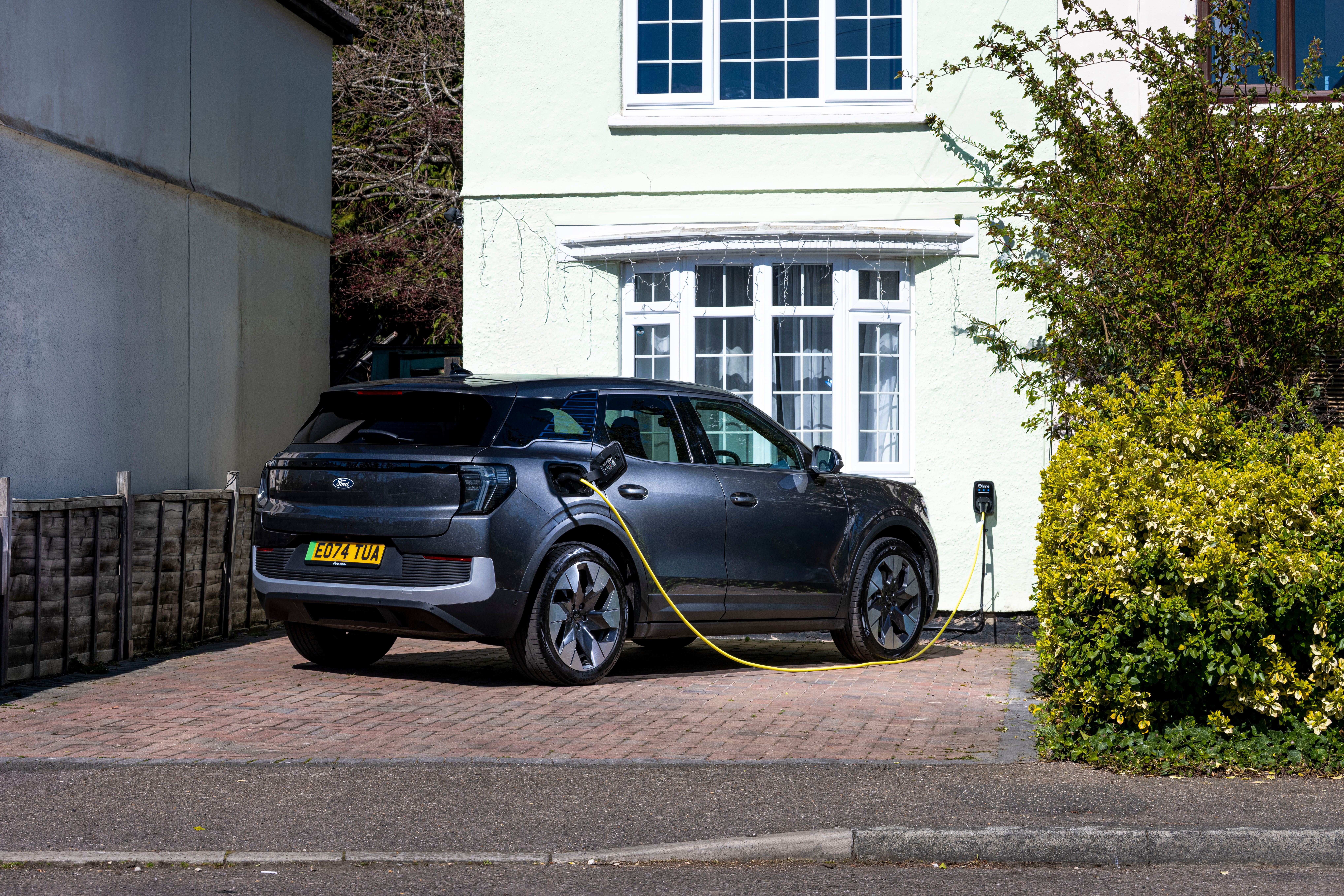
If you’re lucky enough to have your own home charger and a driveway to park your car on, make the most of it.
Not only does it make it a lot more convenient for you, but it’s a lot cheaper than public charge points.
The benefits of charging your EV at home mean you can plug it in at off-peak times, usually from 12am to 6am, at a tariff rate of just 7p per kilowatt. Fully charging an average-sized EV will cost between £10 and £13 when using this tariff.
Charging your car up at home guarantees your EV to be 100 per cent fully charged in the morning, giving you peace of mind when driving in the winter that you’ve got enough range to get to your destination and back.
Also, we’d recommend that you don’t run your EV too low or too high on charge. Anything below 20 per cent and above 80 per cent can put further strain on the vehicle’s battery pack, which can prolong its lifespan.
Search for used cars on Cazoo
Check your tyres
Tyres are one of the most important safety features fitted to your car, and in the winter months, you need to check them regularly.
EVs are usually heavier than combustion-powered vehicles, which means that there is more weight put on their rubber, so always check the condition of the tyres before you travel in the winter.
The colder climate means that ice, snow, salt and rain will cause road surfaces to be slipperier, meaning your tyres will have less traction and grip, especially if they’re not in good condition.
Here in the UK, the legal minimum tread depth requirement is 1.6mm. Anything below that reading will cause the car to fail its MOT and will not be deemed ‘safe’ to use on the road. If your tyres are thin on tread, get them replaced immediately by a trained mechanic.
Look at the condition of the tyre sidewalls. Check for cracks, splits, cuts and perishing on the rubber, as all of these signs could increase the risk of a blowout at high speeds, which could cause a serious accident.
Always check how much pressure is in the tyres too, as underinflated and overinflated rubber can be extremely dangerous to drive on. Wrongly-pressurised tyres will often mean that a car will take longer to stop, won’t drive in a straight line, and can cause a higher risk of a blowout at speeds, as well as hydroplaning on wet surfaces. Most cars will have a tyre pressure ‘PSi’ label located in the door shut, glovebox or in the owner’s manual. Make sure you inflate your tyres to the manufacturer’s correct pressure readings.
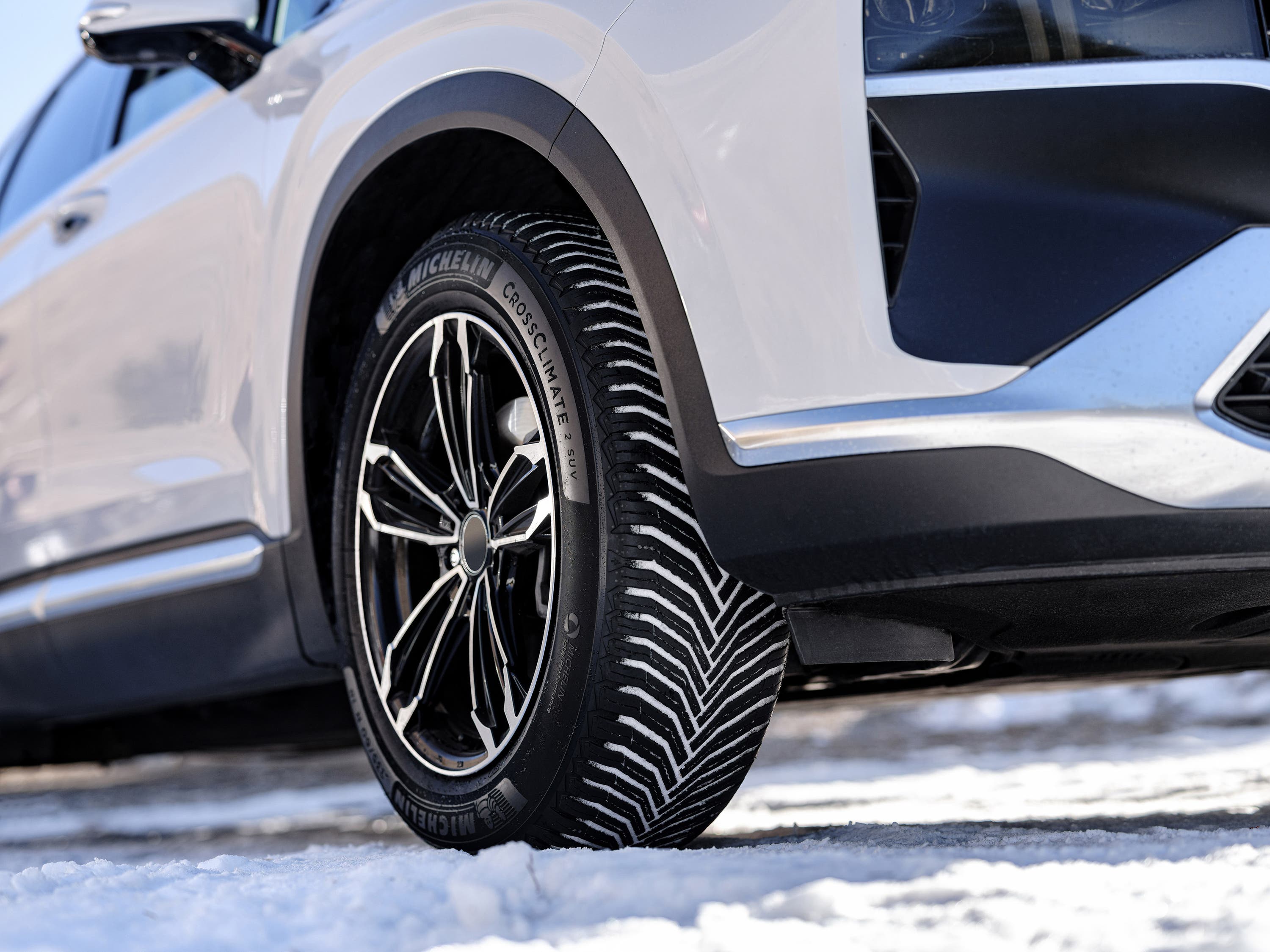
A great tip for driving your EV in winter is to invest in a set of winter tyres, as they have a thicker tread pattern, softer rubber compounds and sipes that are designed to disperse water and grip into snow. Winter tyres on your EV are a safe option, as they improve stability, traction, grip and help improve the vehicle’s stopping distance.
Search for used cars on Cazoo