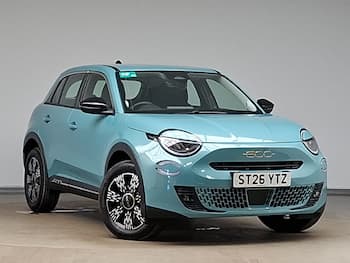
Fiat 600 review
The Fiat 600 was a welcome addition to the brand’s range as a more practical step above the 500, but the game moves on quickly and it struggles to keep up in some areas – even from within its own family

Author: Charlie Harvey
15th Jul 2026 – 15 mins read
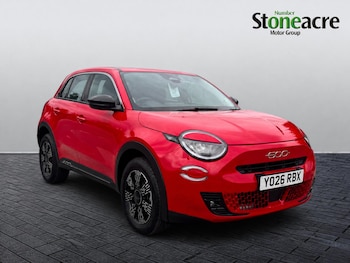
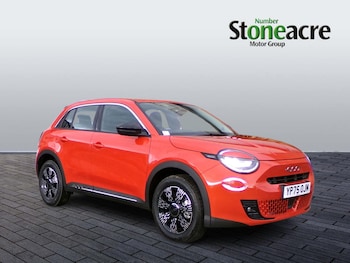
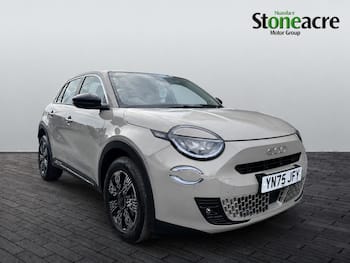
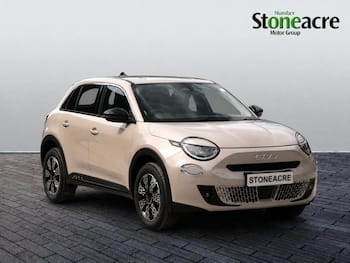
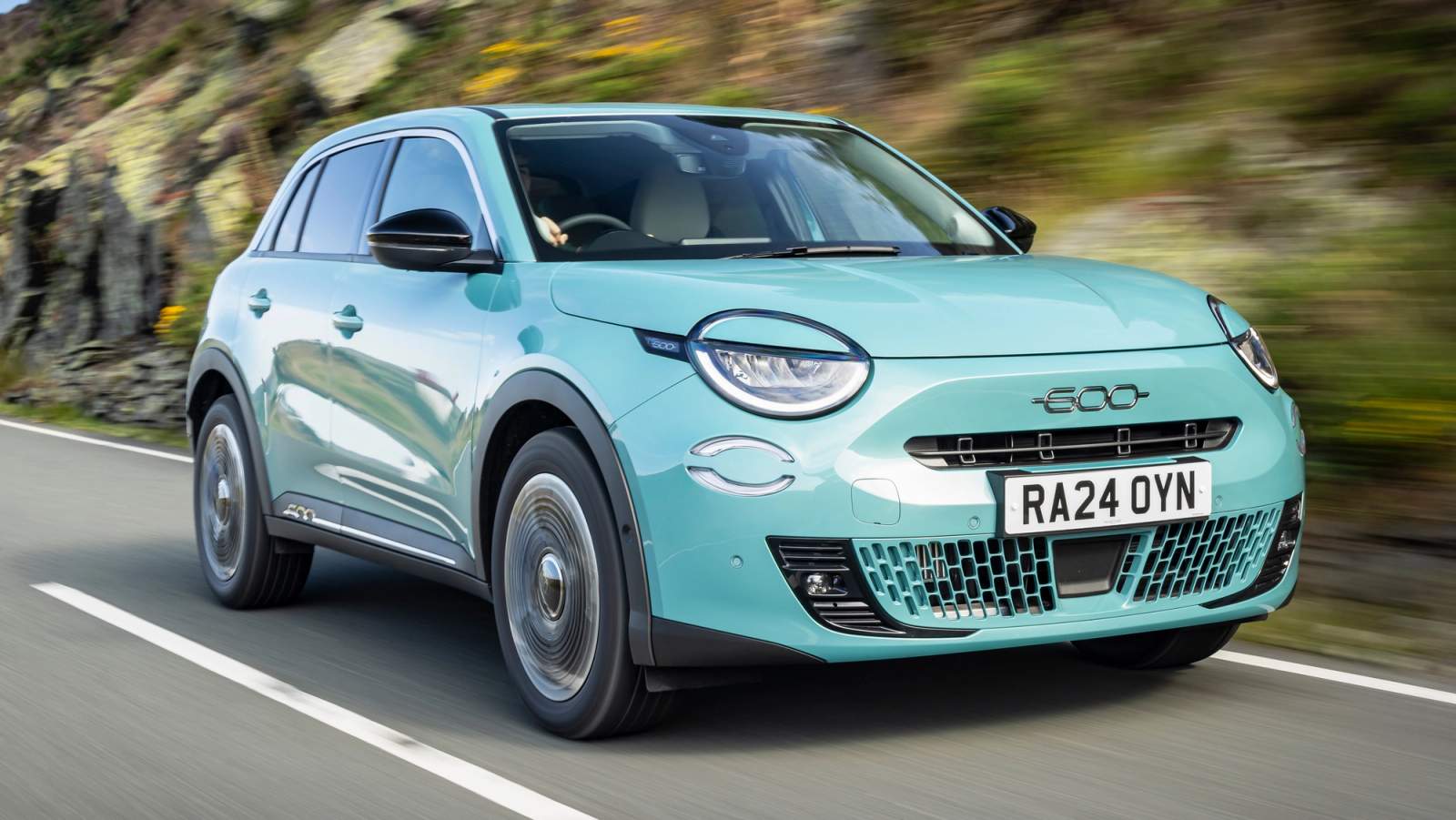
After so many years of the Fiat 500 dominating the brand’s lineup, with a distinct lack of other models, the Fiat 600 did feel like a breath of fresh air with its larger, more practical size and the option of varied electric, hybrid and petrol options. The problem is, it still falls into the trap of riding the retro charm a little too much, when some important aspects of the car are lacking. While I may have mentioned it’s more practical than the Fiat 500 city car, that’s not to say it’s particularly practical overall. The Fiat 600 looks like a small SUV, but it’s surprisingly cramped in the back, and the boot’s nothing to write home about. It’s best to think of it as a hatchback on stilts. The problem is, since the Fiat Grande Panda arrived sitting below it in the lineup, it feels as though the 600 has strong competition from within its own family. The Grande Panda has a little more flair than the 600 with nods to its rich history from the 80s and 90s that feel fresh, while the 600 does really feel like a scaled up rehash of the 500’s overdone 50s retro vibe. The space in the back seats honestly feels about the same in the Grande Panda, and shockingly that car’s got a bigger boot, too – which poses the question: what’s the point of the 600? Well, the original rebooted Fiat 500’s appeal was such that it ran from 2007 to 2024, with the electric (and now hybrid) version following it, so the 50s styling that’s carried over to the 600 might still be a big pull for many buyers – it’s undoubtedly a cute-looking thing. Even if it’s not to your taste, the Jeep Avenger is the same car underneath with a boxier, more rugged look. Aside from that, in isolation the 600 does have a few things going for it compared with the Grande Panda. Admittedly, the Fiat 600 comes with more tech than you can get in that car, so if that’s a priority you might also be swayed.
Pros
- Bold cutesy looks
- Easy to get in and out of
- 600e EV comes with a heat pump as standard
Cons
- Materials feel cheap on various interior touchpoints
- Handling is vague, with inconsistent steering feel
- Interior and boot are smaller than you’d expect
Interior:
Dashboard & tech
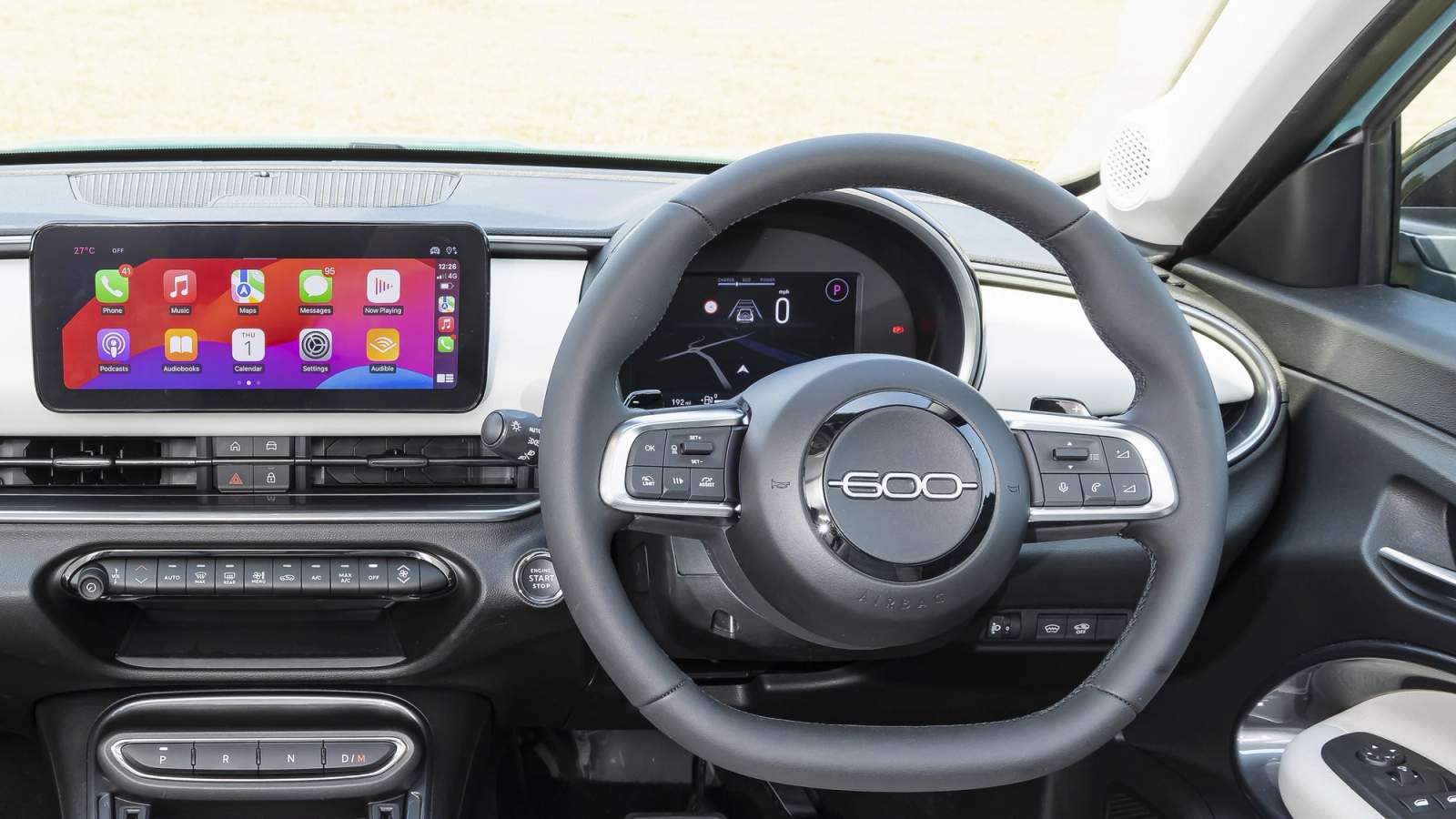
The Fiat 600 has only been out for a few years, but it arguably already feels a little dated – that’s testament to the fast rate at which Fiat’s subsequent cars have improved, though, not to mention that of rivals in the wider industry. Most buyers should be happy enough with the simplicity of the layout of the screen on the driver’s binnacle, as the readouts are clear and show all the relevant information needed, even if other cars’ systems are larger and more crisp.
If you’re coming from an older, simpler petrol car you might notice the lack of a rev counter on the screen in hybrid and EV models – it’s replaced by a gauge that tells you how much power you’re using when you put your foot down, and encourages you to keep the bar in the ‘Eco’ sweet spot. When you let off the accelerator or go downhill, this bar shifts to the left into ‘Charge’ as the energy generated from braking goes back into the battery. You can toggle through different readouts, including one that shows whether you’re using power from the engine or electric motor on the hybrid, should you wish. The 600 may not be fun to drive (more on that further down) but this layout does instead succeed in helping you to drive more economically.
The Fiat 600’s infotainment interface is rather basic, but it does make it easy to use. It comes with wireless Android Auto and Apple CarPlay, and I found it was best to make use of this system. It feels familiar and consistent, which means you’ll find it easy to use if you’ve ever owned another car with this compatibility. I like that there’s always a virtual button in the top right-hand corner to go into Android Auto, rather than having to navigate various submenus to find it on the fly.
Happily, not everything is resigned to the touchscreen. There’s a set of piano-key-like physical buttons below the touchscreen to tweak the climate control settings, which make it easy to do so while driving with little distraction. It would be good if there were physical buttons here for the heated seats, though – those are hidden in a submenu on the touchscreen. Immediately below the touchscreen there are four buttons: one to shortcut to the home screen and another to access vehicle settings, at least – the other two are there for putting on the hazard lights or locking and unlocking the car from the inside.
One peculiar quirk of the steering wheel controls is how the controls for skipping and rewinding music is controlled with a switch that goes up and down, while the volume controls are individual buttons. It would have made more sense for the volume to be the up and down switch and the skip and rewind buttons to be individual buttons.
Comfort
The Fiat 600’s seats on my La Prima spec test car were comfortable and supportive enough. It was only days into my time with the car that I realised these were heated – the option is well hidden in the infotainment screen. During the heat of summer I didn’t feel the need to test these, but that’s a nice feature which will become useful in the winter. The seats are electronically adjustable, with tweaks to the lumbar support on a button to the side of the seat. I also discovered a massage function here – this wasn’t the most sophisticated feature, but it’s a nice addition you’d only expect from a much higher-end car, nonetheless.
Quality
It has to be said that quality isn’t a strong point in the Fiat 600. While the design with the colour-coded retro-inspired dash accents may look good in pictures, some of the plastics used are a bit cheap and tacky.
That aside, in my top-spec La Prima test car, the faux-leather seats do look and feel good and upmarket, which was a plus. They went some way to lifting the interior as a whole, but when regular touch points such as the doorcards are made with scratchy black plastic, it’s a frequent reminder of cost-cutting.
Build quality is good, however. I noticed no creaks or rattles when driving around in the Fiat 600, and the buttons in the centre for the climate control felt solid and pleasing to the touch. While some Stellantis cars (models from brands including Fiat, Peugeot, Citroen, Jeep, Alfa Romeo and more) have made use of shiny piano black plastic elements in the past, these are absent in the Fiat 600 – that’s actually a good thing, though, because whilst they look good initially, they’re easy to scratch. You get the impression that the materials used in the 600 are hard-wearing and up to the challenges of daily family life.
Practicality & boot space:
Interior space
In the Fiat 600, the floor isn’t as low as you’d expect from a car that sits so high – that goes for both the EV and the hybrid. Since both cars share the same platform and the electric 600e’s batteries sit in the floor, I can only imagine this is something that was carried over to the hybrid to save costs on redesigning the floor pan. It would have been great if the hybrid’s floor space had been tweaked for extra legroom.
Headroom is plentiful in the 600, so it does feel spacious in that aspect. It’s a shame, though, that the rear seats are so tight, and you might have to push the front seats rather far forward for taller back-seat passengers. Here comes another comparison to the Grande Panda, but bear with me – the rear seat space in that car felt comparable to the 600’s, which is a bit of a problem, given the 600 is more expensive to buy new, and has a larger footprint.
Boot space
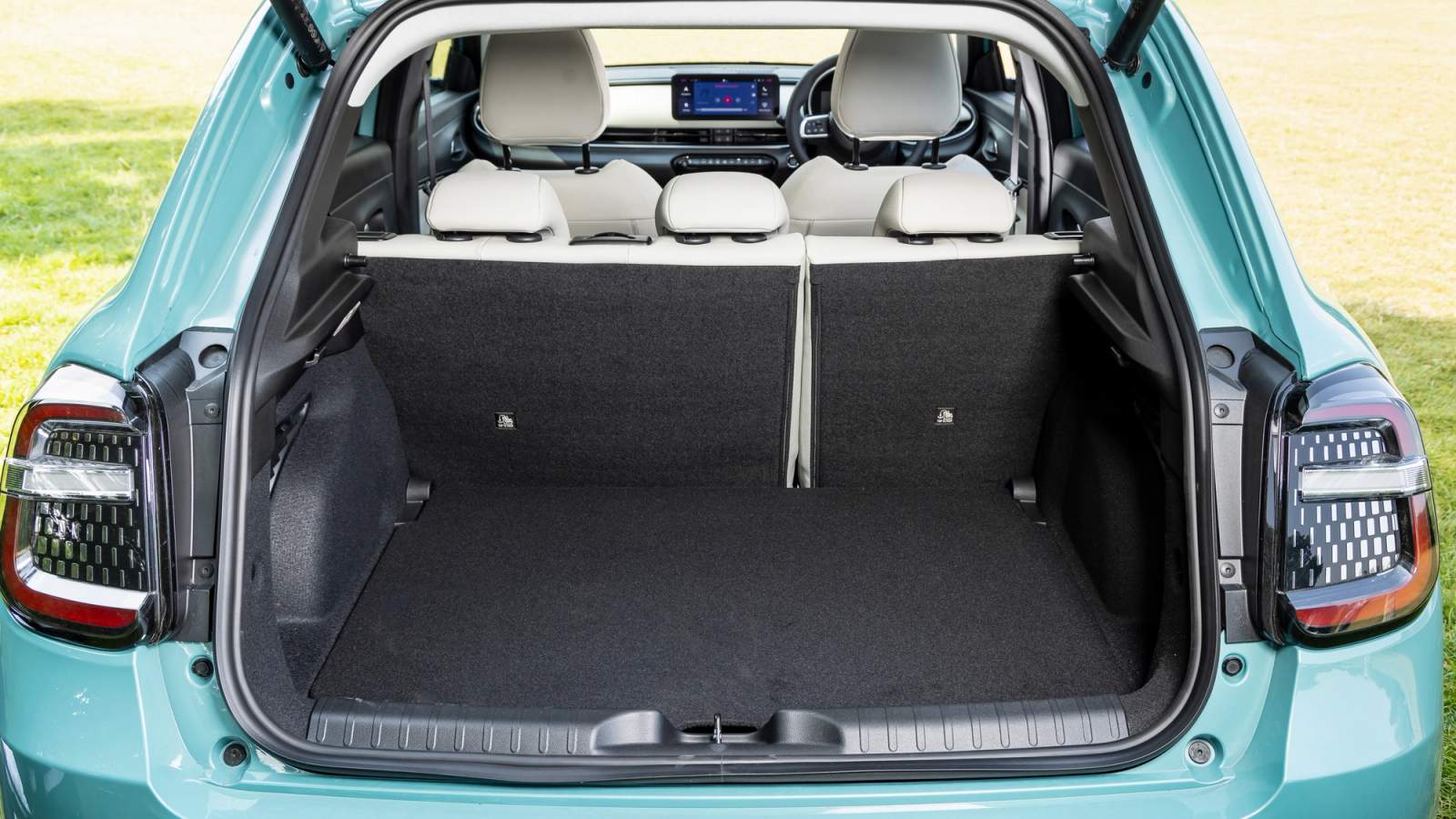
Sadly, the Fiat 600’s boot space is another disappointing area. You get 360 litres to play with if you go for the electric 600e model, and that increases to 385 in the hybrid. Those figures are disappointing when you consider the car’s SUV looks, which give you the impression it’s going to be super practical. Admittedly, those figures are about enough to accommodate most buyers who will just be using the car to do the weekly shop, but when you consider the cheaper Grande Panda has a bigger boot capacity (sorry, I can’t help but keep comparing them) it confuses things further.
That said, the shape of the Fiat 600’s boot is much better than that of its sibling, so the difference might be negligible in practice. The Fiat 600’s boot floor is adjustable, so you can eliminate the load lip, making heavier items easier to put in the back.
My La Prima test model came with a hands-free operated tailgate, which came in handy after I bought a large tray of fizzy drink cans from the supermarket. With all my hands full of shopping including the heavy cans, I wiggled my foot under the car and the powered tailgate lifted, making it a breeze to get the shopping into the boot in one go. Lots of cars do have this, but you don’t realise how useful these features really are until you live with them.
Versatility
The interior of the Fiat 600 has some useful large spaces to place items in the centre console and armrest. Most of the storage is focused here, but there is lots of it. My test car had a wireless smartphone charging pad hidden under a foldable tunnel pad cover in the centre console – that was a nice touch, because it allows you to keep your phone charged without making the interior look cluttered. The wireless charging pad itself, however, said it was charging my phone when it wasn’t – I came towards the end of a long drive with no charge on my smartphone, which ended up being a problem as it then disconnected from the infotainment system. I can’t say whether the issue was with my phone or the Fiat, but that’s worth checking out if you take a 600 for a test drive.
The doors have deep, wide pockets which come in useful for small drink bottles, and there are simple but effective partitions you can move around in the centre storage bin to accommodate various bottle sizes – they came in very useful when going through a fast food drive thru with an order that included paper cups and a bottle of water.
Driving:
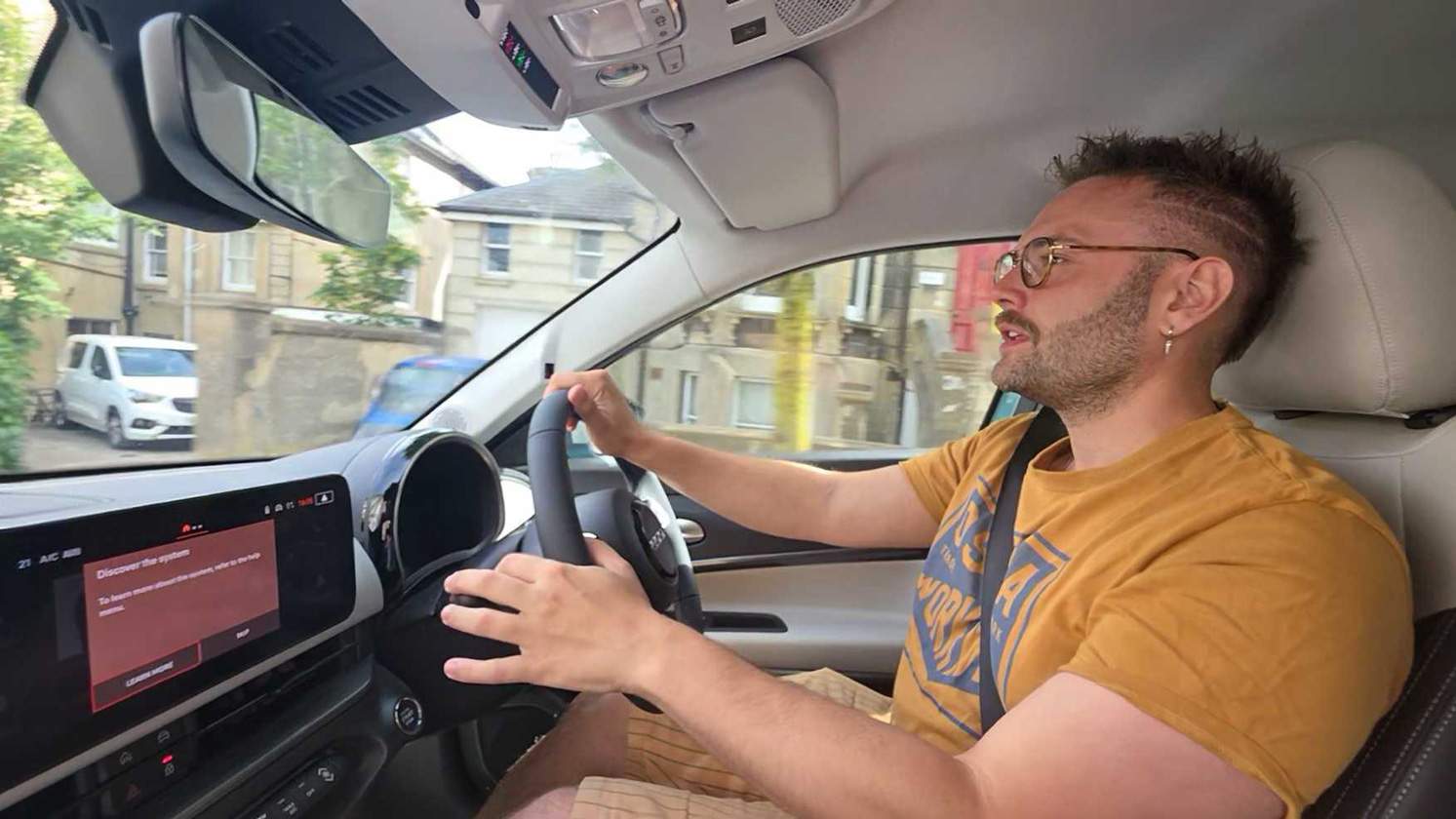
Driving experience
The majority of my time with the Fiat 600 range has been spent with the hybrid 145 model. It’s safe to say that it’s not a very engaging car to drive, but it’s well suited to driving around town despite what its chunky stance might have you believe on first impressions.
The steering is very light, which means manoeuvring into and out of parking spaces on the street is a doddle. The hybrid system is cleverly integrated so you can set off and make progress at very low speeds solely on the electric motor. This means it’s quite smooth to set off, and it’s calibrated in a way that’s not jerky or sudden.
The real downside to the steering is that it also feels too light and without much feel when you’re on the move on winding country roads. There’s so little feedback that it can be disconcerting at times because it’s hard to judge the angle at which you’re entering corners. That said, spirited driving isn’t really what the Fiat 600 is intended for, so it can be somewhat forgiven – for a more hardcore, communicative drive, buyers are catered for with the Abarth 600e.
The Fiat 600 is good to drive on the motorway, where it’s mostly comfortable and planted. The La Prima model I tested came with lane keep assist and adaptive cruise control, which can be used altogether as the Co-Driver system. This will cruise along at your desired speed, slow down and speed up keeping a safe distance from you and the driver in front, while also gently steering the 600 in lane. You still have to keep your hands on the wheel and be attentive to other drivers as you’re ultimately still the responsible driver, but it does take the stress out of motorway driving to some extent. The problem with these systems (not just on the Fiat, but across many cars) is that the computer tends to think you’re not holding the steering wheel even when you are, frequently blasting out warning beeps and bongs. I did notice that the hybrid returned better MPG when left to manage its own acceleration and deceleration, which makes it worth using on long trips.
The ride quality in the Fiat 600 is mostly good. Its spongey suspension setup irons out most potholes and bumps, but there were occasions where smaller blemishes on the road’s surface did cause shudders through the cabin. On the motorway, the setup also felt a little bouncy at speed – not uncomfortably so, but it felt as though the car couldn’t quite settle.
Performance
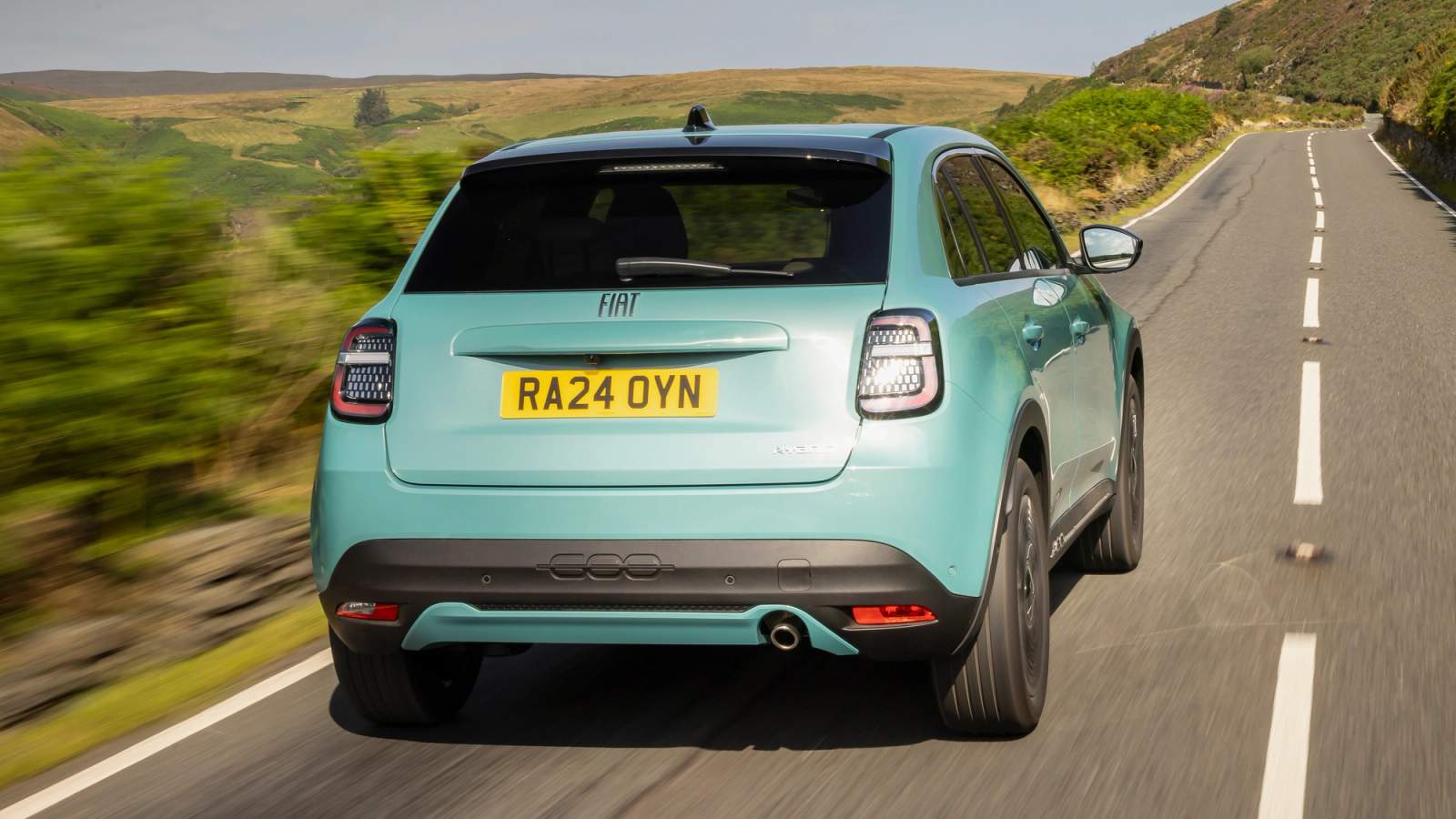
The Fiat 600 is available as a petrol, hybrid or a full EV, and all versions are front-wheel drive. The hybrid comes in two power outputs with either 110bhp or 145bhp coming from a small electric motor and a 1.2-litre petrol engine. My test car came with the higher power option and felt spritely enough when you put your foot down, though there was a notable delay until the car responded when I did so – the standard 600 has clearly been set up for calm and casual power delivery. I’ve driven the same 110bhp setup in the Grande Panda, and it did feel rather slow, but most drivers will be perfectly happy with the power on offer here. The 145bhp gives more confidence for overtaking, with a 0-62mph time of 8.5 seconds – that same sprint takes 10.9 seconds with the 110bhp setup.
While Fiat describes it as a mild hybrid, the 600 is able to creep along at low speeds on electric power only without starting the engine. When you have accessories such as the climate control on, or you put your foot down and ask for all the power, the petrol engine will come on more often – unfortunately when you do so, the sound and the vibration in the cabin can occasionally get irritating. That’s especially true when stuck in start-stop traffic sitting in silence. The engine shudders into life and can shake the cabin, disturbing the peace.
You won’t have such problems with the all-electric Fiat 600e. Its power delivery is very smooth – while EVs have gained a reputation for being lightning quick and ripping your face off when you put your foot down, the 600e is calibrated for a gentler experience than most EVs. 0-62mph will take around nine seconds in the 600e.
The petrol version of the Fiat 600 has actually been a rather late entry-level addition to the range. While I’ve not driven it, the on-paper performance figures sit in the middle of the range with a 0-62mph time of 10.5 seconds, which is slightly quicker than the 110bhp hybrid. The petrol may only have 100bhp, but it’s lighter, which gives it a leg-up in terms of acceleration. It’s got a manual gearbox, so traditionalists who like to change gear themselves will prefer it, but it’s still no driver’s car.
Running costs:
Fuel economy & CO2 emissions
The electric Fiat 600e was actually the first to the lineup when the car launched in 2023. The official combined electric range figure is up to 254 miles, which by recent standards is about average. In the real world, we’d estimate about 210 miles for most drivers, but this of course depends on weather conditions and the weight you’re carrying around. Fiat also says that sticking to low-speed city and town driving could see you eek out up to 370 miles from a charge, so this is the model to choose if these are the sorts of trips you’re most likely to do on the daily.
It’s always worth mentioning that if your biggest concern is lower running costs, the electric version is probably only worth your consideration if you live in a place where you can have a home wallbox charger installed, and can negotiate a lower electricity tariff to charge it. In my personal experience living in a flat with no possibility of having one fitted, public charging can get just as expensive as filling up with petrol. That’s not Fiat’s fault, of course, and more needs to be done to lower the cost of on-street charge providers’ services.
The Fiat 600 Hybrid arrived later to address lower-than-expected consumer EV appetite. It was a good move – my test model was the higher-powered hybrid with 145bhp and it proved to be economical to live with, without the stress of keeping it charged. The dash readout showed an average of around 47mpg during my time with the car, but it is worth mentioning that’s a way off the official figures provided by Fiat. For both hybrid models regardless of power output, Fiat’s numbers are up to 58.9mpg with CO2 emissions of 109g/km. Perhaps drivers with a lighter right foot – combined with cooler weather that didn’t require the AC to be on so much – would yield results closer to that official fuel economy.
As of 2026, Fiat also has a pure-petrol manual version of the 600. Official fuel economy will be less impressive on this model at an estimated 50.4mpg, but the car is much cheaper to buy outright and its manual gearbox means the onus is on you as the driver to drive as economically as you can. CO2 emissions are higher, too, at an official 127g/km.
Reliability & warranty
Fiat’s never been a brand synonymous with reliability, but since being owned by the Stellantis group, which uses its parts and systems across Peugeot, Citroen, Vauxhall, Jeep, Alfa Romeo (the list goes on) the 600 does come with tried-and-tested engines and electric motors. In theory, the hybrid is more complicated than the EV with more to go wrong, but we’re yet to hear of any major issues.
If I said there were no issues at all, however, that wouldn’t be true. The test car I had had done just 250 miles once I got it, and yet on one occasion I started the car and got a warning and an engine light on the dash. Once I turned the ignition off and restarted, though, this disappeared and didn’t return. Other minor niggles included the Android Auto system suddenly forgetting my phone was connected, and the whole system forgetting my customisation options (changing the background to red and tweaking the audio settings), but these are nothing a software update can’t sort.
The Fiat 600 comes with an industry-standard three-year warranty, should anything go wrong, for up to 60,000 miles. Whether you’re buying the car new or used, that warranty does carry over with the car, but it’s worth noting that many other brands offer more impressive cover as standard. If you go for the 600e EV, the battery comes with an eight-year warranty for up to 100,000 miles as standard, which is on par with the offering for other EVs – this covers it for replacement or refurbishment if its health drops to 70% of its original capacity.
Safety:
Safety features
Fiat may be a budget brand, but it’s good to see so many safety features on the 600 – all of these are familiar additions from the rest of Stellantis’ portfolio of brands, and work well for the most part. It can get annoying when the excessive speed warning beep comes on, but this is a standard requirement as per EU legislation, so it’s present on all new cars.
The real problem with this system is that on occasion the traffic sign recognition system read the speed limit incorrectly, meaning I got hounded by bongs and beeps despite driving responsibly. This can be deactivated through a series of submenus, but is reactivated every time you restart the car (again, by law) and the 600 could do with a physical button at arms length to turn it off, like in the newer Grande Panda.
The driver fatigue monitoring system was also a source of annoyance – when I was singing along to my favourite tunes, clearly the faces I must have been pulling confused the system, which would abruptly tell me to take a break. Adaptive cruise control and lane-keep assist can be combined to work as the Co-Driver system to take the stress out of motorway driving, though this also kept telling me I needed to keep my hands on the wheel, despite me already doing so. It wouldn’t be fair to penalise Fiat for this, though, because that’s the case with every system I’ve ever tested, regardless of the brand.
I was thankful for the inclusion of blind-spot monitoring – it’s a simple, but useful addition that illuminates a light on the wing mirrors if you have a car in your blind spot, and one area where the Fiat 600 wins over the Grande Panda, which can’t be had with the option.
The Fiat 600 has not yet been crash tested by Euro NCAP, but it’s essentially the same car as the Jeep Avenger, which has been. That car achieved a pretty mediocre three-star crash test rating, with good scores in the child and general occupant protection tests, but fell behind in areas that rated the safety assistance tech and vulnerable road user protection.
Trims & engines:
Trim levels
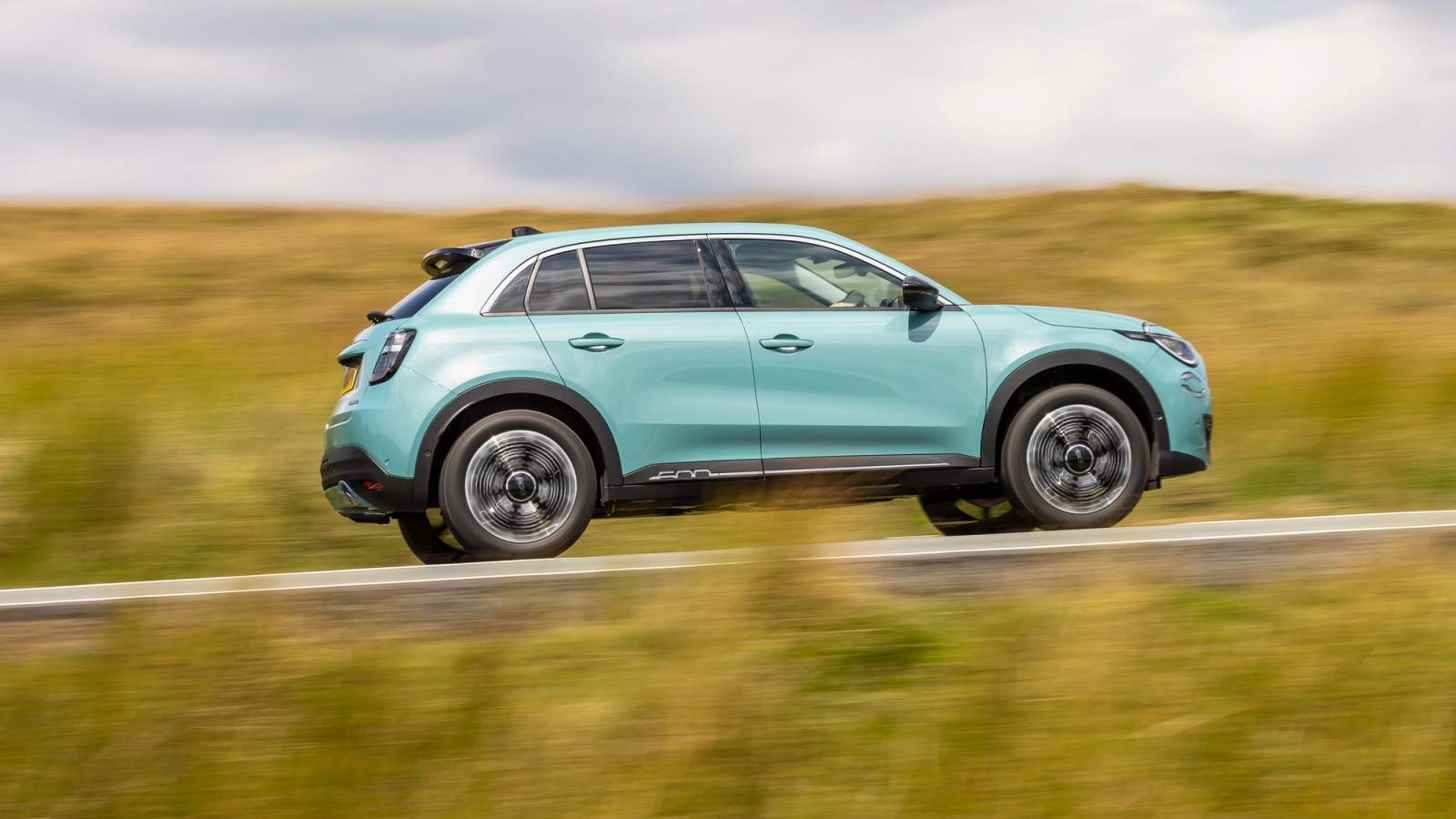
The Fiat 600 is available in four trims: Pop kicks things off as the entry-level grade, while Icon sits in the middle of the range. La Prima and Sport are the same price to buy new, but diverge in terms of style – La Prima goes for a more sophisticated up-market feel, while Sport gets racier touches. Whether you’re looking to buy one new or used, it’s probably best to find an example in La Prima trim, because that’s what makes it a more enticing proposition than the Grande Panda.
- Pop: This is the most basic of the Fiat 600 lineup. It gets a seven-inch digital instrument cluster, 10.25-inch infotainment touchscreen, rear parking sensors and useful tech like auto high and low beam headlights, auto wipers, LED headlights and tail lights and driver safety tech like autonomous emergency braking and driver drowsiness detection. 17-inch alloys complete the look.
- Icon: In addition to the above, Icon models get LED fog lights, passive entry (the key just needs to be in your pocket to get in and out, and the car self-locks as you walk away), an uprated sound system, wireless charging pad, automatic climate control and more.
- La Prima: La Prima is one of the top specifications, with an elegant sophisticated look comprising faux heated seats with a massive function, a rear-view parking camera, hands-free powered tailgate, sat nav on the infotainment system, and larger 18-inch wheels. You also get hi-tech touches like adaptive cruise control and a co-pilot system that keeps the car at a cruise and steers in lane on the motorway.
- Sport: Sport gets a slightly racier design than other grades, with black 18-inch alloys, black accenting on some of the panels and a chrome exhaust tip. There are also paddle shifters on the steering wheel which allow you to change gear down more quickly, allowing for a quicker, more involved response.
Engines
The Fiat 600 lineup comes with either a petrol engine, a hybrid system or electric motor. The hybrid uses a 1.2-litre petrol engine and electric motor with outputs of either 110bhp or 145bhp in total. The electric 600e boasts 156bhp but is heavier, so it’s not the quickest of the lineup. There’s a manual petrol that arrived later, using the same 1.2-litre unit as the hybrids, albeit without electrification, and produces just 100bhp – it’s actually quicker than the 110bhp hybrid, however, doing 0-62mph in 10.5 seconds, compared with the entry-level hybrid’s 10.9-second time. The fastest is the 145bhp hybrid, which will sprint from 0-62mph in 8.5 seconds.
Decided the Fiat 600 is for you?
There are already plenty of Fiat 600 examples for sale nearly new and used on Cazoo