What you should know about buying an EV
Electric cars now outsell diesels in the UK, and there can be serious cost savings for EV motorists. Read on for helpful tips that are good to know before buying an EV.
The Cazoo editorial team
Published on 28 May 2026 | 7 mins read

Electric vehicles are no longer a novelty. They outsell diesel cars in the UK and are increasingly the default choice for new car buyers. But making the switch from petrol or diesel is still a big decision – and it isn't the right move for everyone right now.
Whether you're tempted by lower running costs, fed up with filling up, or simply want something different on the driveway, this guide covers everything you should consider before buying an electric vehicle – the benefits, the potential pitfalls, and the cars worth looking at in each category.
Can you live with the range?
Range anxiety – the fear of running out of charge before reaching your destination – is the number one concern cited by drivers considering an EV. And while it's a legitimate question, it's one that's becoming less relevant with every new model that arrives on the market.
The average UK driver covers around 20 miles a day. Even the most modest modern EVs can manage well over 150 miles on a charge, meaning most people could go a week between charges on typical daily use. Where range still matters is for longer trips – motorway runs, weekend breaks, or those occasional drives that stretch beyond 200 miles.
If you regularly cover big distances, you need a car with genuine long-range credentials. There are a number of used EVs with an official range of well over 400 miles, from the Mercedes EQS to the Volkswagen ID.7 and Peugeot e-3008.
If you'd prefer something more affordable but still long-legged, the Hyundai Ioniq 5 and Kia EV6 are worth considering, both offering real-world ranges in the region of 260–290 miles with ultra-fast 800V charging. Browse used electric cars on Cazoo to find long-range EVs at a range of price points.
- Great for range: Volkswagen ID.7
Do you have somewhere to charge at home?
This is perhaps the single most important practical question when considering an EV. If you have a driveway or garage, home charging is a game-changer. You simply plug in overnight and wake up to a full battery every morning – no forecourt queues, no fuel costs, just cheap, convenient electricity.
A dedicated home wallbox charger (typically 7kW) can be installed for around £700–£1,500 and will charge most EVs overnight in six to ten hours. The government's EV chargepoint grant covers 75% of installation costs (up to £350) for eligible homeowners and renters.
However, if you rely entirely on on-street parking, life is more complicated. Public charging infrastructure in the UK is growing quickly but is still inconsistent, and relying solely on public chargers can be slower and more expensive than home charging. That doesn't make an EV impossible without a driveway, but it requires more planning.
The good news is that the public network is improving. Apps such as Zap-Map help drivers locate chargers in real time, and most modern EVs include built-in navigation that automatically plans routes around charging stops. If you're curious about the full costs of ownership, our guides to electric cars cover running costs in more detail.
Are EVs actually cheaper to run?
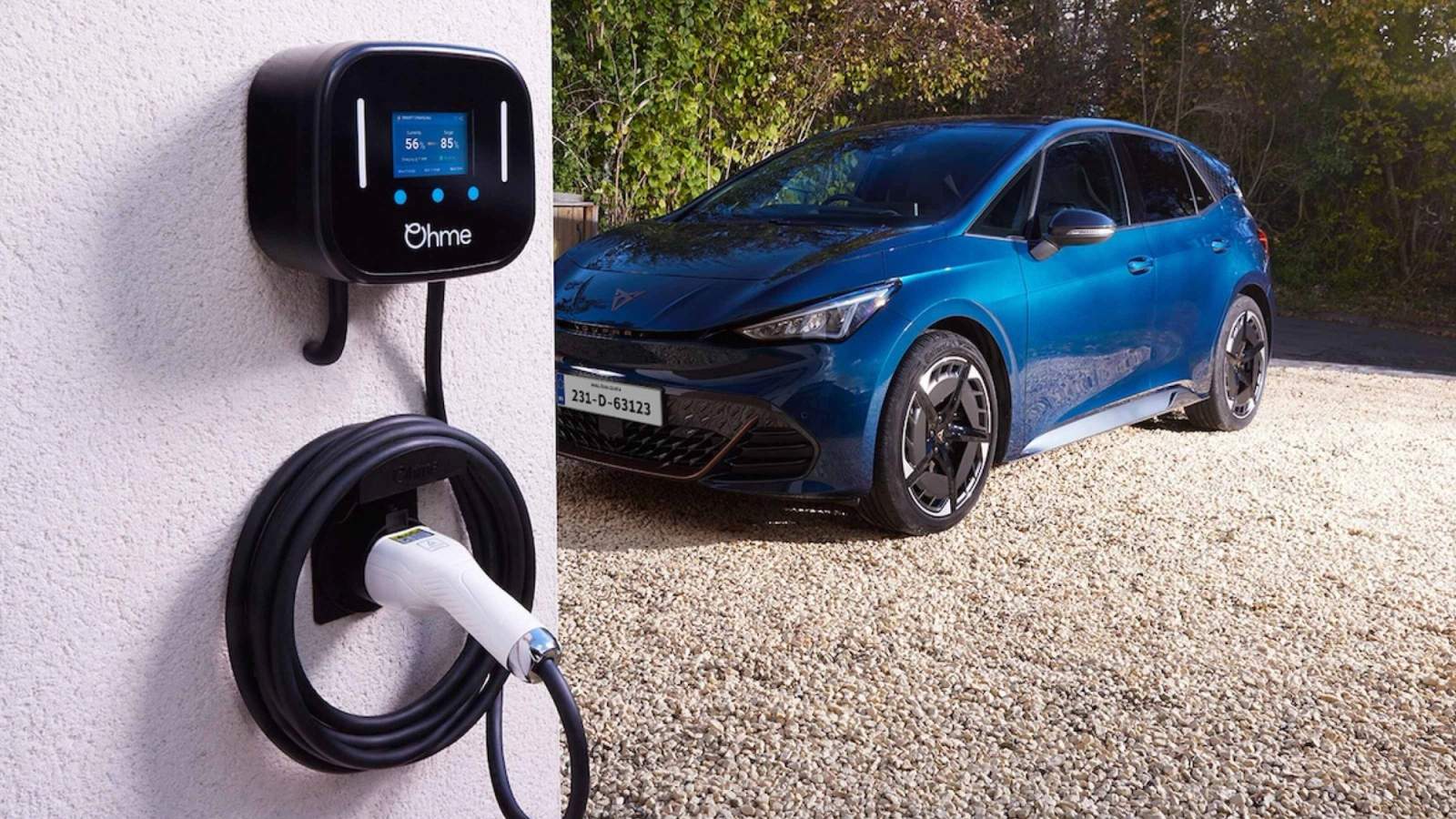
Electric vehicles typically cost more to buy than an equivalent petrol or diesel car – though that gap is narrowing fast, particularly in the used market. Where EVs make up significant ground is in running costs.
Charging at home is roughly four to five times cheaper per mile than filling up with petrol at current rates. Servicing costs are also lower: no oil changes, fewer brake replacements (thanks to regenerative braking), and fewer moving parts overall.
Company car drivers have an especially strong incentive: EVs attract a Benefit-in-Kind (BiK) tax rate of just 3% in 2025/26, compared to 25–37% for petrol and diesel vehicles. For higher-rate taxpayers, the annual savings can run into thousands of pounds.
On the downside, public rapid charging can be expensive – sometimes approaching the cost-per-mile of petrol – and insurance premiums for EVs remain slightly higher than for comparable combustion cars, partly due to the potential cost of battery repairs. Factor these in when calculating total cost of ownership.
Do EVs have to be boring?
For a long time, electric cars were defined by worthy, anonymous styling designed to communicate eco-credentials rather than turn heads. That era is firmly over.
Electric cars now make up some of the most exciting models on the road. Take the new Renault 5; reviving one of the most iconic names in automotive history, the new R5 takes the spirit of the original 1970s supermini and reimagines it as a thoroughly modern electric hatchback. With its retro-inspired headlights, sculpted flanks, and charming illuminated bonnet charging indicator, it's one of the most genuinely lovable cars on sale – electric or otherwise.
And it's not just a pretty face. It has been priced affordably and drives with genuine confidence. The larger battery version offers up to 252 miles of range and is surprisingly accomplished on longer runs. For city drivers who want personality with their practicality, the Renault 5 is hard to beat.
Beyond the Renault 5, the Hyundai Ioniq 5's bold retro-futuristic styling, the Kia EV6's coupe-like silhouette all prove that choosing an EV no longer means compromising on kerb appeal.
- Great for style: Renault 5
Is an EV a good choice for families?
The short answer is yes – for many families, an EV is now the most practical choice available, not despite its battery powertrain, but because of it.
Modern electric family cars offer generous boot space, strong safety ratings, and interiors designed with real-world use in mind. The Hyundai Ioniq 5, for example, offers 531 litres of boot space, a five-star Euro NCAP safety rating, a sliding centre console, and one of the most spacious rear cabins in its class. Its 800V ultra-rapid charging (up to 350kW) means a 10–80% top-up takes around 18 minutes at a compatible charger – quick enough for a motorway coffee stop.
For larger families who need seven seats, the Kia EV9 is the standout option: four ISOFIX points across two rows, an 828-litre boot, and top marks in Euro NCAP's most recent testing.
The main consideration for families is journey planning. Road trips require a little more thought than with a petrol car, but most modern EVs make this easier with built-in route planning and real-time charger availability. Once you've done it a few times, it quickly becomes second nature.
- Great for families: Hyundai Ioniq 5
Is an EV right for your lifestyle?
Electric vehicles are an excellent fit for most UK drivers – but they're not perfect for everyone, right now.
An EV is likely a great choice if you:
- Drive mostly around town or on predictable daily routes
- Have access to home charging (driveway or garage)
- Do most of your driving during the week with time to charge at weekends
- Are a company car driver looking to reduce your BiK tax bill
- Care about lower running costs and reduced maintenance
An EV may not be the right fit yet if you:
- Regularly tow heavy loads over long distances (range drops significantly under towing conditions)
- Rely entirely on on-street parking with no reliable access to home charging
- Frequently make very long, time-sensitive journeys where a five-minute fuel stop matters
- Drive high mileage in a rural area with limited public charging infrastructure
That said, the charging network is expanding rapidly, and many of the limitations that existed just a few years ago are diminishing. It's worth revisiting the question every year – the answer may well change.
Ready to find your EV?
Browse used electric cars on Cazoo to find models across all budgets and body styles, from city-friendly hatchbacks to long-range family SUVs.