How to drive more economically
Fuel prices are a major part of most drivers’ monthly budget, so what can you do to save money at the pumps?
The Cazoo editorial team
Published on 27 May 2026 | 7 mins read

With fuel prices continuing to be a hot topic – driven by everything from geopolitical tensions to global supply pressures – it has never been more important to make every drop count. Whether you're filling up a petrol, diesel, or even a hybrid vehicle, the cost of keeping your car on the road can take a serious chunk out of your monthly budget.
The good news is that there are plenty of simple, effective techniques you can adopt to reduce your fuel consumption without having to radically change your lifestyle. Here's how to drive more economically and keep your running costs down.
Smooth driving saves money
One of the biggest factors affecting your fuel consumption is how smoothly you drive. Harsh acceleration and heavy braking are two of the most fuel-hungry habits you can have behind the wheel, so working to eliminate them will have a noticeable impact on how far each tank of fuel goes.
Try to read the road ahead as much as possible, anticipating bends, junctions, and the flow of traffic rather than reacting to them. By accelerating gently and allowing the car to coast to a slow speed before braking, you'll use considerably less fuel than if you were constantly surging forward and stopping hard. Every time you need to accelerate to recover lost speed, it will impact your car’s fuel economy.
Keep your speed in check
Speed has a dramatic effect on fuel economy. Driving at 70mph can use up to 25% more fuel than driving at 50mph, and the gap only grows the faster you go. On the motorway, using your cruise control – if you have it – helps to maintain a steady, consistent speed rather than the natural fluctuations that come with manual throttle control as the road undulates and you negotiate traffic.
On A-roads and in towns, sticking to the speed limit isn't just about safety – it's about efficiency. Driving at a steady, legal pace through built-up areas will keep your revs low and your fuel consumption down.
Use the right gear at the right time
If you drive a manual car, making sure you're in the correct gear for your speed is essential for economy. Driving in too low a gear means your engine is working harder than it needs to, burning more fuel in the process. As a general rule, aim to change up a gear before the engine reaches 2,500rpm in a petrol car, or 2,000rpm in a diesel.
Modern cars will often display a gear-shift indicator on the dashboard to let you know when it's time to change up for optimum efficiency, so make use of it if yours has one. For automatic drivers, simply backing off the throttle slightly when the car feels ready to change will encourage an earlier, more economical upshift.
Keep on top of your tyre pressures
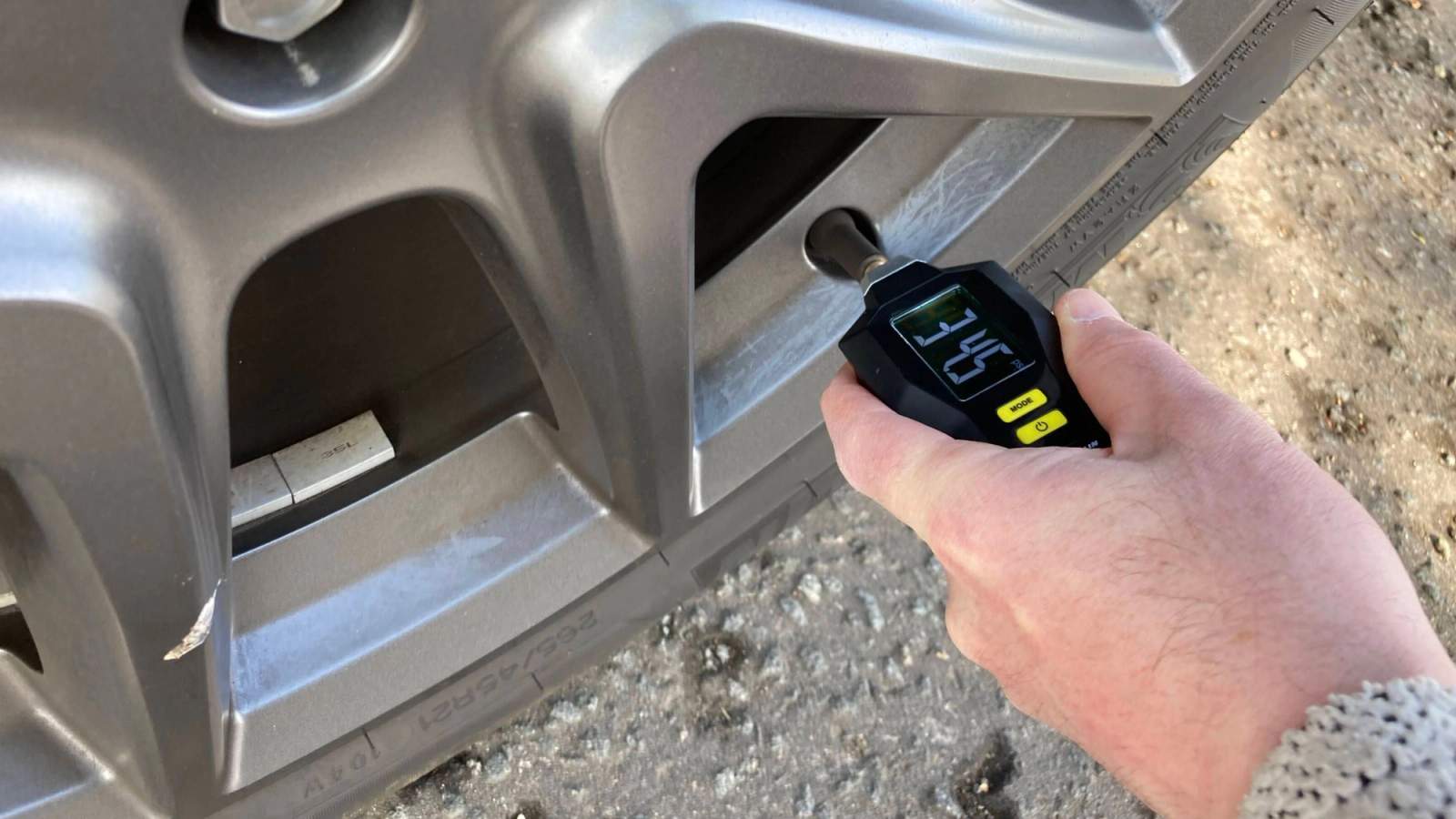
Underinflated tyres create more rolling resistance, which means your engine has to work harder – and burn more fuel – to maintain the same speed. Checking your tyre pressures regularly is one of the quickest and easiest wins available to any driver looking to improve their economy.
You'll find the recommended tyre pressures for your vehicle in the owner's manual or on a sticker inside the driver's door frame. Most petrol stations have an air machine you can use, and the whole job takes just a few minutes. It's worth doing every couple of weeks, or at least before a long journey. If your tyres need replacing, check that the new ones have the best fuel-efficiency rating available within your budget.
Cut the dead weight
It's easy for a car to become a rolling storage unit, but all of that extra weight has a real impact on how much fuel you use. Every extra 50kg in your car can increase fuel consumption by around 2%, so it's worth having a clear-out and removing anything that doesn't need to be there.
Roof racks, roof boxes and roof tents are some of the worst offenders – not just because of the weight, but because of the aerodynamic drag they create. If you're not using it for a while, take it off. It can make a surprisingly significant difference to your fuel economy, particularly at higher speeds – and improve refinement as an added bonus.
Turn off systems you don't need
Air conditioning is one of the most power-hungry systems in a modern car, and running it constantly can increase fuel consumption by up to 10%. On cooler days or shorter journeys, it's worth turning it off and opening the windows instead. That said, at higher speeds, open windows create drag which can actually cancel out the benefit – so on the motorway, air conditioning is often the more economical choice.
It's also worth making sure you're not leaving other systems running unnecessarily. Heated seats, heated rear windows, and infotainment screens all draw power from the engine, so turning off anything you don't need is a small but worthwhile habit to get into.
Plan your journeys
Setting off without a clear route in mind can lead to unnecessary detours, wrong turns, and time spent in congestion – all of which eat into your fuel economy. Taking a few minutes to plan your journey before you leave, using up-to-date traffic information, can make a meaningful difference to how much fuel you use.
If you have multiple errands to run, try to combine them into a single trip rather than making several shorter journeys. A cold engine uses considerably more fuel than a warmed-up one, so fewer individual trips means better overall economy. Where possible, avoiding peak traffic hours will also help you spend less time idling in queues.
Consider whether your car is working against you
Sometimes, no amount of careful driving can fully compensate for a car that simply isn't fuel-efficient. Older vehicles, or those that haven't been properly serviced, tend to use more fuel than their modern, well-maintained equivalents. If you're regularly struggling with your running costs, it might be worth considering whether a more economical model could save you money in the long run.
Looking for a used car that's kinder to your wallet at the pump? Explore the full range of used electric cars and fuel-efficient used hybrid cars available on Cazoo, where you can filter by fuel type to find the right match for your budget and lifestyle.
Small changes, big savings
Driving more economically doesn't require any special equipment or a major lifestyle change – it's really about building a few sensible habits and staying aware of how your actions behind the wheel affect your fuel use. Combine smooth driving, correct tyre pressures, sensible speeds, and good journey planning, and you'll be surprised just how much further your tank can take you.